Foltran Bruno B, Gaspar João P, Silva Igor R M, Pires Henrique M, Andrade Fernanda B, Costa Giovanna M, Paixao Julia E L, Fernandes Luis G V, Teixeira Aline F, Nascimento Ana L T O
Laboratório de Desenvolvimento de Vacinas, Instituto Butantan, São Paulo, Brazil.
Programa de Pós-Graduação Interunidades em Biotecnologia, Instituto de Ciências Biomédicas, Universidade de São Paulo, São Paulo, Brazil.
Front Cell Infect Microbiol. 2024 Dec 13;14:1492352. doi: 10.3389/fcimb.2024.1492352. eCollection 2024.
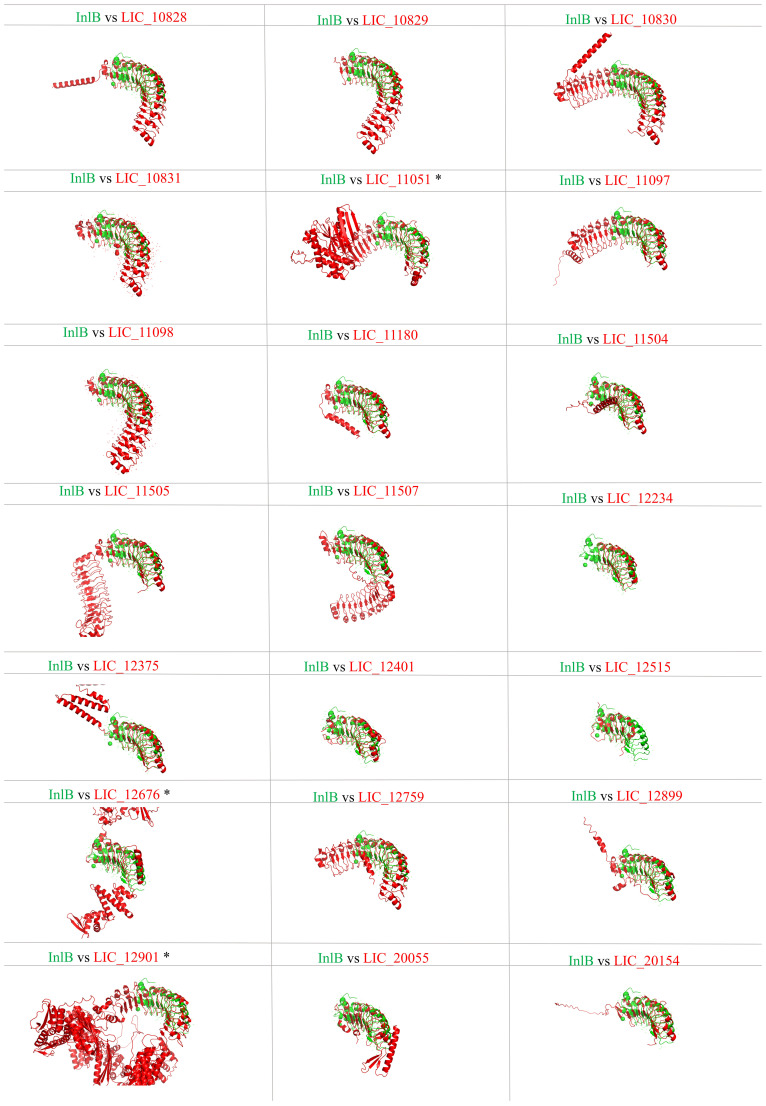
Pathogenic are spirochetes that cause leptospirosis, a worldwide zoonotic disease. Leptospirosis affects humans and animals, with approximately 1 million human infections and 60,000 deaths per year. The diversity of leptospiral strains and serovars allied to the fact that pathogenesis is not yet fully understood, make the development of an effective vaccine against leptospirosis a challenge. Outer membrane and secreted proteins are considered potential antigens since they play a vital role in mediating interactions with host molecules. Several domains or motifs have been reported to participate in the leptospiral infection process. Among them, leucine-rich repeat (LRR) proteins have been highlighted as attractive multipurpose proteins, exhibiting a broad spectrum of ligands and having a putative role in bacterial pathogenesis. Indeed, genome annotation of leptospiral species pointed out that LRR proteins are predominant in pathogenic strains, a feature that corroborates this hypothesis. A few LRR proteins of , and have been studied and their possible role in virulence was proposed. Yet, a mechanistic and broad investigation of LRR proteins was not fully performed. In this review, a comprehensive analysis of 21 LRR proteins of was performed in relation to structure, function, dynamics and virulent potential that will contribute to understanding the key role of these domains in the underlying mechanisms of leptospiral infection.
致病性螺旋体可引起钩端螺旋体病,这是一种全球性人畜共患病。钩端螺旋体病会影响人类和动物,每年约有100万人感染,6万人死亡。钩端螺旋体菌株和血清型的多样性,以及致病机制尚未完全明了的事实,使得开发一种有效的钩端螺旋体病疫苗成为一项挑战。外膜蛋白和分泌蛋白被认为是潜在抗原,因为它们在介导与宿主分子的相互作用中起着至关重要的作用。据报道,有几个结构域或基序参与了钩端螺旋体的感染过程。其中,富含亮氨酸重复序列(LRR)蛋白被认为是有吸引力的多功能蛋白,具有广泛的配体,并且在细菌致病过程中可能发挥作用。事实上,钩端螺旋体物种的基因组注释指出,LRR蛋白在致病菌株中占主导地位,这一特征证实了这一假设。已经对问号钩端螺旋体、双曲钩端螺旋体和犬钩端螺旋体的一些LRR蛋白进行了研究,并提出了它们在毒力方面可能发挥的作用。然而,尚未对LRR蛋白进行全面的机制研究。在这篇综述中,对问号钩端螺旋体的21种LRR蛋白进行了全面的结构、功能、动力学和毒力潜力分析,这将有助于理解这些结构域在钩端螺旋体感染潜在机制中的关键作用。