Shang Yi, Yu Lefan, Xing Hanqi, Chang Yue, Dong Ke, Xiao Yao, Liu Yuanqing, Feng Mengmeng, Qin Yiren, Dai Hui
Department of Radiology, The First Affiliated Hospital of Soochow University, Suzhou, 215006, People's Republic of China.
Department of Neurology, The First Affiliated Hospital of Soochow University, Suzhou, 215006, People's Republic of China.
Nat Sci Sleep. 2024 Dec 23;16:2205-2215. doi: 10.2147/NSS.S496607. eCollection 2024.
Sleep disorders are common in Alzheimer's disease (AD) patients and can impair the glymphatic system, leading to cognitive decline. This study aimed to investigate whether AD patients with sleep disorders exhibit worse glymphatic function and more severe cognitive impairment compared to those without sleep disorders and to explore the underlying molecular imaging mechanisms.
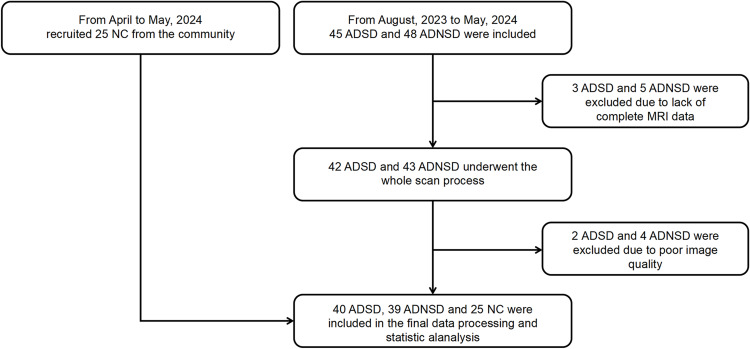
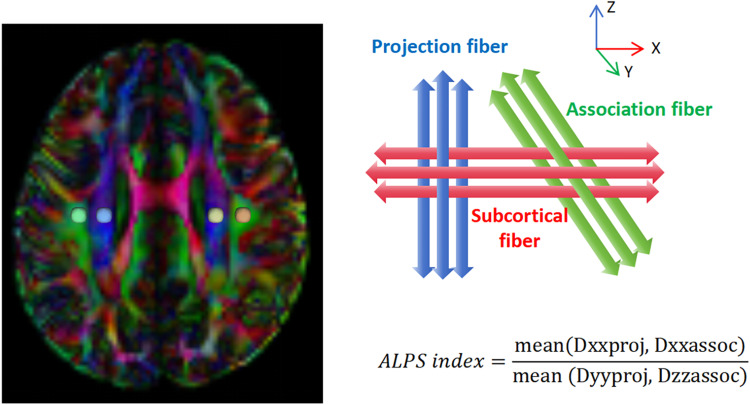
This study included 40 AD patients with sleep disorders (ADSD), 39 cognitively matched AD patients without sleep disorders (ADNSD), and 25 healthy middle-aged and elderly controls (NC). Participants underwent functional magnetic resonance imaging (fMRI), and cognitive and sleep assessments. The ALPS (Along the Perivascular Space) index was calculated, followed by intergroup comparisons, correlation analyses, and mediation analyses. The diagnostic utility of the ALPS index was assessed using a receiver operating characteristic (ROC) curve.
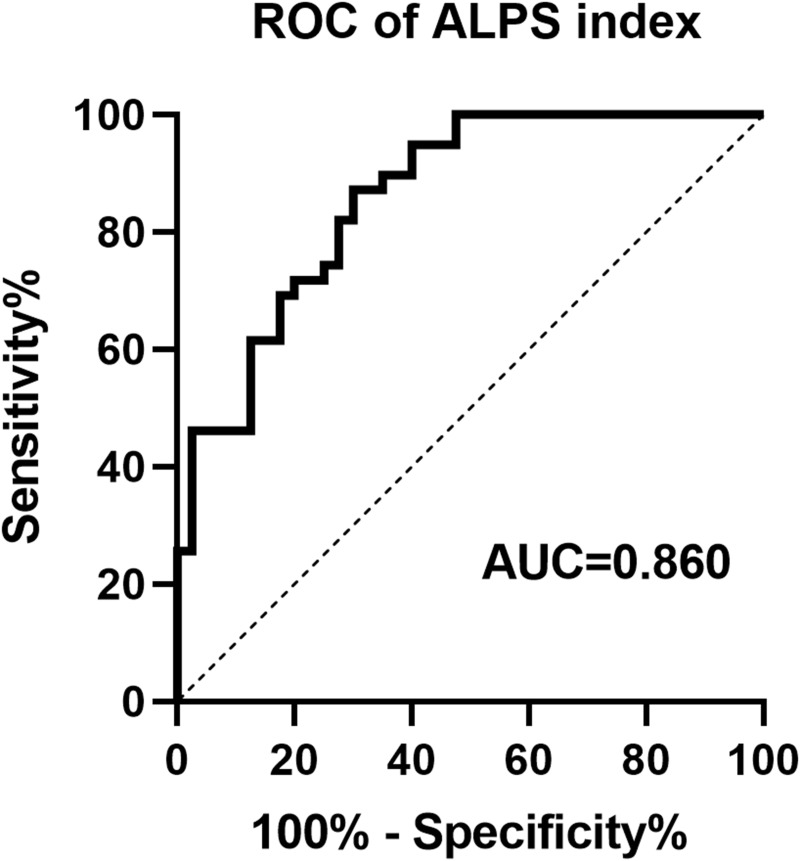
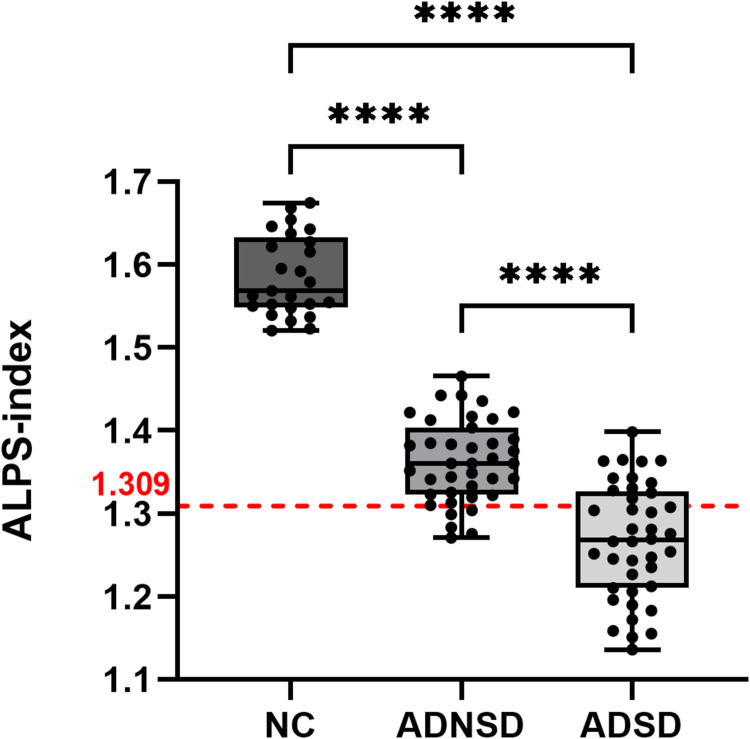
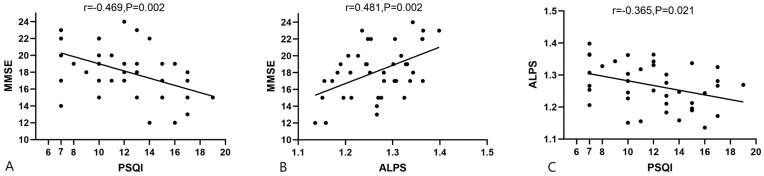
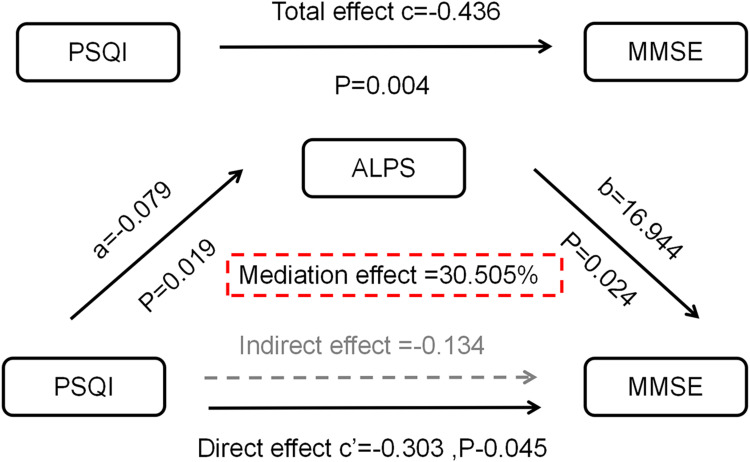
The ALPS index was lower in the ADNSD and ADSD groups compared to the NC group. In the ADSD group, PSQI scores were negatively correlated with MMSE scores. The ALPS index was positively correlated with MMSE scores and negatively with PSQI scores. Mediation analyses indicated that the ALPS index partially mediated the effect of sleep disturbances on cognitive impairment (indirect effect = -0.134; mediation effect = 30.505%). The area under the ROC curve (AUROC) for distinguishing ADSD from ADNSD was 0.86, with a cutoff ALPS index value 1.309.
Sleep disorders worsen glymphatic function and cognitive impairment in AD patients. The ALPS index partially mediates the impact of sleep disorders on cognitive function and shows moderate accuracy in distinguishing between patients with ADSD and ADNSD.
睡眠障碍在阿尔茨海默病(AD)患者中很常见,并且会损害类淋巴系统,导致认知能力下降。本研究旨在调查与无睡眠障碍的AD患者相比,有睡眠障碍的AD患者是否表现出更差的类淋巴功能和更严重的认知障碍,并探索潜在的分子成像机制。
本研究纳入了40名有睡眠障碍的AD患者(ADSD)、39名认知匹配的无睡眠障碍的AD患者(ADNSD)和25名健康的中老年对照者(NC)。参与者接受了功能磁共振成像(fMRI)、认知和睡眠评估。计算了沿血管周围间隙(ALPS)指数,随后进行组间比较、相关性分析和中介分析。使用受试者工作特征(ROC)曲线评估ALPS指数的诊断效用。
与NC组相比,ADNSD组和ADSD组的ALPS指数较低。在ADSD组中,PSQI评分与MMSE评分呈负相关。ALPS指数与MMSE评分呈正相关,与PSQI评分呈负相关。中介分析表明,ALPS指数部分介导了睡眠障碍对认知障碍的影响(间接效应=-0.134;中介效应=30.505%)。区分ADSD与ADNSD的ROC曲线下面积(AUROC)为0.86,ALPS指数临界值为1.309。
睡眠障碍会使AD患者的类淋巴功能和认知障碍恶化。ALPS指数部分介导了睡眠障碍对认知功能的影响,并且在区分ADSD和ADNSD患者方面显示出中等准确性。