Horstmann Rosa Hannele, Seefeld Lara, Schellong Julia, Garthus-Niegel Susan
Institute and Policlinic of Occupational and Social Medicine, Faculty of Medicine, TUD Dresden University of Technology, Dresden, Germany.
Department of Psychotherapy and Psychosomatic Medicine, Faculty of Medicine and University Hospital Carl Gustav Carus, TUD Dresden University of Technology, Dresden, Germany.
BMC Pregnancy Childbirth. 2024 Dec 31;24(1):885. doi: 10.1186/s12884-024-07061-2.
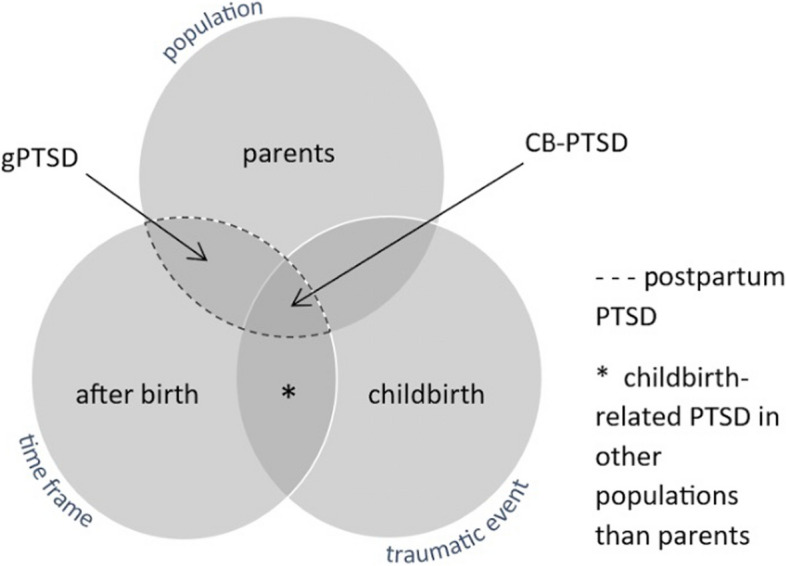
Post-traumatic stress disorder (PTSD) in the postpartum period is a prevalent yet under-researched mental health condition. To date, many women who suffer from postpartum PTSD remain unrecognized and untreated. To enhance the accessibility of help for these women, it is crucial to offer tailored treatment and counselling services that align with their needs. This study aimed to understand how support preferences differ between women with and without postpartum PTSD, considering the two subgroups of postpartum PTSD: childbirth-related PTSD (CB-PTSD) and general PTSD (gPTSD).
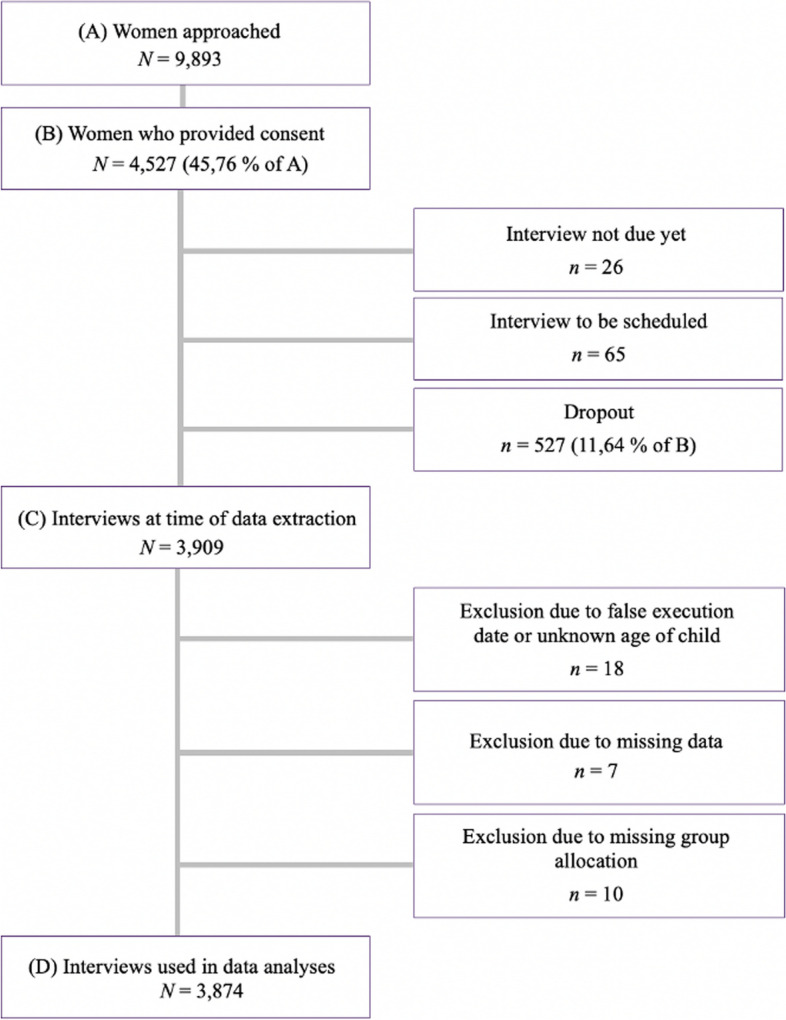
This study used data from the cross-sectional INVITE study, comprising telephone interviews with N = 3,874 women conducted six weeks to six months after childbirth. The City Birth Trauma Scale (City BiTS) was used to assess CB-PTSD, while the Primary Care Posttraumatic Stress Disorder Screen for DSM-5 (PC-PTSD-5) was used to assess gPTSD. Service preferences and preferred modes of service provision were measured with self-developed questionnaires. Analyses of variance were used to identify differences between groups.
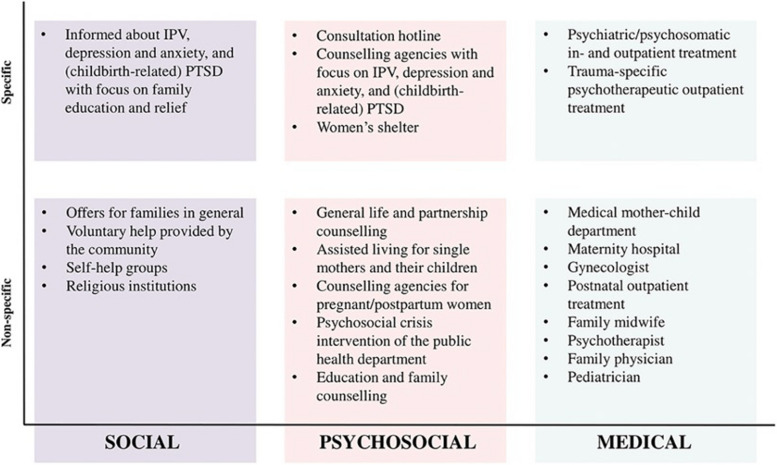
The support services (family-)midwives and family, friends, or colleagues and the service provision mode as in person communication were preferred most by women across groups. The analyses revealed that women with CB-PTSD had lower overall preferences for services compared to women without postpartum PTSD. Women with CB-PTSD also showed less preference for psychotherapeutic services (e.g. outpatient treatment, inpatient clinics) compared to women without postpartum PTSD. Regarding modes of service provision, women with gPTSD had a higher preference for all service modes compared to women with CB-PTSD and those without postpartum PTSD, with a stronger preference for both direct (e.g. in person, video conference) and delayed communication (e.g. chat, e-mail).
This study was the first to explore the support preferences of women experiencing symptoms of postpartum PTSD. Findings suggest that women differ in their preferences, contingent upon the subgroup of postpartum PTSD. According to women's overall preferences, the expansion and further training of (family-)midwife services is recommended. By tailoring support services accordingly to women's preferences, it may be possible to bridge the treatment gap for postpartum PTSD and to improve the well-being of affected women and their families.
产后创伤后应激障碍(PTSD)是一种普遍存在但研究不足的心理健康状况。迄今为止,许多患有产后PTSD的女性仍未得到识别和治疗。为了提高这些女性获得帮助的机会,提供符合她们需求的量身定制的治疗和咨询服务至关重要。本研究旨在了解有和没有产后PTSD的女性在支持偏好上的差异,同时考虑产后PTSD的两个亚组:分娩相关PTSD(CB-PTSD)和一般PTSD(gPTSD)。
本研究使用了横断面INVITE研究的数据,该研究包括在分娩后六周至六个月对N = 3874名女性进行的电话访谈。使用城市分娩创伤量表(City BiTS)评估CB-PTSD,同时使用DSM-5初级保健创伤后应激障碍筛查量表(PC-PTSD-5)评估gPTSD。通过自行编制的问卷来测量服务偏好和首选的服务提供方式。采用方差分析来确定组间差异。
跨组女性最青睐的支持服务是(家庭)助产士以及家人、朋友或同事,服务提供方式是面对面交流。分析表明,与没有产后PTSD的女性相比,患有CB-PTSD的女性对服务的总体偏好较低。与没有产后PTSD的女性相比,患有CB-PTSD的女性对心理治疗服务(如门诊治疗、住院诊所)的偏好也较低。在服务提供方式方面,与患有CB-PTSD的女性和没有产后PTSD的女性相比,患有gPTSD的女性对所有服务方式的偏好更高,对直接(如面对面、视频会议)和延迟交流(如聊天、电子邮件)的偏好更强。
本研究首次探讨了有产后PTSD症状女性的支持偏好。研究结果表明,女性的偏好因产后PTSD亚组而异。根据女性的总体偏好,建议扩大(家庭)助产士服务并对其进行进一步培训。通过根据女性的偏好相应地调整支持服务,有可能弥合产后PTSD的治疗差距,改善受影响女性及其家庭的福祉。