Mitiku Haymanot Zeleke, Assefa Addis Birtukan, Edmealem Afework, Tsegaye Dejen, Biyazin Yalemgeta, Abate Abebe
Department of Nursing, College of Medicine and Health Sciences, Debre Markos University, Debre Markos, Ethiopia.
Department of Pediatrics and Child Health, College of Medicine and Health Sciences, Debre Markos University, Debre Markos, Ethiopia.
Front Med (Lausanne). 2024 Dec 16;11:1470212. doi: 10.3389/fmed.2024.1470212. eCollection 2024.
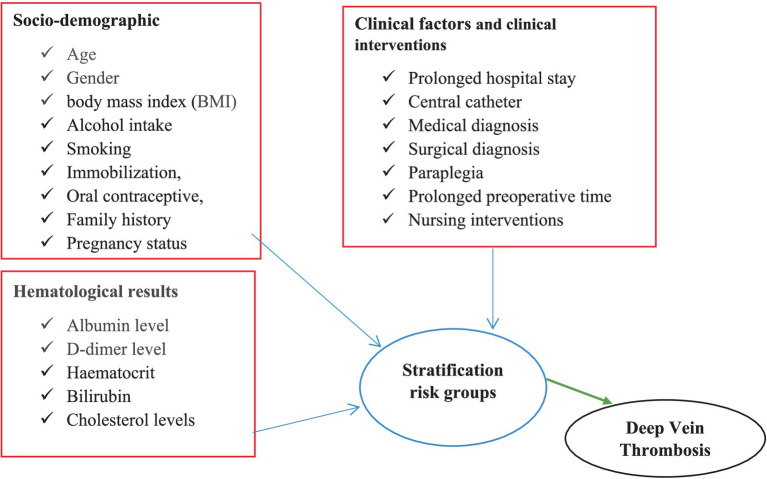
Deep vein thrombosis is a serious condition and a leading cause of morbidity and mortality in hospitalized patients. Studies conducted in various hospitals in Ethiopia have reported that the prevalence rates of deep vein thrombosis range from approximately 5-10% among hospitalized patients. The risk stratification of deep vein thrombosis and the identification of associated risk factors are critical for assessing deep vein thrombosis in hospital settings. Wells scoring provides a valuable framework for assessing individual risk. This study aims to assess the risk stratification of deep vein thrombosis and to identify the risk factors among patients admitted at Debre Markos Comprehensive Specialized Hospital.
A facility-based cross-sectional study was conducted from December 2023 to February 2024. The study included 423 adult patients, and the data were collected using a structured questionnaire and chart review. Ordinal logistic regression analysis was conducted after performing the model test.
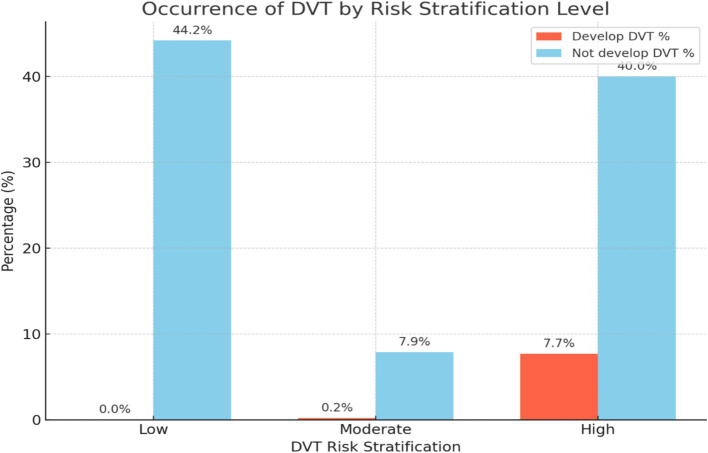
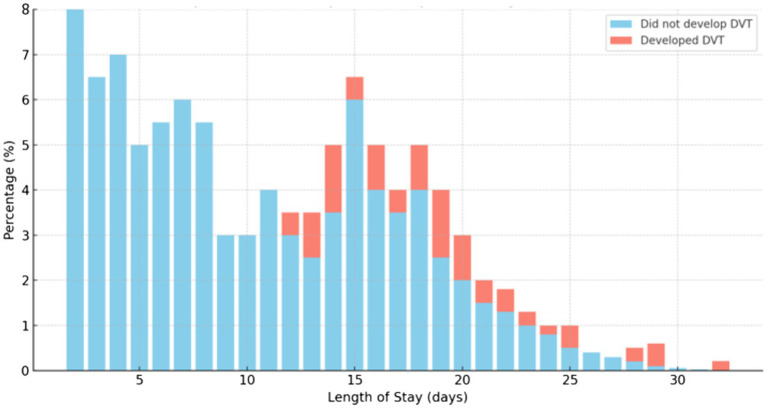
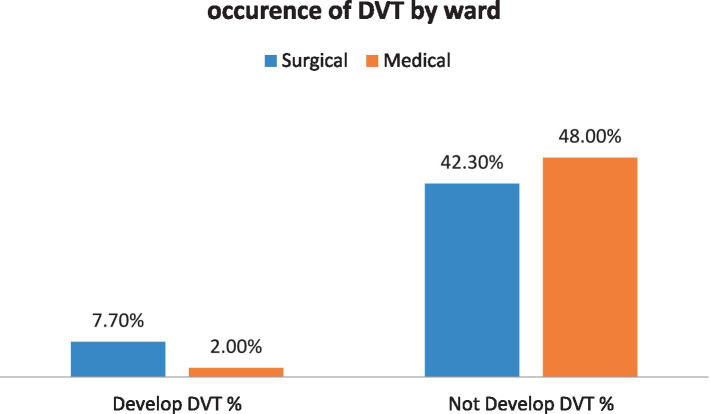
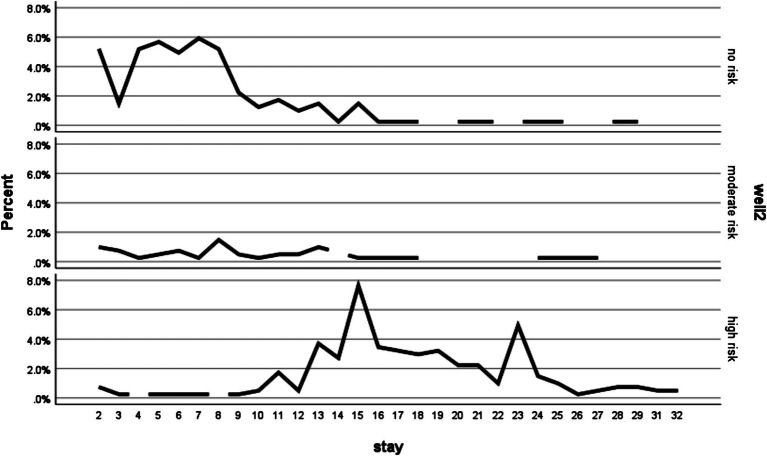
The prevalence of deep vein thrombosis was found to be 7.9%, with 44.2% categorized as having no risk, 8.1% as moderate risk, and 47.7% as high risk for deep vein thrombosis stratification. Various risk factors, such as regular alcohol consumption (odd ratio 4.59, = 0.032), a previous history of deep vein thrombosis (odd ratio 28.32, = 0.000), the presence of a central catheter (odd ratio 12.92, = 0.000), a severe lipid profile (odd ratio 3.8, = 0.001), and a longer duration of stay in the ward (odd ratio 1.28, = 0.000), were significantly associated with high risk for deep vein thrombosis stratification.
The prevalence of high-risk deep vein thrombosis stratification was found to be high, and the occurrence of deep vein thrombosis was also high within this risk group. Regular alcohol consumption, a previous history of deep vein thrombosis, the presence of a central catheter, a severe lipid profile, and a longer duration of stay in the ward were statistically significant for high-risk deep vein thrombosis stratification. This study highlights the importance of identifying patients who are at high risk for deep vein thrombosis stratification and addressing the risk factors for deep vein thrombosis stratification.
深静脉血栓形成是一种严重疾病,是住院患者发病和死亡的主要原因。在埃塞俄比亚各医院开展的研究报告称,住院患者中深静脉血栓形成的患病率约为5%-10%。深静脉血栓形成的风险分层以及相关危险因素的识别对于在医院环境中评估深静脉血栓形成至关重要。Wells评分提供了一个评估个体风险的有价值框架。本研究旨在评估德布雷马科斯综合专科医院收治患者的深静脉血栓形成风险分层,并识别危险因素。
于2023年12月至2024年2月开展了一项基于机构的横断面研究。该研究纳入了423名成年患者,通过结构化问卷和病历审查收集数据。在进行模型检验后进行有序逻辑回归分析。
发现深静脉血栓形成的患病率为7.9%,在深静脉血栓形成分层中,44.2%归类为无风险,8.1%为中度风险,47.7%为高风险。各种危险因素,如经常饮酒(比值比4.59,P = 0.032)、深静脉血栓形成既往史(比值比28.32,P = 0.000)、存在中心静脉导管(比值比12.92,P = 0.000)、严重血脂异常(比值比3.8,P = 0.0