Machtoub Dima, Fares Callie, Sinan Hassan, Al Hariri Moustafa, Nehme Rim, Chami Joelle, Joukhdar Ronny, Tcheroyan Raya, Adib Salim, Khoury Samia J
Faculty of Medicine, American University of Beirut Medical Center, Beirut, Lebanon.
Department of Dermatology, American University of Beirut Medical Center, Beirut, Lebanon.
Sci Rep. 2024 Dec 30;14(1):31682. doi: 10.1038/s41598-024-80992-0.
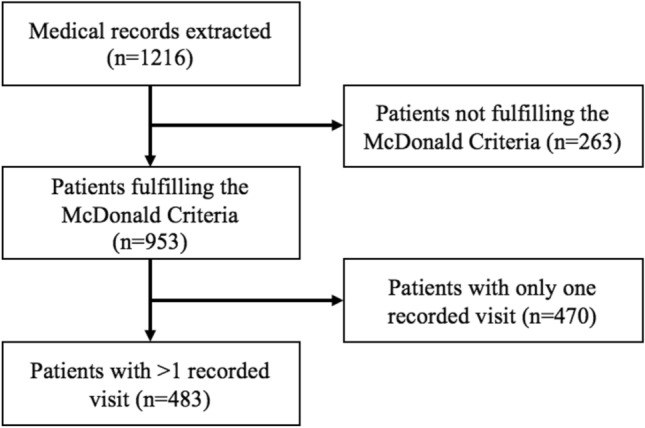
Fatigue is one of the most prevalent and disabling symptoms among patients with MS, but there is limited research investigating the longitudinal determinants of fatigue progression. This study aims to identify the sociodemographic, behavioral and clinical characteristics, and therapeutic regimens that are correlated with worsening fatigue over time in patients diagnosed with MS. This is a retrospective chart review of 483 patients. The primary outcome was a change in the Modified Fatigue Impact Scale-5 (MFIS-5) score from first to last visit during the study interval, from November 2018 to November 2020. The study found that progressive MS subtypes, worsening depression, worsening pain, use of antidepressants, and use of fatigue medications were significantly associated with negative fatigue outcomes. Meanwhile age, sex, smoking frequency, use of pain medications, disease-modifying therapies, BMI, number of relapses, visits, steroid courses, and co-morbidities did not show an association. The clinical characteristics associated with worsening fatigue include progressive MS subtypes, worsening depression, worsening pain, use of antidepressants, and use of fatigue medications. Further studies are needed in order to elucidate a causal relationship and determine whether the management of fatigue in patients with MS should include interventions that address the aforementioned variables to optimize patient care and improve quality of life.
疲劳是多发性硬化症(MS)患者中最普遍且致残的症状之一,但针对疲劳进展的纵向决定因素的研究有限。本研究旨在确定与确诊为MS的患者随时间推移疲劳加重相关的社会人口学、行为和临床特征以及治疗方案。这是一项对483例患者的回顾性病历审查。主要结局是在2018年11月至2020年11月的研究期间,从首次就诊到末次就诊时改良疲劳影响量表-5(MFIS-5)评分的变化。研究发现,进展型MS亚型、抑郁加重、疼痛加重、使用抗抑郁药以及使用抗疲劳药物与负面疲劳结局显著相关。同时,年龄、性别、吸烟频率、使用止痛药物、疾病修正治疗、体重指数、复发次数、就诊次数、类固醇疗程以及合并症均未显示出相关性。与疲劳加重相关的临床特征包括进展型MS亚型、抑郁加重、疼痛加重、使用抗抑郁药以及使用抗疲劳药物。需要进一步研究以阐明因果关系,并确定MS患者的疲劳管理是否应包括针对上述变量的干预措施,以优化患者护理并改善生活质量。