Alipour Fateme, Abdi Parisa, Asadigandomani Hassan, Rezakhani Mehran, Moosaie Fatemeh, Jafari Fateme, Yaseri Mehdi, Motamed-Gorji Nazgol, Khalili Fahimeh, Tavakoli Roya, Tahkor Abolfazl, Mohseni Masoome, Salimpour Samira, Aref Seyed Mohammad Javad Mousavi, Mirzaei Mohammad, Soleimani Mohammadreza, Shahraki Kourosh, Alizade Yousef, Shoja Mohammad Reza, Khataminia Gholam Reza, Behrouz Mahmoud Jabbarvand, Hashemi Hassan
Translational Ophthalmology Research Center, Department of Ophthalmology, Farabi Eye Hospital, School of Medicine, Tehran University of Medical Sciences, Tehran, 1336616351, Iran.
Digestive Diseases Research Institute, Shariati Hospital, Tehran University of Medical Sciences, Tehran, Iran.
Sci Rep. 2024 Dec 30;14(1):31812. doi: 10.1038/s41598-024-83080-5.
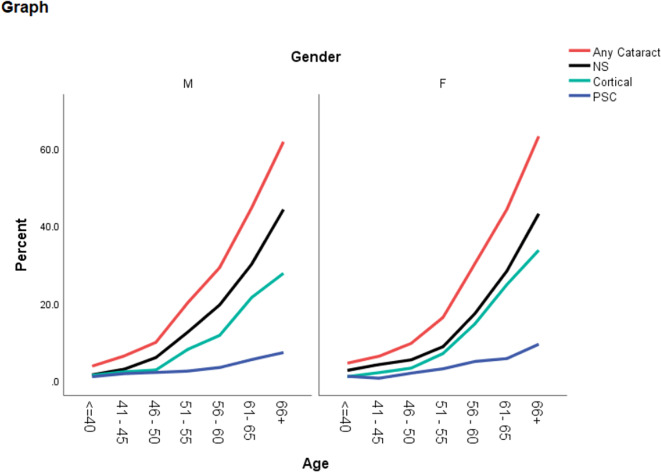
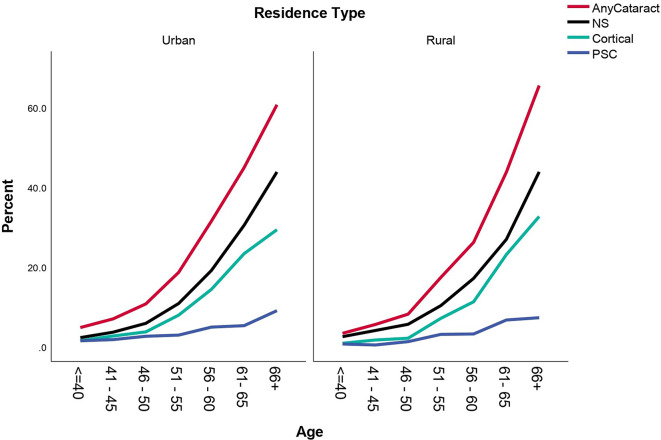
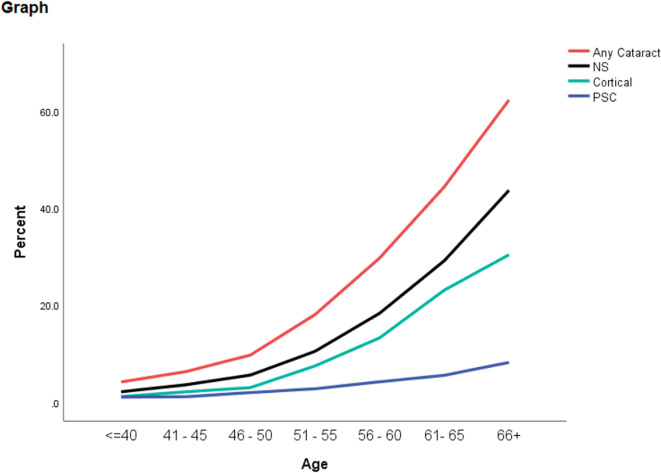
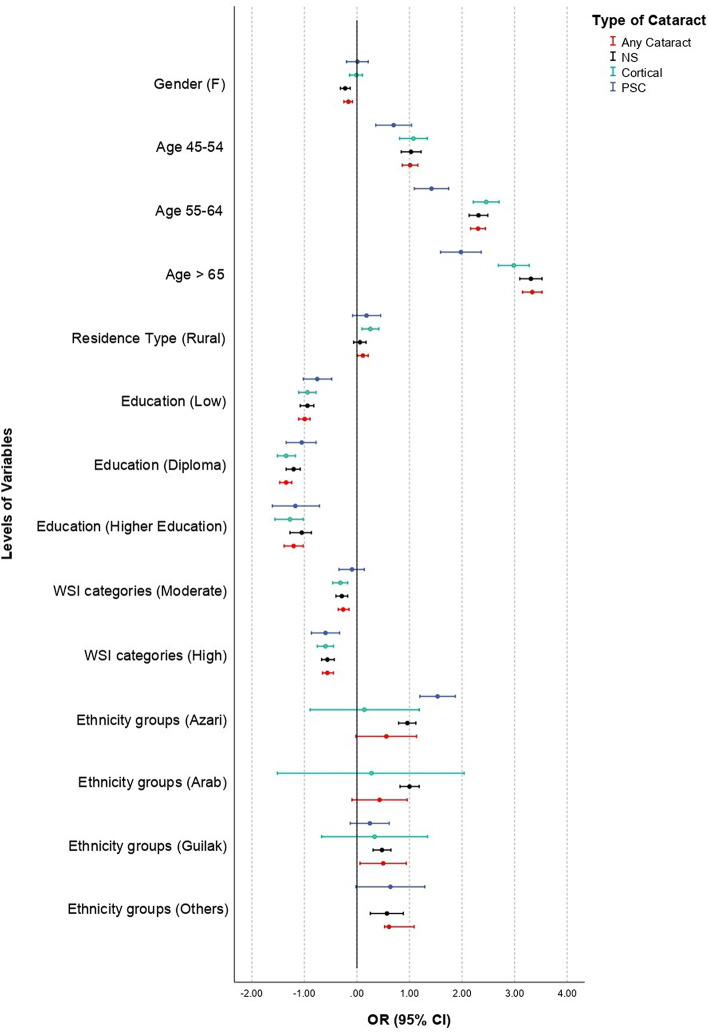
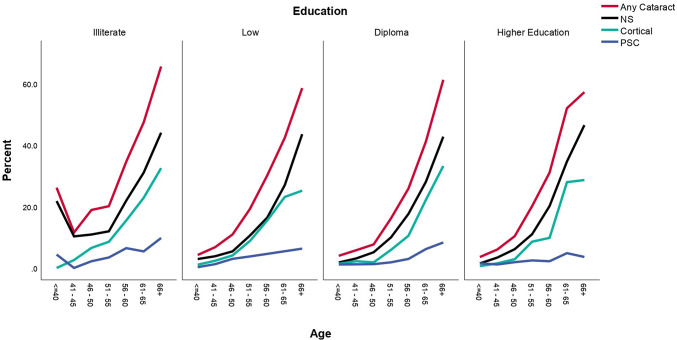
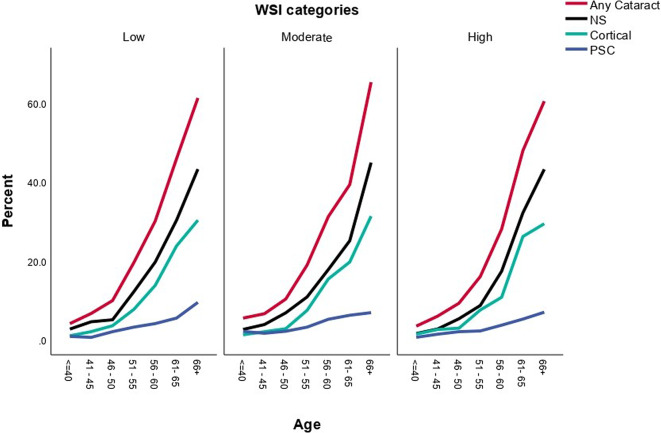
The PERSIAN eye cohort study is a population-based study that evaluates the overall prevalence of cataracts and their subtypes (nuclear sclerosis, cortical, and PSC) in Iran. In this study, from January 2015 to September 2021, 16,016 participants over 35 years of age from four provinces who were selected by random cluster sampling were examined. Demographic information, education, socioeconomic status, and place of residence were collected through interviews. The cataract status of the study participants was examined by two experienced ophthalmologists using slit lamp photography. The average age of the study participants was 49.52 ± 9.31 and 8891 (55.5%) were female. The overall prevalence of each type of cataract, nuclear sclerosis, cortical, and PSC was 18.90%, 12.65%, 9.20%, and 3.08%, respectively. The results indicated that the prevalence of any type of cataract (adjusted OR = 0.85, 95% CI: 0.78-0.92, p < 0.001) and NS cataract (adjusted OR = 0.80, 95% CI: 0.73-0.88, p < 0.001) is lower in women. The risk of developing cataracts increased exponentially with aging. The prevalence of any type of cataract and cortical subtype was higher in rural than urban populations. Also, the risk of developing cataracts decreased with an increase in education level and socioeconomic status and some Iranian races such as Arabs, Azari, and Guilak were also at a higher risk of cataracts. The results of this study indicate the importance of a comprehensive regard of cataract as one of the causes of avoidable blindness in Iran due to its higher prevalence than the global average.
波斯眼队列研究是一项基于人群的研究,旨在评估伊朗白内障及其亚型(核性硬化、皮质性和后囊下性)的总体患病率。在本研究中,从2015年1月至2021年9月,对通过随机整群抽样从四个省份选取的16016名35岁以上参与者进行了检查。通过访谈收集人口统计学信息、教育程度、社会经济状况和居住地点。研究参与者的白内障状况由两名经验丰富的眼科医生使用裂隙灯摄影进行检查。研究参与者的平均年龄为49.52±9.31岁,女性有8891名(55.5%)。每种类型白内障、核性硬化、皮质性和后囊下性的总体患病率分别为18.90%、12.65%、9.20%和3.08%。结果表明,任何类型白内障(调整后的比值比=0.85,95%置信区间:0.78 - 0.92,p<0.001)和核性硬化白内障(调整后的比值比=0.80,95%置信区间:0.73 - 0.88,p<0.001)在女性中的患病率较低。患白内障的风险随年龄增长呈指数增加。农村地区任何类型白内障和皮质性亚型的患病率高于城市人口。此外,随着教育水平和社会经济状况的提高,患白内障的风险降低,一些伊朗种族如阿拉伯人、阿扎里人和吉拉克人患白内障的风险也较高。本研究结果表明,由于白内障在伊朗的患病率高于全球平均水平,因此将其作为可避免失明的原因之一进行全面考量具有重要意义。