Riantini Maya, Mardiharini Maesti, Sudjarmoko Bedy, Kasymir Eka, Nur'aini Lestari Gita, Anindita Salsa Hentia, Syukur Mat, Zulham Armen, Wardono Budi, Ardana I Ketut, Indrawanto Chandra, Wahyudi Agus
Study Program of Agribusiness, Faculty of Agriculture, University of Lampung, Bandar Lampung, Indonesia.
National Research and Innovation Agency, Jakarta, Indonesia.
PLoS One. 2024 Dec 31;19(12):e0315051. doi: 10.1371/journal.pone.0315051. eCollection 2024.
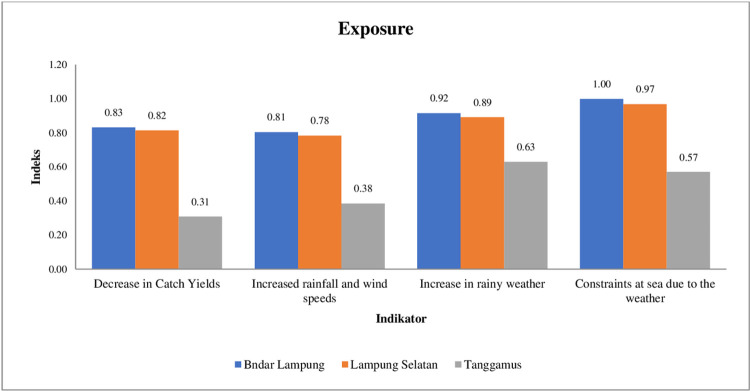
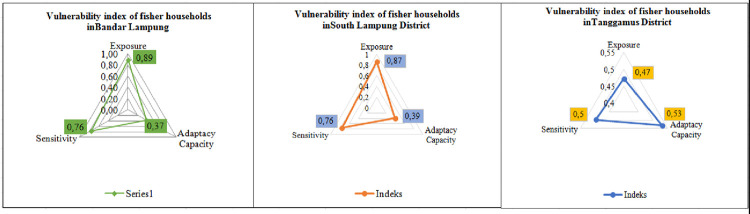
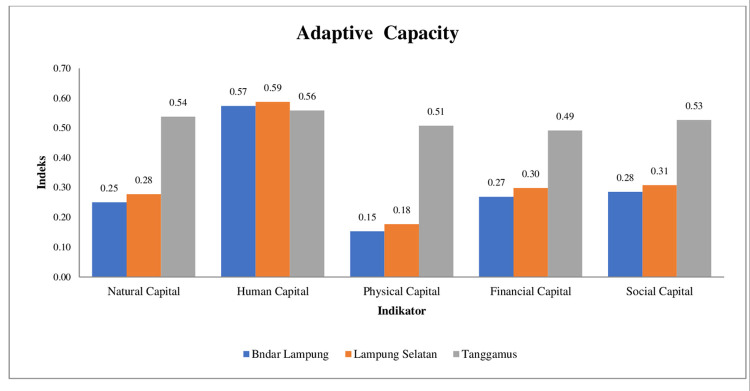
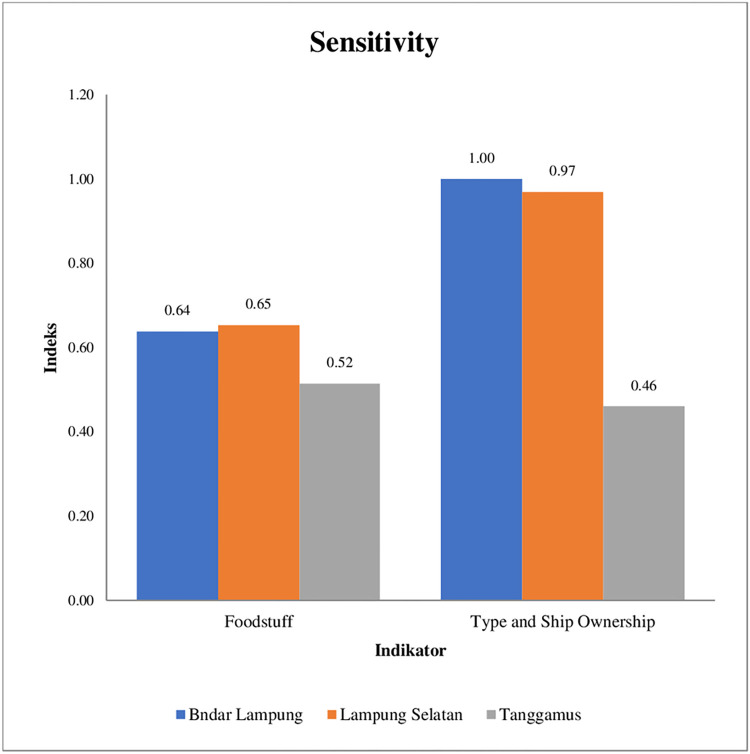
The livelihood of small-scale fishers is highly dependent on marine resources and coastal areas while the condition of marine waters is increasingly unpredictable due to seasonal uncertainty and extreme weather due to climate variability. This condition has a negative impact on fish catches and the income of small-scale fishermen. The study results were obtained through interviews with respondents using a structured questionnaire. Sampling was carried out using multistage random sampling based on the type and number of ships controlled (1 GT-5GT). The total sample of respondents interviewed was 166 fishing households, consisting of 36 respondents from Bandar Lampung City, 65 respondents from South Lampung Regency, and 65 respondents from Tanggamus Regency. Data was evaluated using three analysis methods, namely household income structure, indicators of income vulnerability, and adaptation mechanisms. Income structure and income vulnerability use a quantitative approach, while adaptation mechanisms use a qualitative approach. The results of this empirical study found that the source of income of traditional capture fisher households is from: fishing business (on the farm) averaged 82.22%, in Tanggamus Regency, the proportion reached 86.22%. The income vulnerability index of traditional capture fisher households (LVI-IPCC value) in Bandar Lampung City and South Lampung Regency is positive (0.39 and 0.36). The income vulnerability index of traditional fishermen in Tanggamus Regency is negative -0.29. Fishermen employ an adaptation mechanism that engaged the five fundamental facets of income capital, namely natural capital, human capital, physical capital, financial capital, and social capital.
小规模渔民的生计高度依赖海洋资源和沿海地区,而由于季节不确定性以及气候变化导致的极端天气,海水状况愈发难以预测。这种情况对渔获量和小规模渔民的收入产生了负面影响。研究结果是通过使用结构化问卷对受访者进行访谈获得的。抽样是基于所控制船舶的类型和数量(1总吨 - 5总吨)采用多阶段随机抽样进行的。接受访谈的受访者总样本为166个渔业家庭,其中包括来自楠榜市的36名受访者、来自楠榜摄政区南部的65名受访者以及来自坦加姆斯摄政区的65名受访者。数据使用三种分析方法进行评估,即家庭收入结构、收入脆弱性指标和适应机制。收入结构和收入脆弱性采用定量方法,而适应机制采用定性方法。这项实证研究的结果发现,传统捕捞渔业家庭的收入来源为:渔业经营(在渔场)平均占82.22%,在坦加姆斯摄政区,这一比例达到86.22%。楠榜市和楠榜摄政区南部传统捕捞渔业家庭的收入脆弱性指数(LVI - IPCC值)为正值(分别为0.39和0.36)。坦加姆斯摄政区传统渔民的收入脆弱性指数为负值 -0.29。渔民采用的适应机制涉及收入资本的五个基本方面,即自然资本、人力资本、物质资本、金融资本和社会资本。