Harrington Marcus O, Karapanagiotidis Theodoros, Phillips Lauryn, Smallwood Jonathan, Anderson Michael C, Cairney Scott A
Department of Psychology, University of York, York YO10 5DD, United Kingdom.
School of Psychology, University of East Anglia, Norwich NR4 7TJ, United Kingdom.
Proc Natl Acad Sci U S A. 2025 Jan 7;122(1):e2400743122. doi: 10.1073/pnas.2400743122. Epub 2024 Dec 31.
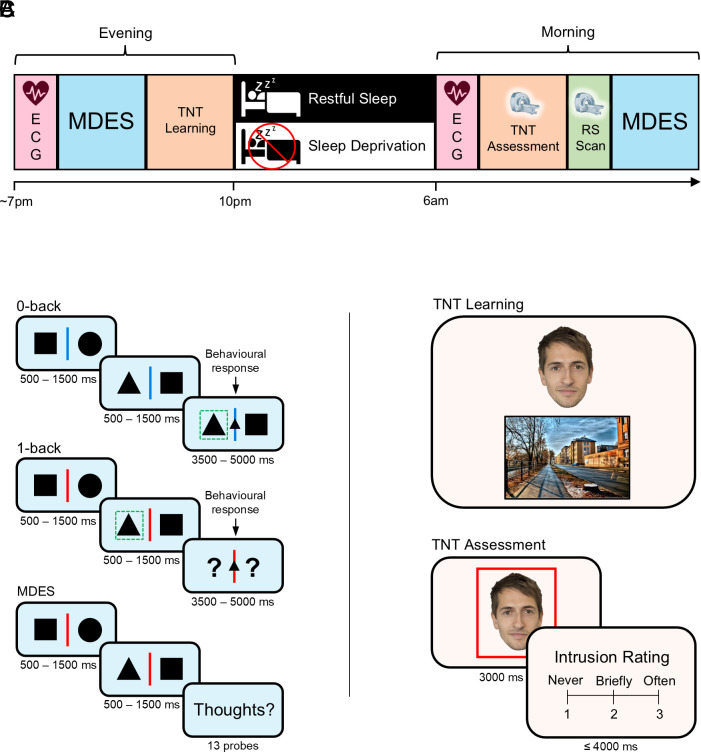
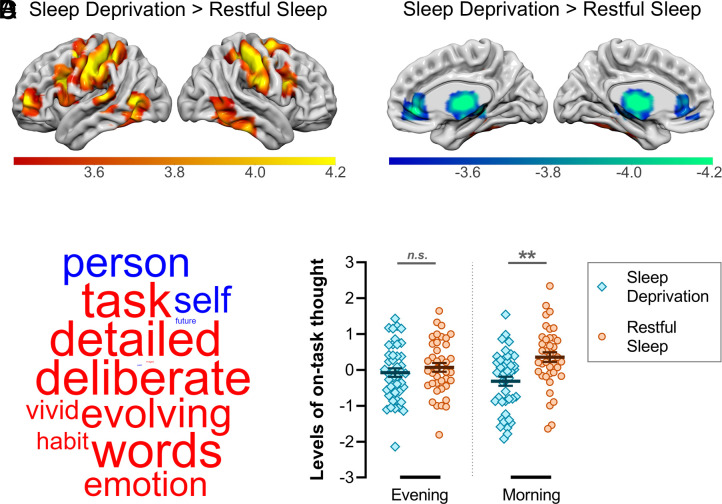
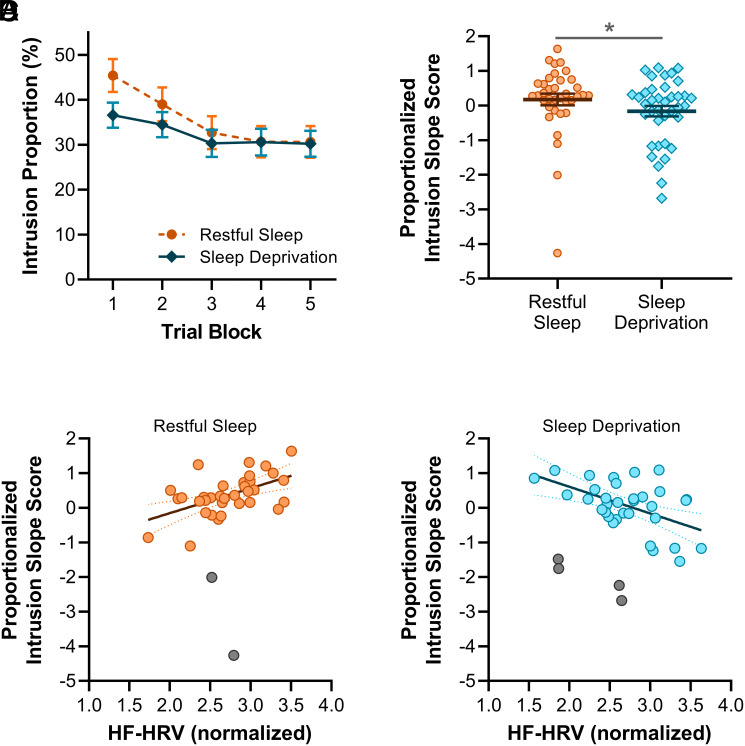
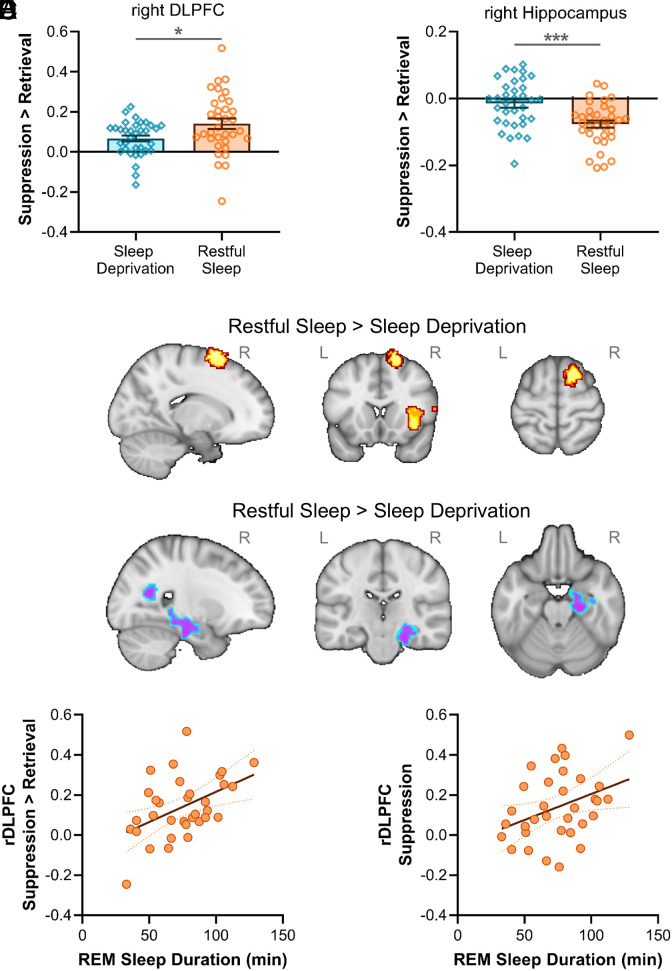
Sleep disturbances are associated with intrusive memories, but the neurocognitive mechanisms underpinning this relationship are poorly understood. Here, we show that sleep deprivation disrupts prefrontal inhibition of memory retrieval, and that the overnight restoration of this inhibitory mechanism is associated with time spent in rapid eye movement (REM) sleep. The functional impairments arising from sleep deprivation are linked to a behavioral deficit in the ability to downregulate unwanted memories, and coincide with a deterioration of deliberate patterns of self-generated thought. We conclude that sleep deprivation gives rise to intrusive memories via the disruption of neural circuits governing mnemonic inhibitory control, which may rely on REM sleep.
睡眠障碍与侵入性记忆有关,但这种关系背后的神经认知机制却鲜为人知。在这里,我们表明睡眠剥夺会破坏前额叶对记忆提取的抑制作用,并且这种抑制机制的夜间恢复与快速眼动(REM)睡眠所花费的时间有关。睡眠剥夺引起的功能损害与下调不必要记忆的能力的行为缺陷有关,并且与自发产生的思维的有意模式的恶化同时出现。我们得出结论,睡眠剥夺通过破坏控制记忆抑制控制的神经回路而产生侵入性记忆,这可能依赖于REM睡眠。