
富血小板血浆在踝关节疾病中的疗效:一项系统评价和荟萃分析。
The efficacy of platelet-rich plasma in ankle disease: a systematic review and meta-analysis.
作者信息
Ding Qixin, Wang Xu, Liu Yurong, Li Yuefang, Zhang Di, Wang Heling, Ma Shenhong, Han Qiaohua, Zhuang Weisheng
机构信息
School of Rehabilitation Medicine, Henan University of Chinese Medicine, Zhengzhou, China.
Hunan Normal University, Changshao, China.
出版信息
J Orthop Surg Res. 2024 Dec 31;19(1):895. doi: 10.1186/s13018-024-05420-5.
OBJECTIVE
Ankle osteoarthritis is a debilitating condition that significantly impairs patients' quality of life. Platelet-rich plasma has emerged as a novel cellular therapy in clinical practice. This study evaluates the clinical efficacy of platelet-rich plasma (PRP) after intervention in ankle disorders, so as to provide strong evidence in support of clinical treatment.
METHODS
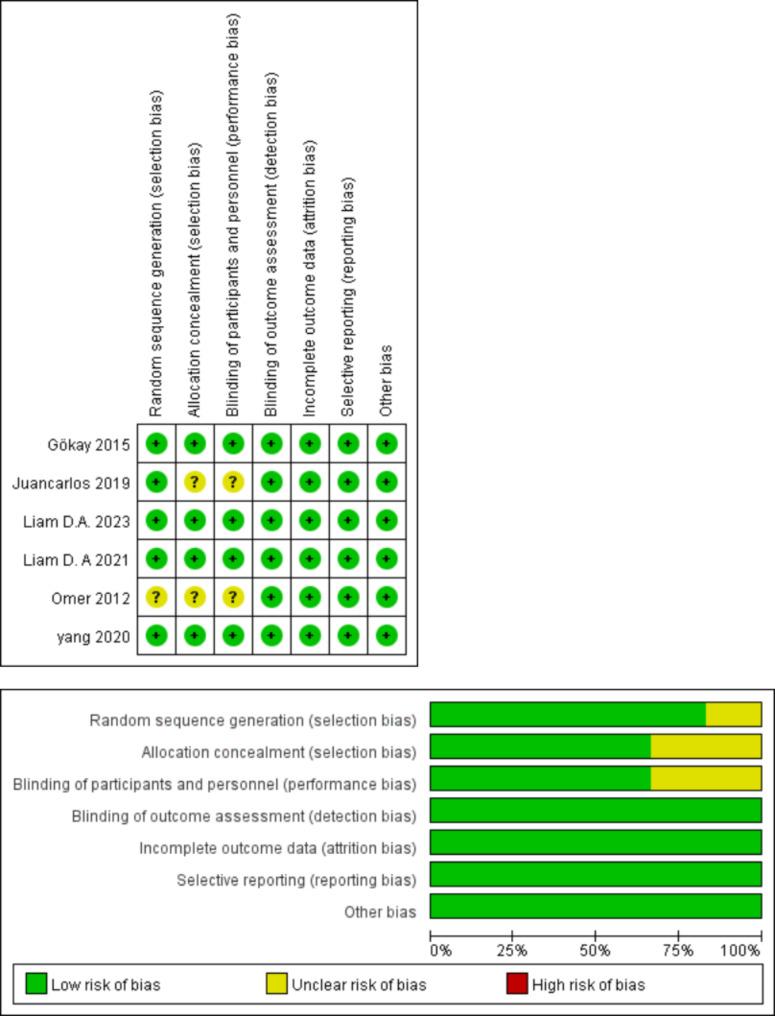
A comprehensive and systematic search of PubMed, the Cochrane Library, Embase and web of science databases was performed, and studies that met the requirements according to the inclusion criteria were analyzed using Review Manager and STATA version 14.0. Quality assessment was performed using the Cochrane Collaboration Risk of Bias 2.0 tool. The outcome indicators were the American Orthopaedic Foot and Ankle Society Rating Scale (AOFAS) and Visual Analog Scale (VAS) scores used to evaluate the efficacy of platelet-rich plasma.
RESULTS
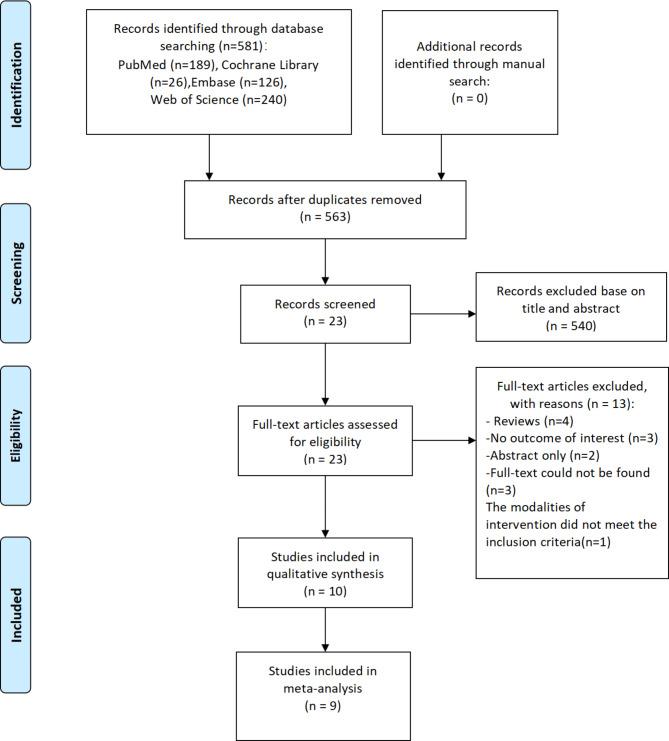
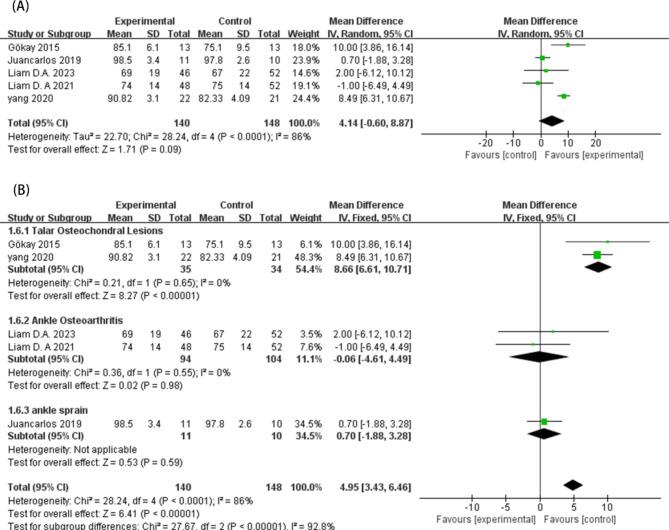
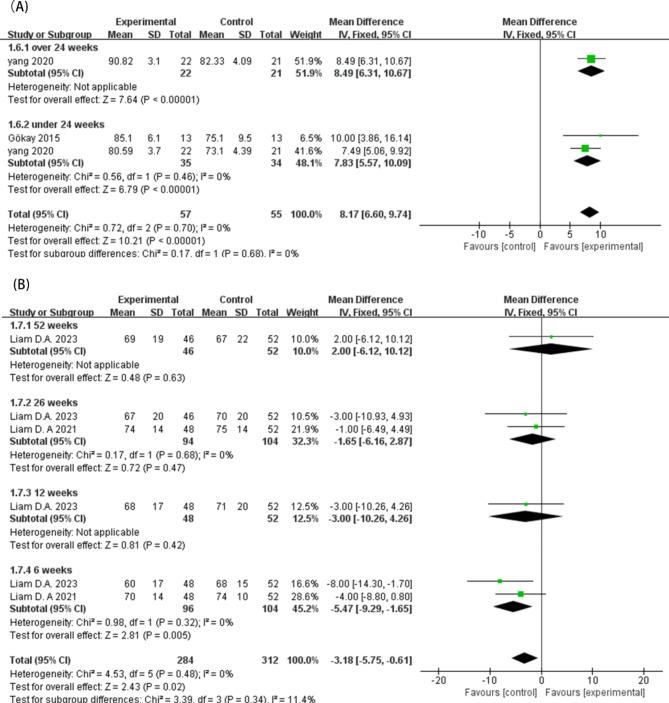
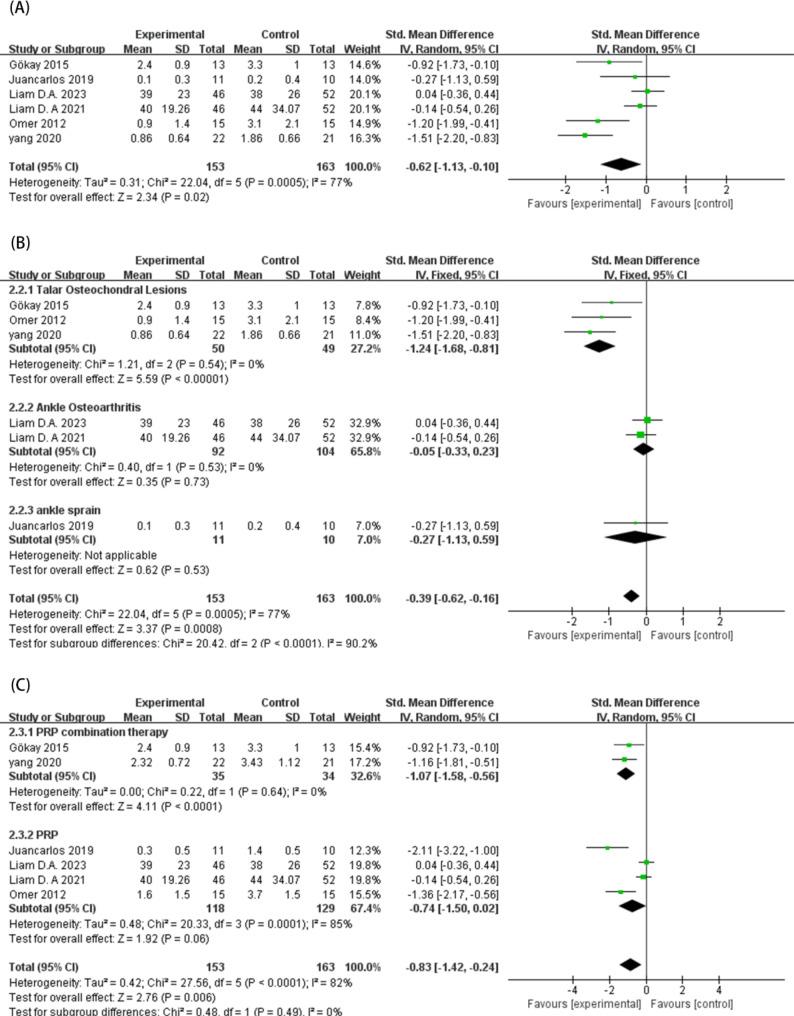
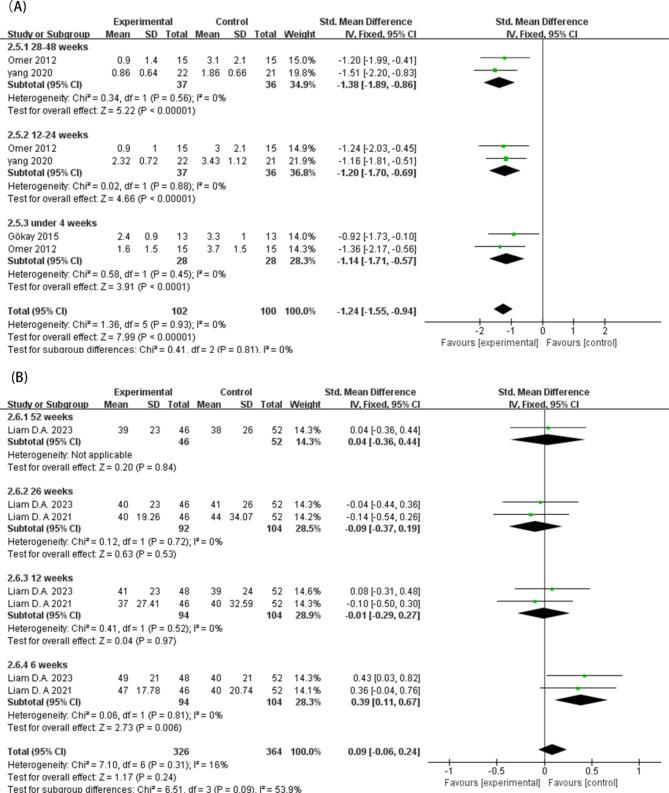
A total of 10 studies met the inclusion criteria. Regarding the AOFAS score, a meta-analysis that included five randomized controlled trials (each study extracted the score results at the last follow-up time) showed no statistically significant differences between the platelet-rich plasma intervention group and the control group, and there was a great deal of heterogeneity in the results, with subgroup analyses based on disease type. (Mean Difference = 4.14, 95% CI=-0.60-8.87, p = 0.09, I = 86%). Subgroup analysis showed a more significant effect in patients with talar cartilage injuries (Mean Difference = 8.66, 95%CI = 6.61-10.71, p < 0.00001, I = 0%). And the treatment effect of PRP remained effective in long-term follow-up (Mean Difference = 7.83, 95% CI = 5.57-10.09, p = 0.46, I = 0%). For VAS scores, PRP relieved patients' pain (Standardized Mean Difference=-0.62, 95%CI=-1.13-0.10, p = 0.02, I = 77%) but showed a greater advantage in patients with cartilage injuries of the talus (Standardized Mean Difference=-1.24, 95%CI=-1.68-0.81, p < 0.00001, I = 0%). Subgroup analyses according to different disease types and different follow-up times showed that PRP had significant efficacy in talar cartilage injuries in both the short and long term. A meta-analysis of single-arm studies showed that PRP was helpful in improving patients' pain before and after the intervention (Standardized Mean Difference = -1.76, 95% CI = -2.85 to -0.67, p = 0.002, I^2 = 87%).However, the high level of heterogeneity may be due to the large differences between the inclusion criteria of the single-arm studies.
CONCLUSION
More clinical studies are needed to further confirm the efficacy of platelet-rich plasma in ankle disorders, and the current study only suggests that platelet-rich plasma may be more effective in talus cartilage injuries than in other types of ankle disorders.
目的
踝关节骨关节炎是一种使人衰弱的疾病,会严重损害患者的生活质量。富血小板血浆已成为临床实践中的一种新型细胞治疗方法。本研究评估富血小板血浆(PRP)干预踝关节疾病后的临床疗效,以便为临床治疗提供有力证据。
方法
全面系统地检索了PubMed、Cochrane图书馆、Embase和科学网数据库,并使用Review Manager和STATA 14.0对符合纳入标准的研究进行分析。使用Cochrane协作偏倚风险2.0工具进行质量评估。结局指标为美国矫形足踝协会评分量表(AOFAS)和视觉模拟量表(VAS)评分,用于评估富血小板血浆的疗效。
结果
共有10项研究符合纳入标准。关于AOFAS评分,一项纳入五项随机对照试验的荟萃分析(每项研究提取最后随访时间的评分结果)显示,富血小板血浆干预组与对照组之间无统计学显著差异,且结果存在很大异质性,基于疾病类型进行了亚组分析。(平均差=4.14,95%CI=-0.60-8.87,p=0.09,I=86%)。亚组分析显示,距骨软骨损伤患者的效果更显著(平均差=8.66,95%CI=6.61-10.71,p<0.00001,I=0%)。并且PRP的治疗效果在长期随访中仍然有效(平均差=7.83,95%CI=5.57-10.09,p=0.46,I=0%)。对于VAS评分,PRP缓解了患者的疼痛(标准化平均差=-0.62,95%CI=-1.13-0.10,p=0.02,I=77%),但在距骨软骨损伤患者中显示出更大优势(标准化平均差=-1.24,95%CI=-1.68-0.81,p<0.00001,I=0%)。根据不同疾病类型和不同随访时间的亚组分析表明,PRP在距骨软骨损伤的短期和长期均具有显著疗效。一项单臂研究的荟萃分析表明,PRP有助于改善患者干预前后的疼痛(标准化平均差=-1.76,95%CI=-2.85至-0.67,p=0.002,I²=87%)。然而,高度异质性可能是由于单臂研究纳入标准之间的巨大差异。
结论
需要更多的临床研究来进一步证实富血小板血浆在踝关节疾病中的疗效,目前的研究仅表明富血小板血浆在距骨软骨损伤中可能比其他类型的踝关节疾病更有效。

 Zotero 插件