de Ramos Francieli Caroline, Barth Robson, Santos Marcos Rizzon, Almeida Milena Dos Santos, Ferreira Sandra Mara, Rafacho Alex, Boschero Antônio Carlos, Dos Santos Gustavo Jorge
Islet Biology and Metabolism Lab - IBM Lab, Department of Physiological Sciences, Center of Biological Sciences, Federal University of Santa Catarina - UFSC, Florianópolis, Santa Catarina, Brazil.
Laboratory of Investigation in Chronic Diseases - LIDoC, Department of Physiological Sciences, Center of Biological Sciences, Federal University of Santa Catarina - UFSC, Florianópolis, Santa Catarina, Brazil.
Front Endocrinol (Lausanne). 2024 Dec 17;15:1511813. doi: 10.3389/fendo.2024.1511813. eCollection 2024.
This study investigates the role of Hepatocyte Nuclear Factor 4α (HNF4α) in the adaptation of pancreatic β-cells to an HFD-induced obesogenic environment, focusing on β cell mass expansion and metabolic adaptations.
We utilized an HNF4α knockout (KO) mouse model, with CRE-recombinase enzyme activation confirmed through tamoxifen administration. KO and Control (CTL) mice were fed an HFD for 20 weeks. We monitored body weight, food intake, glucose tolerance, insulin sensitivity, and insulinemia. Also, to assess structural and metabolic changes, histological analyses of pancreatic islets and liver tissue were conducted.
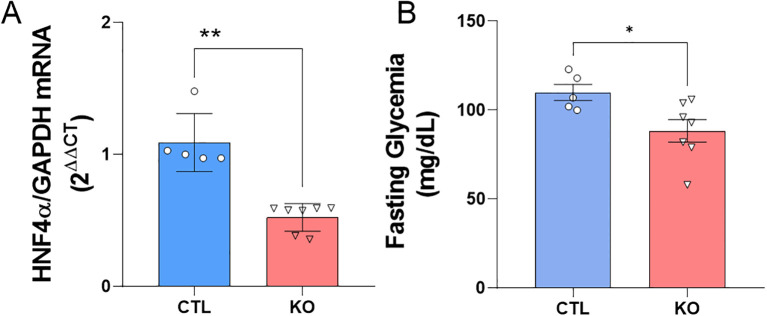
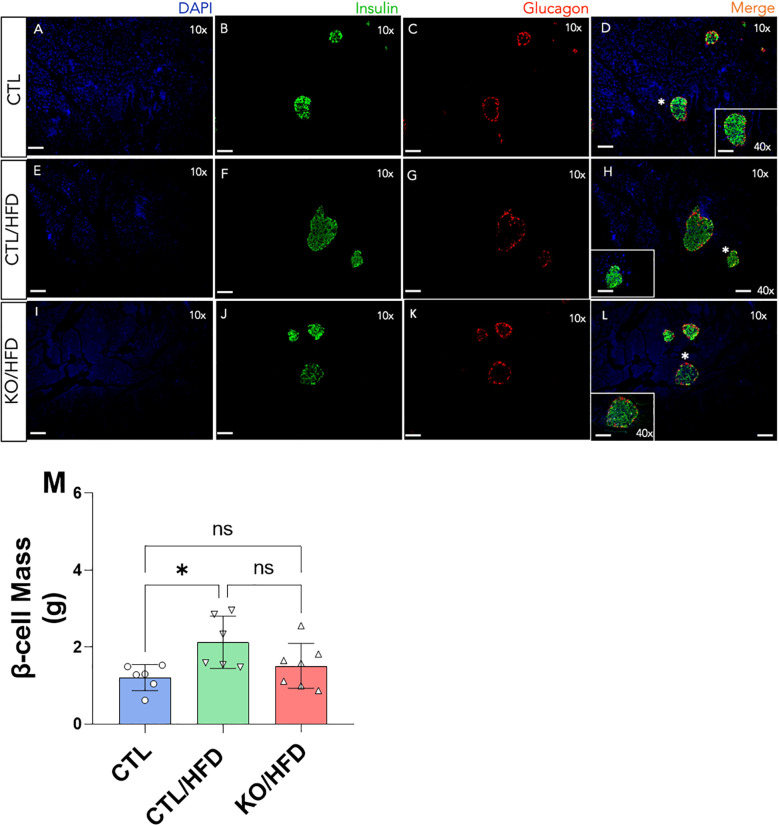
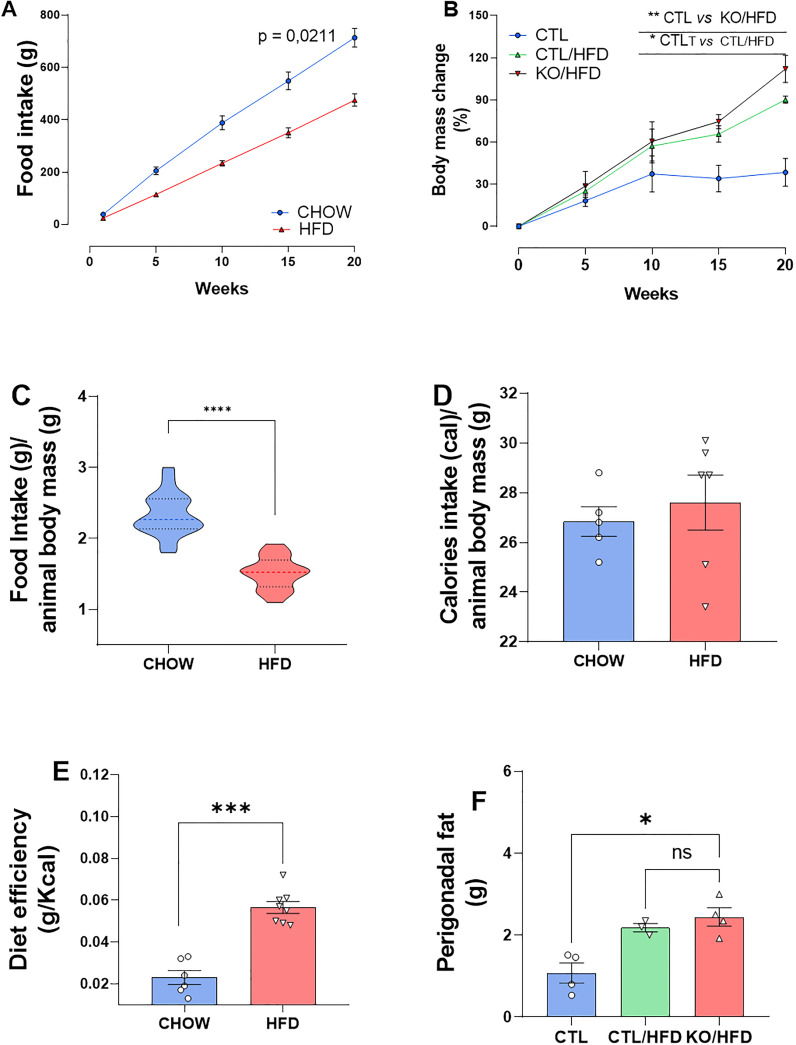
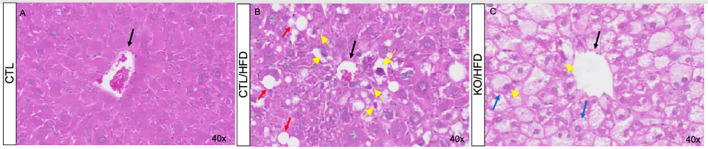
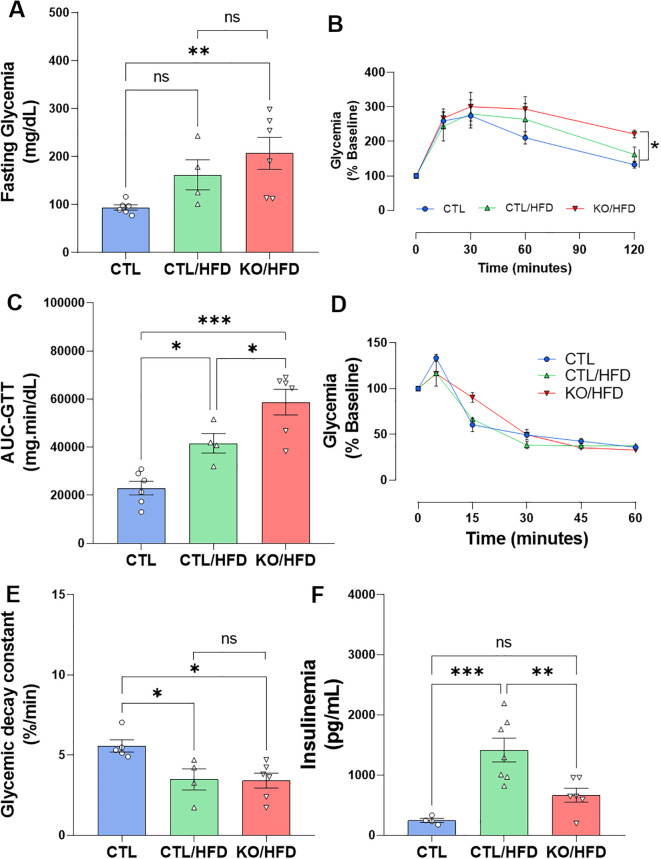
KO mice displayed lower fasting blood glucose levels compared to CTL mice after tamoxifen administration, indicating impaired glucose-regulated insulin secretion. HFD-fed KO mice consumed less food but exhibited greater weight gain and perigonadal fat accumulation, reflecting higher energy efficiency. Histological analysis revealed more pronounced liver steatosis and fibrosis in KO mice on HFD. Glucose intolerance and insulin resistance were exacerbated in KO mice, highlighting their inability to adapt to increased metabolic demand. Structural analysis showed that KO mice failed to exhibit HFD-induced β cell mass expansion, resulting in reduced islet diameter and number, confirming the critical role of HNF4α in β cell adaptation.
This study demonstrates that HNF4α is essential for the proper metabolic and structural adaptation of pancreatic β-cells in response to an obesogenic environment. The lack of HNF4α impairs β cell functionality, leading to increased susceptibility to glucose intolerance and insulin resistance. These findings underscore the importance of HNF4α in maintaining glucose homeostasis and highlight its potential as a therapeutic target for diabetes management in obesity.
本研究调查肝细胞核因子4α(HNF4α)在胰腺β细胞适应高脂饮食诱导的致肥胖环境中的作用,重点关注β细胞质量扩张和代谢适应。
我们利用HNF4α基因敲除(KO)小鼠模型,通过给予他莫昔芬确认CRE重组酶的激活。KO小鼠和对照(CTL)小鼠喂食高脂饮食20周。我们监测体重、食物摄入量、葡萄糖耐量、胰岛素敏感性和胰岛素血症。此外,为了评估结构和代谢变化,对胰岛和肝组织进行了组织学分析。
给予他莫昔芬后,KO小鼠的空腹血糖水平低于CTL小鼠,表明葡萄糖调节的胰岛素分泌受损。喂食高脂饮食的KO小鼠食物摄入量较少,但体重增加更多且性腺周围脂肪堆积更多,反映出更高的能量效率。组织学分析显示,高脂饮食的KO小鼠肝脏脂肪变性和纤维化更明显。KO小鼠的葡萄糖不耐受和胰岛素抵抗加剧,突出了它们无法适应增加的代谢需求。结构分析表明,KO小鼠未能表现出高脂饮食诱导的β细胞质量扩张,导致胰岛直径和数量减少,证实了HNF4α在β细胞适应中的关键作用。
本研究表明,HNF4α对于胰腺β细胞在致肥胖环境中进行适当的代谢和结构适应至关重要。缺乏HNF4α会损害β细胞功能,导致对葡萄糖不耐受和胰岛素抵抗的易感性增加。这些发现强调了HNF4α在维持葡萄糖稳态中的重要性,并突出了其作为肥胖症糖尿病管理治疗靶点的潜力。