Héron Robin, Safin Stéphane, Baker Michael, Zhang Zhuoming, Lecolinet Eric, Détienne Françoise
i3, UMR-9217 CNRS Télécom Paris, Institut Polytechnique de Paris, Palaiseau, France.
LTCI, Télécom Paris, Institut Polytechnique de Paris, Palaiseau, France.
Front Psychol. 2024 Dec 18;15:1497289. doi: 10.3389/fpsyg.2024.1497289. eCollection 2024.
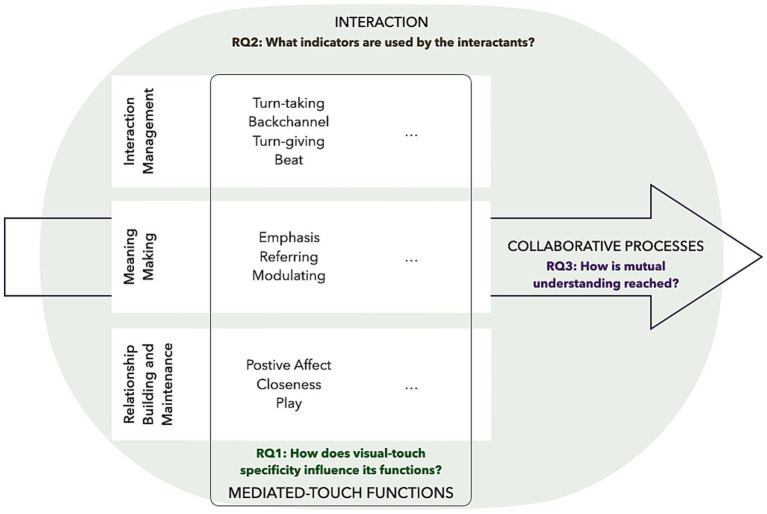
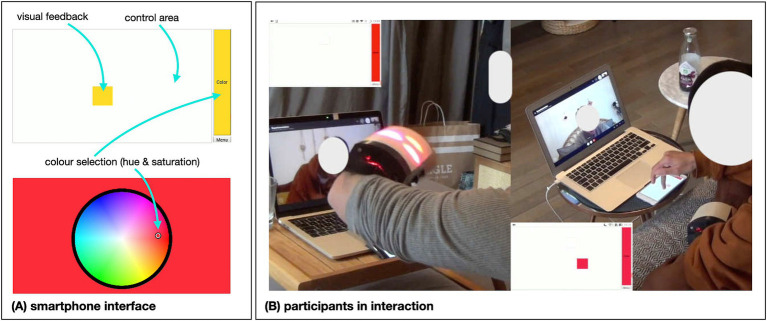
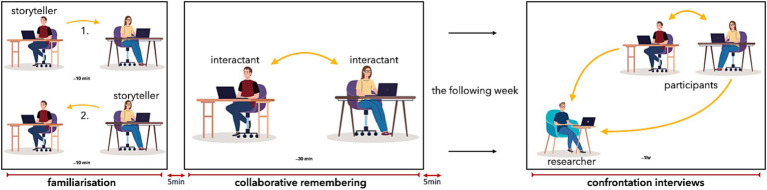
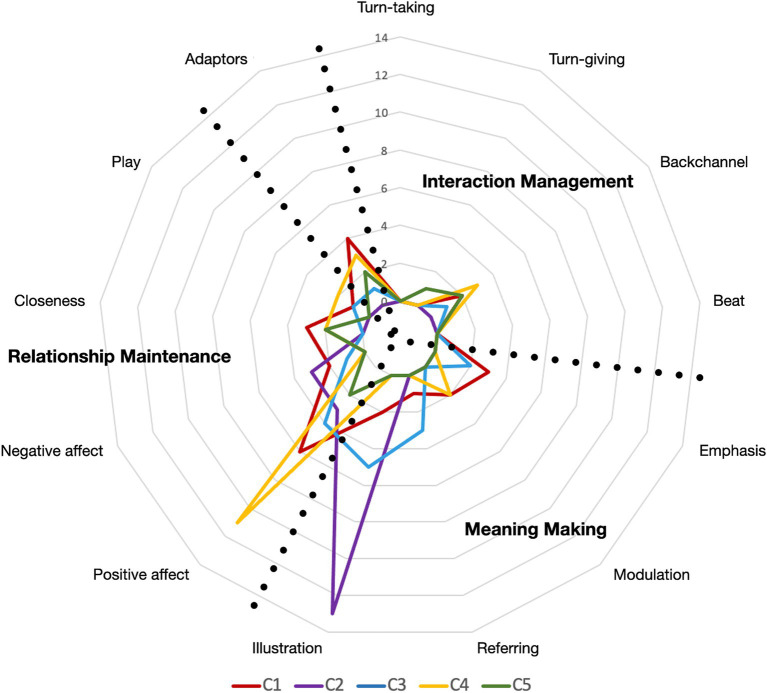
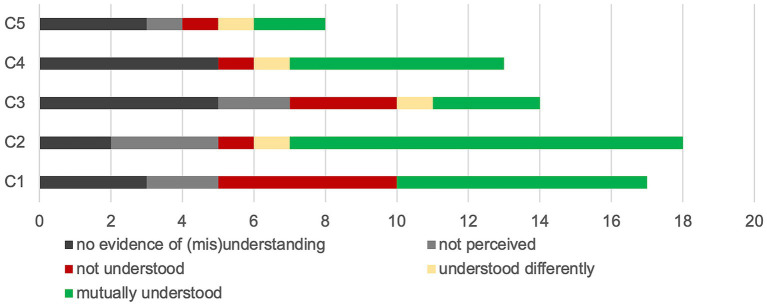
Touch is an inherent part of human social interactions and the diversity of its functions has been highlighted in numerous works. Given the varied roles of touch, with technology-mediated communication being a big part of our everyday lives, research has been interested in enabling and enhancing distant social interactions with mediated touch over networks. Due to the complexity of the sense of touch and technological limitations, multimodal devices have been developed and investigated. In this article, we explore the use of mediated visual touch in distant social interaction. Adopting an interactionist and collaborative approach to human communication, we focus on the communicative functions of distant touch behaviours which interactants co-elaborate throughout their mediated interactions. For this purpose, we conducted an exploratory study placing five romantically involved couples in interaction, where each discussed shared biographical events via a video call, using mediated touch devices (producing vibration and coloured lights). Their interactions were recorded, and excerpts were presented to participants in interviews using a collective confrontation technique (participants are confronted with a recording of their activity and encouraged to comment on it). This technique allows a better understanding of the participants' points of view on their use of the touch devices in context. Through analysis of the interviews, our results highlight: (1) a variety of visual-touch functions with a redistribution of functions mostly supported by other modalities of communication in face-to-face interactions, such as illustrating aspects of the ongoing conversation; (2) the visual-touch characteristics as well as the verbal, paraverbal and non-verbal indicators of the interactional context considered by the participants to make sense of the stimuli and; (3) the multifactorial and dynamic aspects of the co-elaboration process of the visual-touch functions, reaffirming the role of interactional context, combined with cultural and biographical knowledge, in the meaning making.
触摸是人类社交互动中固有的一部分,其功能的多样性在众多研究中得到了强调。鉴于触摸的作用多样,且技术介导的交流在我们日常生活中占据很大比重,研究人员一直致力于通过网络介导的触摸来实现和增强远程社交互动。由于触觉感知的复杂性和技术限制,人们已经开发并研究了多模态设备。在本文中,我们探讨了在远程社交互动中使用介导的视觉触摸。我们采用互动主义和协作的人类交流方法,关注远程触摸行为的交际功能,这些功能是互动者在整个介导互动过程中共同精心构建的。为此,我们进行了一项探索性研究,让五对恋爱中的情侣进行互动,他们通过视频通话讨论共同的生活经历,同时使用介导触摸设备(产生振动和彩色灯光)。他们的互动被记录下来,并通过集体对抗技术将片段呈现给参与者进行访谈(参与者面对自己活动的记录,并被鼓励对此发表评论)。这种技术有助于更好地理解参与者在实际使用触摸设备时的观点。通过对访谈的分析,我们的结果突出显示:(1)各种视觉触摸功能,其功能重新分配主要由面对面互动中的其他交流方式支持,例如说明正在进行的对话的各个方面;(2)视觉触摸特征以及参与者为理解刺激而考虑的互动情境中的言语、副言语和非言语指标;(3)视觉触摸功能共同构建过程的多因素和动态方面,重申了互动情境与文化和个人经历知识相结合在意义构建中的作用。