Wang Xinyi, Zhang Pan, Lin Dandan, Zhao Chunlei, Huang Zhifeng, Chen Ziqian, Li Hui, Xu Shangwen
Department of Radiology, Shengli Clinical Medical College of Fujian Medical University, Fujian Provincial Hospital, Fuzhou University Affiliated Provincial Hospital, Fuzhou, China.
Department of Diagnostic Radiology, Fuzong Clinical Medical College of Fujian Medical University, Fuzhou, Fujian, China.
Front Neurol. 2024 Dec 18;15:1444787. doi: 10.3389/fneur.2024.1444787. eCollection 2024.
This investigation aimed to elucidate alterations in metabolic brain network connectivity in drug-resistant mesial temporal lobe epilepsy (DR-MTLE) patients, relating these changes to varying surgical outcomes.
A retrospective cohort of 87 DR-MTLE patients who underwent selective amygdalohippocampectomy was analyzed. Patients were categorized based on Engel surgical outcome classification into seizure-free (SF) or non-seizure-free (NSF) groups. Additionally, 38 healthy individuals constituted a control group (HC). Employing effect size (ES) methodology, we constructed individualized metabolic brain networks and compared metabolic connectivity matrices across these groups using the DPABINet toolbox.
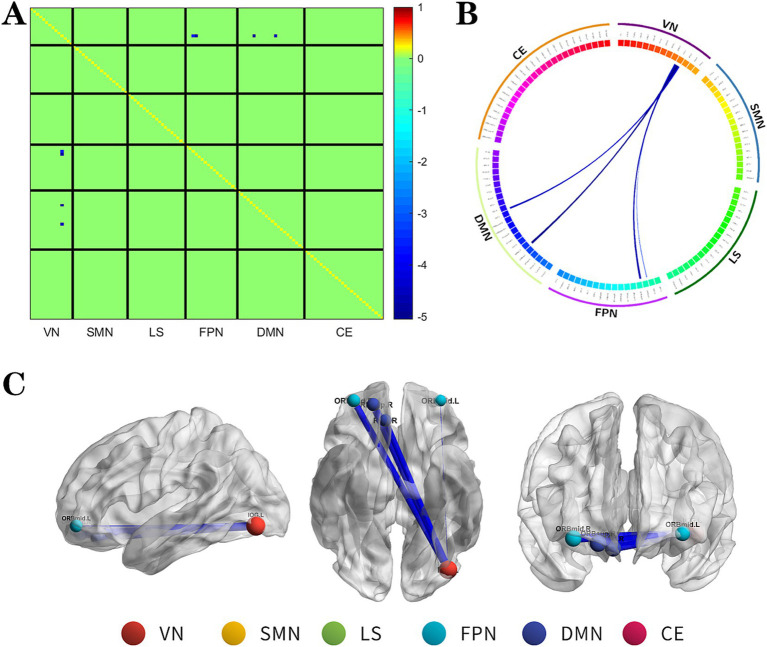
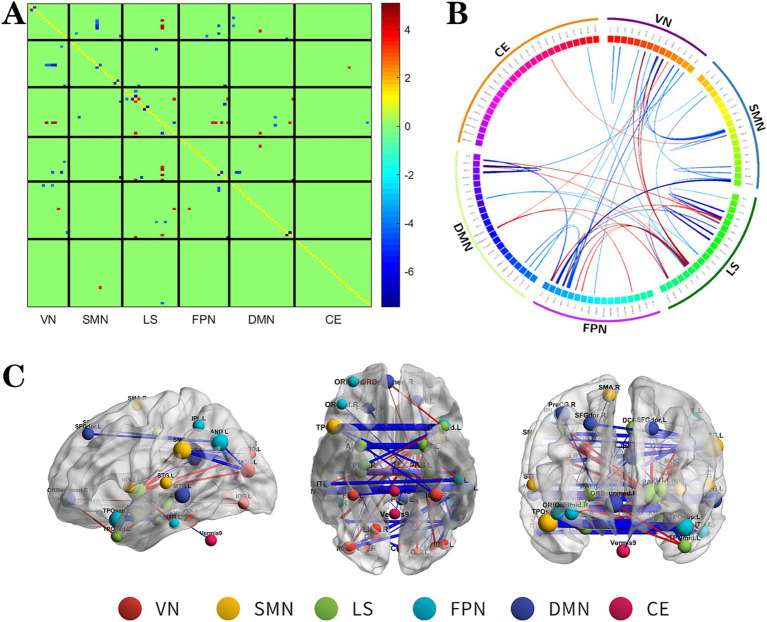
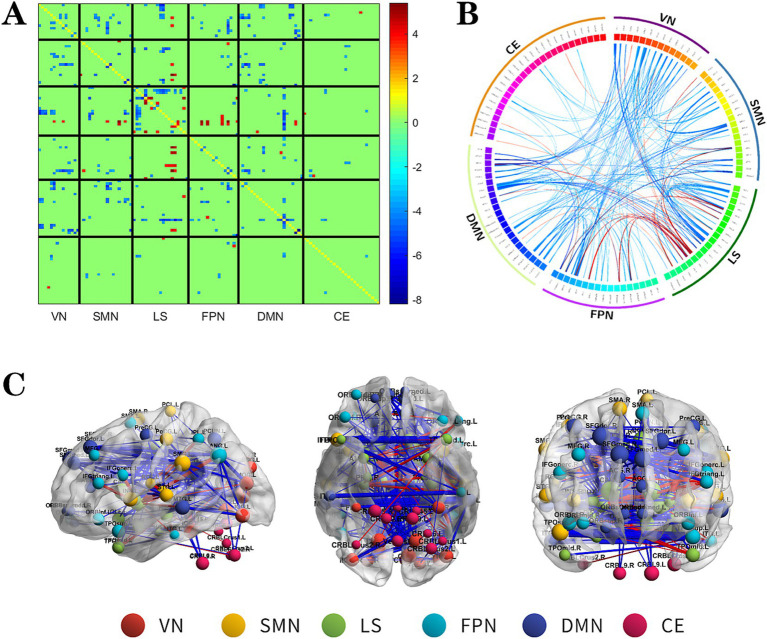
Compared to HCs, both SF and NSF groups exhibited diminished metabolic connectivity, with the NSF group showing pronounced reductions across the whole brain. Notably, the NSF group demonstrated weaker metabolic links between key networks, including the default mode network (DMN), frontoparietal network (FPN), and visual network (VN), in comparison to the SF group.
Individual metabolic brain networks, constructed via ES methodology, revealed significant disruptions in DR-MTLE patients, predominantly in the NSF group. These alterations, particularly between limbic structures and cognitive networks like the DMN, suggested impaired and inefficient information processing across the brain's networks. This study identified abnormal brain networks associated with DR-MTLE and, importantly, contributed novel insights into the mechanisms underlying poor postoperative seizure control, and offered potential implications for refining preoperative assessments.
本研究旨在阐明耐药性内侧颞叶癫痫(DR-MTLE)患者代谢性脑网络连接的改变,并将这些变化与不同的手术结果相关联。
分析了一组87例接受选择性杏仁核海马切除术的DR-MTLE患者的回顾性队列。根据恩格尔手术结果分类将患者分为无癫痫发作(SF)组或非无癫痫发作(NSF)组。此外,38名健康个体组成对照组(HC)。采用效应量(ES)方法,我们构建了个体化的代谢性脑网络,并使用DPABINet工具箱比较了这些组之间的代谢连接矩阵。
与HC相比,SF组和NSF组的代谢连接均降低,NSF组在全脑范围内显示出明显降低。值得注意的是,与SF组相比,NSF组在包括默认模式网络(DMN)、额顶网络(FPN)和视觉网络(VN)在内的关键网络之间表现出较弱的代谢联系。
通过ES方法构建的个体代谢性脑网络显示DR-MTLE患者存在显著破坏,主要在NSF组。这些改变,特别是在边缘结构和认知网络(如DMN)之间,表明大脑网络中信息处理受损且效率低下。本研究确定了与DR-MTLE相关的异常脑网络,重要的是,为术后癫痫控制不佳的潜在机制提供了新见解,并为完善术前评估提供了潜在意义。