Shin Jiha, Lim Jihoon, Han Daewon, Lee Solji, Sung Nak Song, Kim Jong-Seok, Kim Do Kyung, Lee Hoi Young, Lee Sung Ki, Shin Jongdae, Kim Jeong Sig, Park Hwan-Woo
Department of Cell Biology, Konyang University College of Medicine, Daejeon 35365, Republic of Korea.
Department of Surgery, Konyang University Hospital, Daejeon 35365, Republic of Korea.
Int J Biol Sci. 2025 Jan 1;21(1):143-159. doi: 10.7150/ijbs.100212. eCollection 2025.
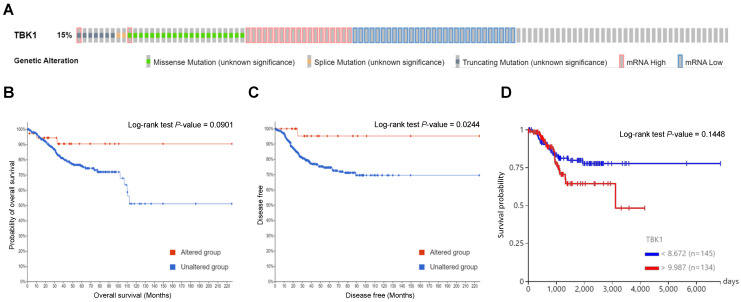
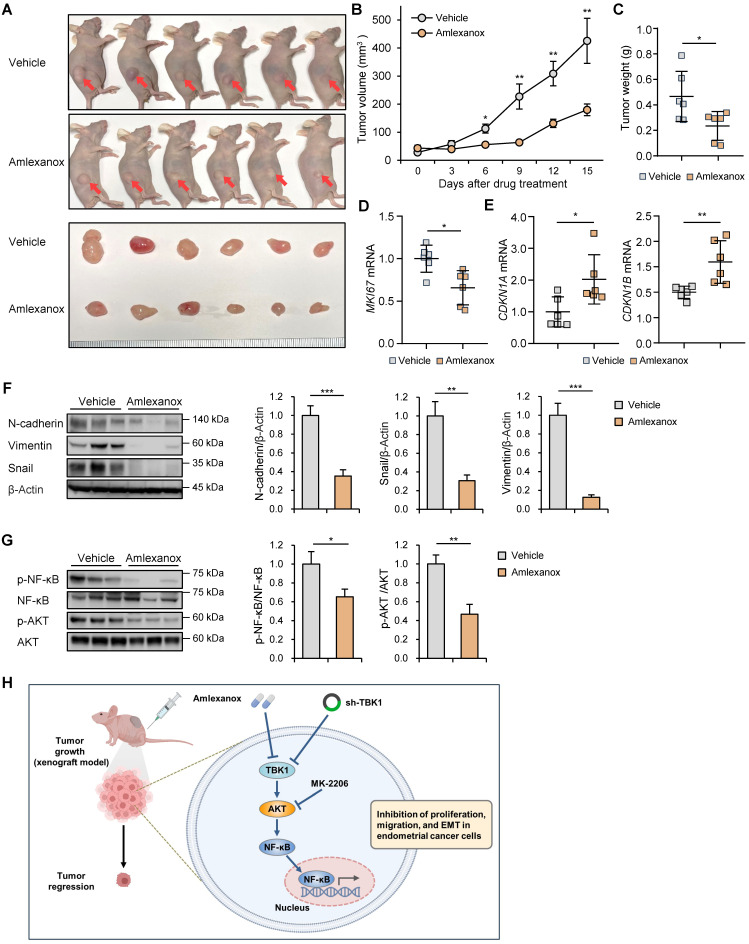
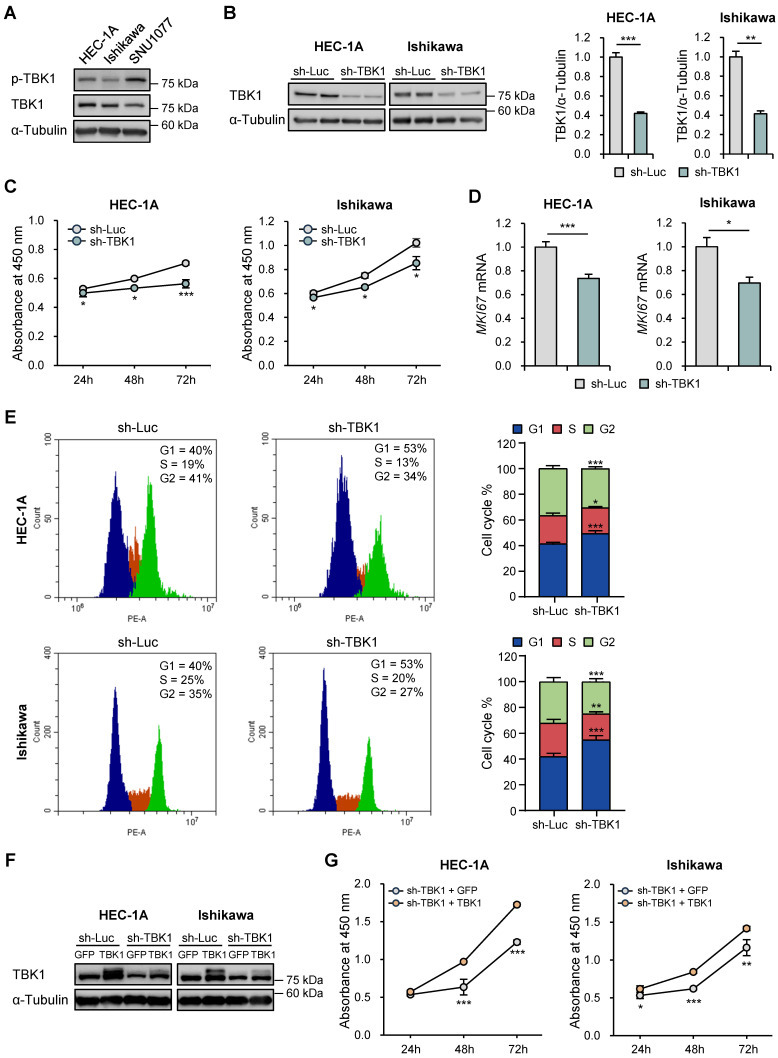
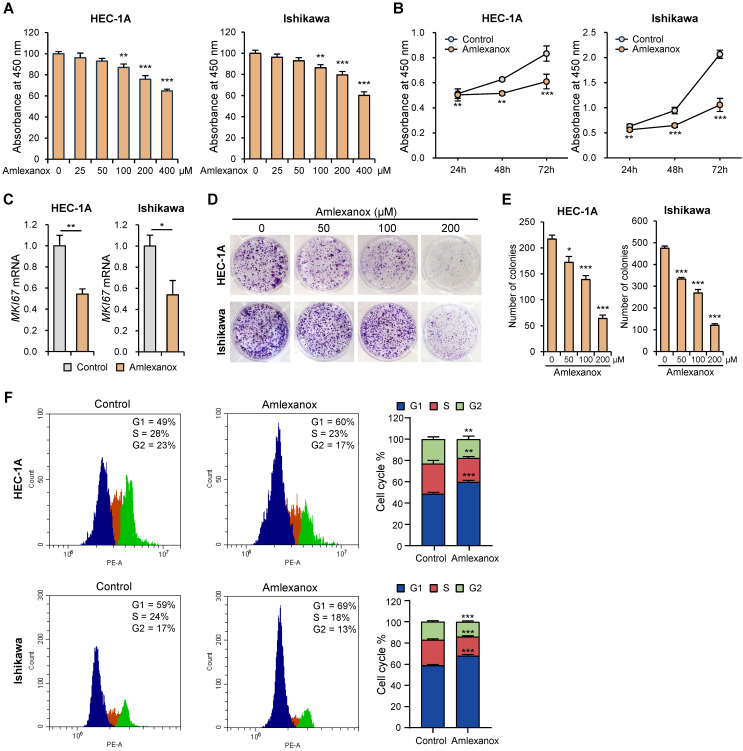
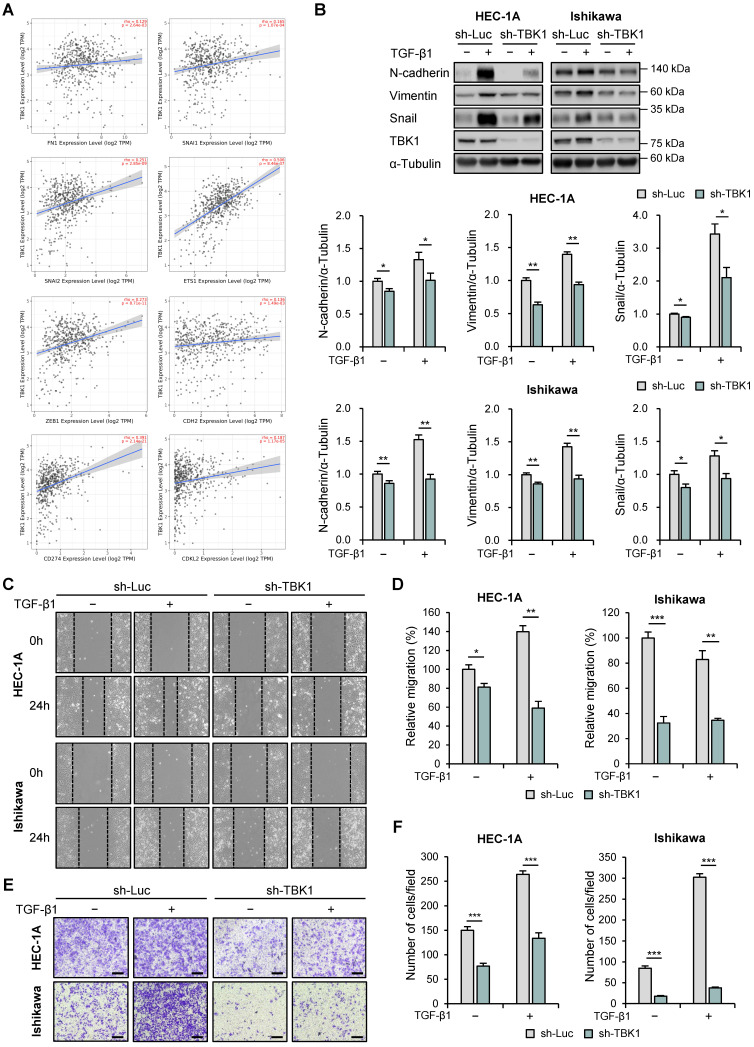
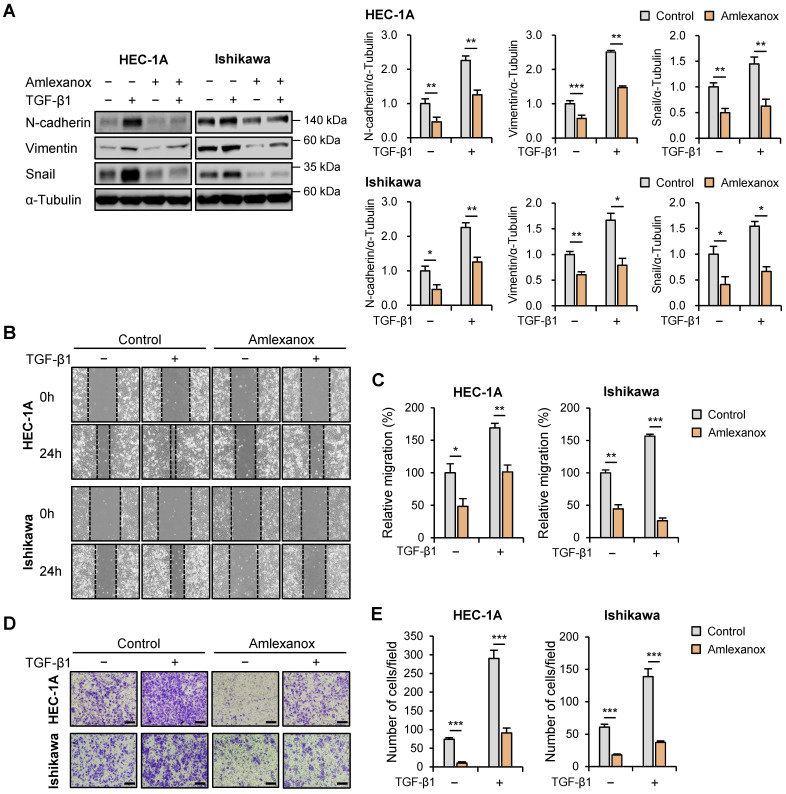
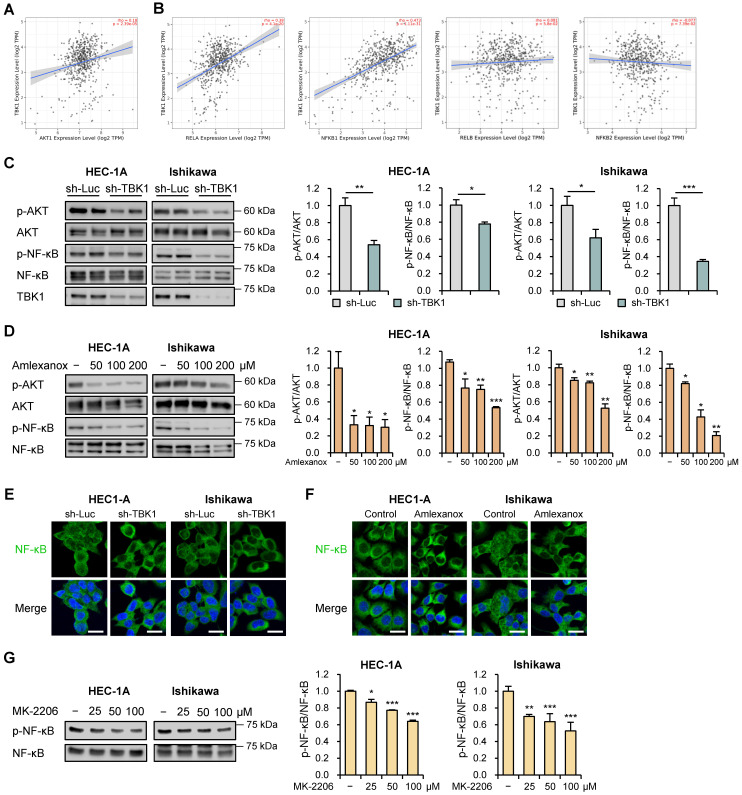
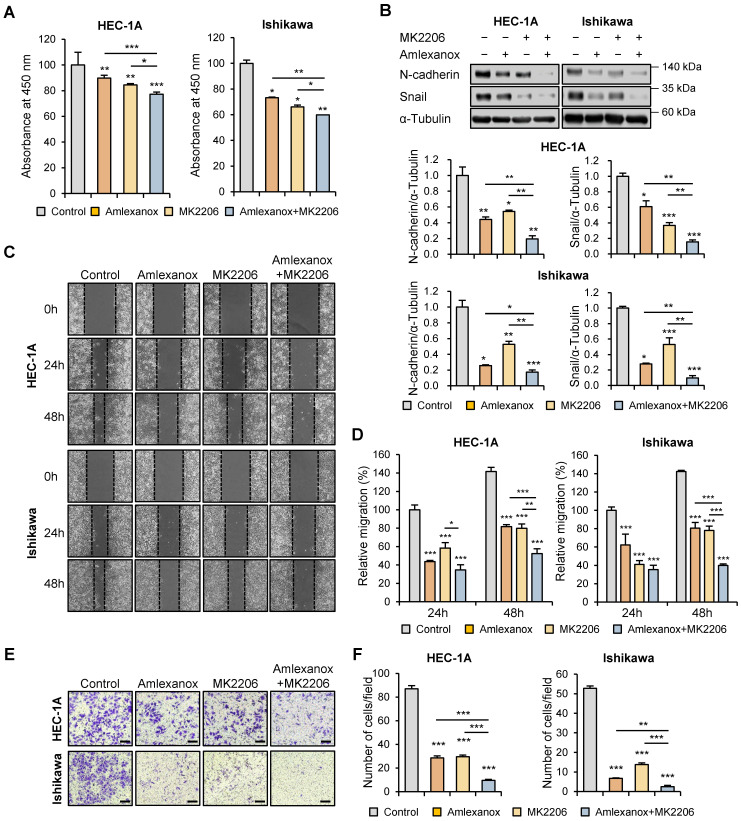
Endometrial cancer, a common gynecological malignancy, poses significant clinical challenges, particularly in advanced or recurrent cases. TANK-binding kinase 1 (TBK1), a serine/threonine kinase, plays crucial roles in inflammation and immunity by activating nuclear factor (NF)-κB and interferon regulatory factor 3. However, its specific roles in endometrial cancer remain unknown. In this study, we aimed to investigate the anti-cancer effects and underlying mechanisms of amlexanox, a TBK1 inhibitor, against endometrial cancer. The main genetic mutations in TBK1 were found to be mRNA downregulation and missense mutations. Kaplan-Meier plotter analysis revealed that low TBK1 expression was associated with a good prognosis in patients with uterine corpus endometrial carcinoma (UCEC). experiments demonstrated that knockdown or amlexanox significantly inhibited the proliferation, cell cycle progression, and migration of endometrial cancer cells. Furthermore, the inhibitory effects of targeting TBK1 on cancer cell proliferation and migration were mediated by the protein kinase B (AKT)/NF-κB signaling pathway. Xenograft experiments revealed that both amlexanox treatment and knockdown effectively suppressed the tumor growth. Overall, this study highlights the potent anti-cancer effects of amlexanox against endometrial cancer by modulating AKT/NF-κB signaling, thus providing a new avenue for the development of novel TBK1-targeting therapeutic strategies for UCEC.
子宫内膜癌是一种常见的妇科恶性肿瘤,带来了重大的临床挑战,尤其是在晚期或复发病例中。TANK结合激酶1(TBK1)是一种丝氨酸/苏氨酸激酶,通过激活核因子(NF)-κB和干扰素调节因子3在炎症和免疫中发挥关键作用。然而,其在子宫内膜癌中的具体作用仍不清楚。在本研究中,我们旨在探究TBK1抑制剂氨来呫诺对子宫内膜癌的抗癌作用及潜在机制。发现TBK1的主要基因突变是mRNA下调和错义突变。Kaplan-Meier生存曲线分析显示,子宫体子宫内膜癌(UCEC)患者中TBK1低表达与良好预后相关。实验表明,敲低或氨来呫诺显著抑制子宫内膜癌细胞的增殖、细胞周期进程和迁移。此外,靶向TBK1对癌细胞增殖和迁移的抑制作用是由蛋白激酶B(AKT)/NF-κB信号通路介导的。异种移植实验显示,氨来呫诺治疗和敲低均有效抑制肿瘤生长。总体而言,本研究强调了氨来呫诺通过调节AKT/NF-κB信号通路对子宫内膜癌具有强大的抗癌作用,从而为开发针对UCEC的新型TBK1靶向治疗策略提供了新途径。