Farahmand Ghasem, Behkar Atefeh, Hashemi Hassan, Ghajarzadeh Mahsa, Raminfard Samira, Shahbazi Mojtaba, Sarraf Payam
Iranian Center of Neurological Research, Neuroscience Institute, Tehran University of Medical Sciences, Tehran, Iran.
Occupational Sleep Research Center, Baharloo Hospital, Tehran University of Medical Sciences, Tehran, Iran.
Curr J Neurol. 2024 Apr 3;23(2):89-95. doi: 10.18502/cjn.v23i2.16837.
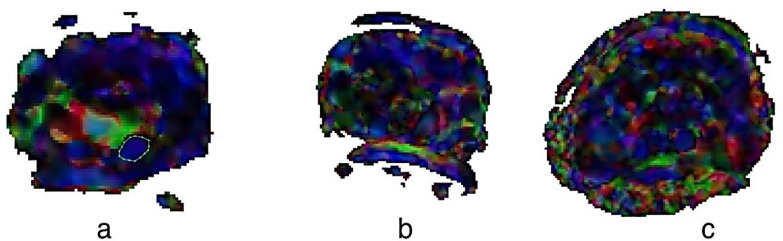
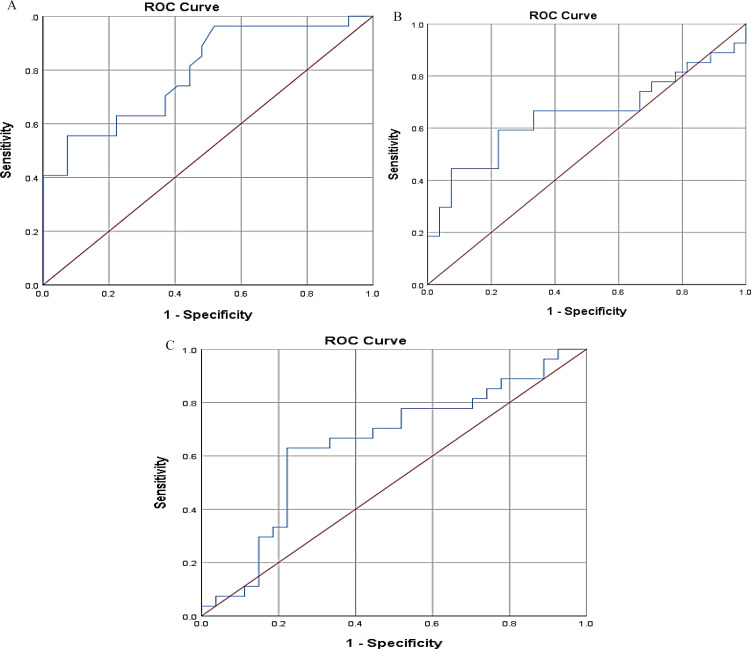
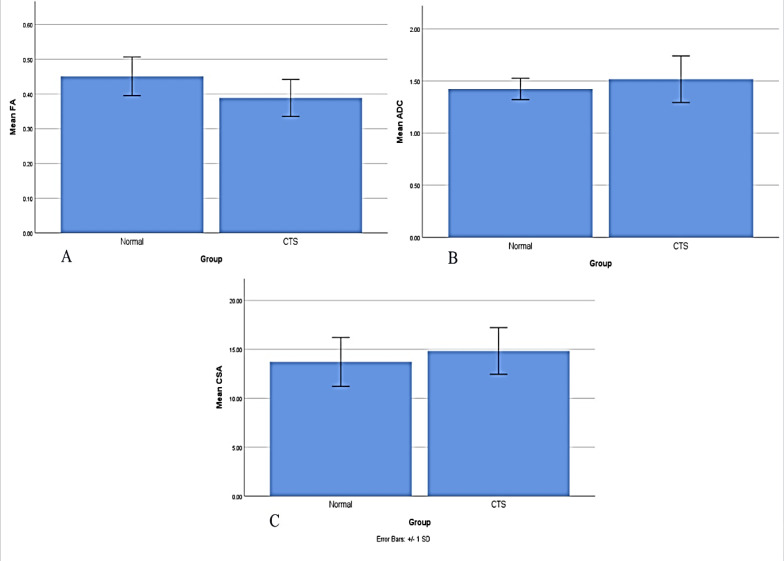
Carpal tunnel syndrome (CTS) is a common peripheral nerve entrapment disorder that is diagnosed using clinical signs and symptoms and confirmed via nerve conduction studies (NCSs). While NCS is a semi-invasive procedure, magnetic resonance imaging (MRI) is a non-invasive diagnostic tool that detects macroscopic nerve abnormalities and evaluates a patient's surgical or medication treatment options. This study assessed magnetic resonance neurography (MRN)'s diagnostic and grading value by comparing it to electrodiagnostic studies in patients with CTS and healthy individuals. This was a cross-sectional study on 27 wrists with CTS and 27 healthy wrists. After history taking and physical examination, we employed an NCS to confirm and determine the severity of CTS, then MRN and diffusion tensor imaging (DTI) were used to calculate apparent diffusion coefficient (ADC), fractional anisotropy (FA), and cross-sectional area (CSA). 18 patients with CTS (27 median nerves) and 15 healthy controls (27 median nerves) were evaluated. The mean FA in the CTS group was significantly lower (0.38 ± 0.05 vs. 0.45 ± 0.06, P < 0.001). The mean CSA and ADC were higher in patients with CTS but not statistically significant. FA's diagnostic cut-off was 0.42, with a sensitivity of 70.4% and a specificity of 63%. MRN with DTI can be an effective and non-invasive diagnostic technique for the detection of CTS. The FA measure demonstrated adequate sensitivity and specificity for differentiating patients with CTS from healthy individuals.
腕管综合征(CTS)是一种常见的周围神经卡压性疾病,通过临床症状和体征进行诊断,并通过神经传导研究(NCS)加以证实。虽然NCS是一种半侵入性检查,但磁共振成像(MRI)是一种非侵入性诊断工具,可检测宏观神经异常并评估患者的手术或药物治疗方案。本研究通过将磁共振神经造影(MRN)与CTS患者及健康个体的电诊断研究进行比较,评估了MRN的诊断和分级价值。这是一项针对27例CTS手腕和27例健康手腕的横断面研究。在进行病史采集和体格检查后,我们采用NCS来确认并确定CTS的严重程度,然后使用MRN和扩散张量成像(DTI)来计算表观扩散系数(ADC)、各向异性分数(FA)和横截面积(CSA)。对18例CTS患者(27条正中神经)和15例健康对照者(27条正中神经)进行了评估。CTS组的平均FA显著较低(0.38±0.05对0.45±0.06,P<0.001)。CTS患者的平均CSA和ADC较高,但无统计学意义。FA的诊断临界值为0.42,灵敏度为70.4%,特异性为63%。联合DTI的MRN可以成为检测CTS的一种有效且非侵入性的诊断技术。FA测量在区分CTS患者和健康个体方面显示出足够的灵敏度和特异性。