Zhu Danqing, Kim Won Joon, Lee Hyunjin, Bao Xiaoping, Kim Pilnam
Department of Chemical and Biological Engineering, School of Engineering, The Hong Kong University of Science and Technology (HKUST), Kowloon, Hong Kong SAR, 999077, China.
State Key Laboratory of Molecular Neuroscience, The Hong Kong University of Science and Technology (HKUST), Kowloon, Hong Kong SAR, 999077, China.
Adv Mater. 2025 Jun;37(23):e2414882. doi: 10.1002/adma.202414882. Epub 2025 Jan 2.
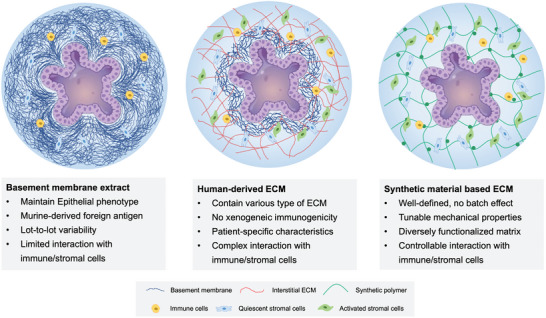
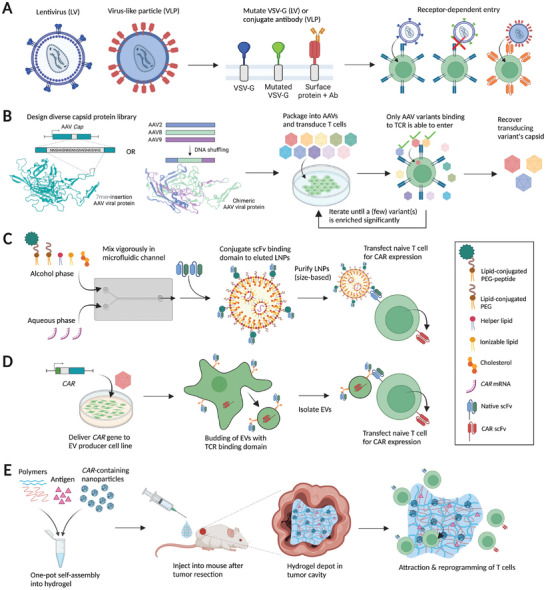
Cancer immunotherapy, specifically Chimeric Antigen Receptor (CAR)-T cell therapy, represents a significant breakthrough in treating cancers. Despite its success in hematological cancers, CAR-T exhibits limited efficacy in solid tumors, which account for more than 90% of all cancers. Solid tumors commonly present unique challenges, including antigen heterogeneity and complex tumor microenvironment (TME). To address these, efforts are being made through improvements in CAR design and the development of advanced validation platforms. While efficacy is limited, some solid tumor types, such as neuroblastoma and gastrointestinal cancers, have shown responsiveness to CAR-T therapy in recent clinical trials. In this review, it is first examined both experimental and computational strategies, such as protein engineering coupled with machine learning, developed to enhance T cell specificity. The challenges and methods associated with T cell delivery and in vivo reprogramming in solid tumors is discussed. It is also explored the advancements in engineered organoid systems, which are emerging as high-fidelity in vitro models that closely mimic the complex human TME and serve as a validation platform for CAR discovery. Collectively, these innovative engineering strategies offer the potential to revolutionize the next generation of CAR-T therapy, ultimately paving the way for more effective treatments in solid tumors.
癌症免疫疗法,特别是嵌合抗原受体(CAR)-T细胞疗法,是癌症治疗领域的一项重大突破。尽管CAR-T细胞疗法在血液系统癌症治疗中取得了成功,但在实体瘤治疗中疗效有限,而实体瘤占所有癌症的90%以上。实体瘤通常带来独特的挑战,包括抗原异质性和复杂的肿瘤微环境(TME)。为解决这些问题,人们正在通过改进CAR设计和开发先进的验证平台来努力。尽管疗效有限,但在最近的临床试验中,一些实体瘤类型,如神经母细胞瘤和胃肠道癌症,已显示出对CAR-T细胞疗法有反应。在本综述中,首先研究了为增强T细胞特异性而开发的实验和计算策略,如结合机器学习的蛋白质工程。讨论了实体瘤中T细胞递送和体内重编程相关的挑战和方法。还探讨了工程化类器官系统的进展,该系统正成为高度逼真的体外模型,可紧密模拟复杂的人类肿瘤微环境,并作为CAR发现的验证平台。总体而言,这些创新的工程策略有可能彻底改变下一代CAR-T细胞疗法,最终为实体瘤更有效的治疗铺平道路。