Stanley Center for Psychiatric Research, Broad Institute of MIT and Harvard, Cambridge, MA, USA.
Department of Systems and Computer Engineering, Faculty of Engineering, Al-Azhar University, Cairo, Egypt.
Nat Commun. 2024 Aug 4;15(1):6602. doi: 10.1038/s41467-024-50555-y.
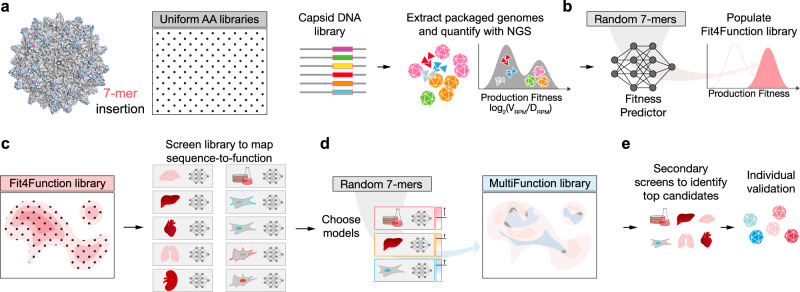
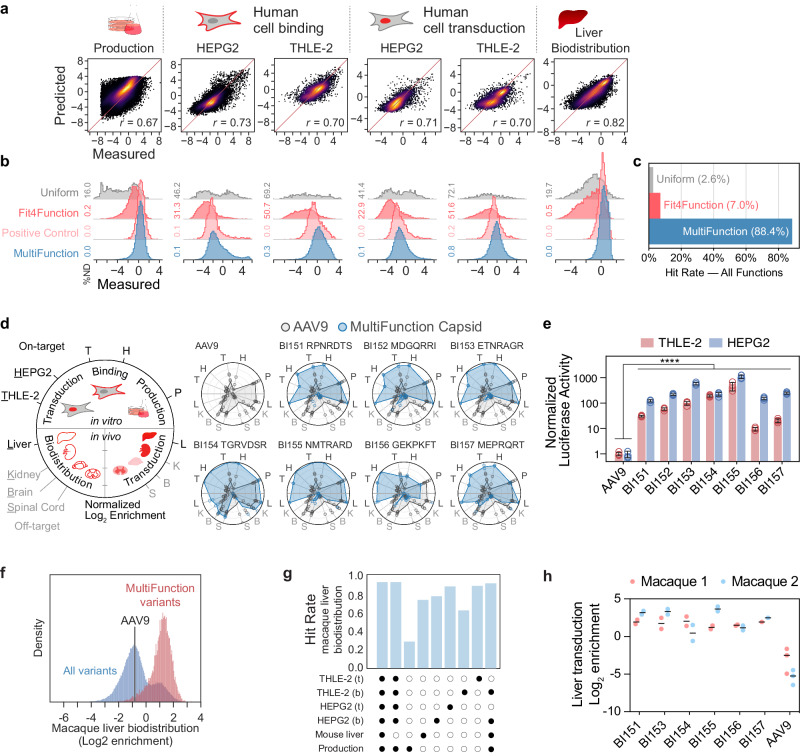
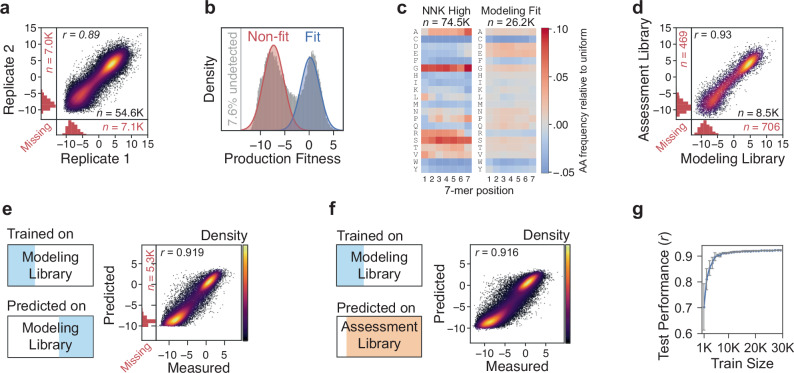
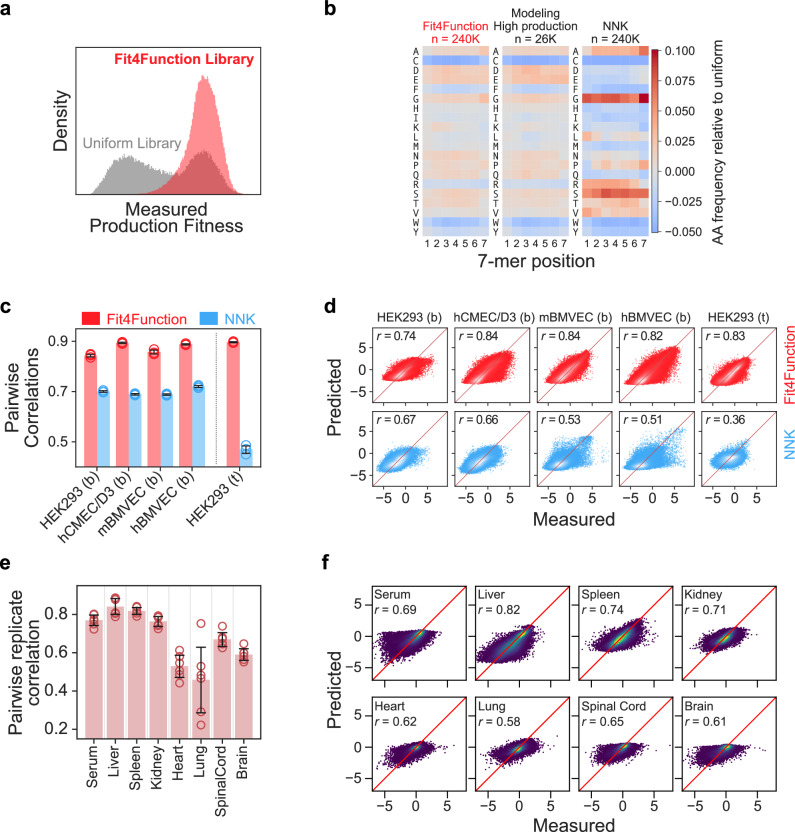
Broadening gene therapy applications requires manufacturable vectors that efficiently transduce target cells in humans and preclinical models. Conventional selections of adeno-associated virus (AAV) capsid libraries are inefficient at searching the vast sequence space for the small fraction of vectors possessing multiple traits essential for clinical translation. Here, we present Fit4Function, a generalizable machine learning (ML) approach for systematically engineering multi-trait AAV capsids. By leveraging a capsid library that uniformly samples the manufacturable sequence space, reproducible screening data are generated to train accurate sequence-to-function models. Combining six models, we designed a multi-trait (liver-targeted, manufacturable) capsid library and validated 88% of library variants on all six predetermined criteria. Furthermore, the models, trained only on mouse in vivo and human in vitro Fit4Function data, accurately predicted AAV capsid variant biodistribution in macaque. Top candidates exhibited production yields comparable to AAV9, efficient murine liver transduction, up to 1000-fold greater human hepatocyte transduction, and increased enrichment relative to AAV9 in a screen for liver transduction in macaques. The Fit4Function strategy ultimately makes it possible to predict cross-species traits of peptide-modified AAV capsids and is a critical step toward assembling an ML atlas that predicts AAV capsid performance across dozens of traits.
拓宽基因治疗的应用范围需要能够制造的载体,以有效地将目标细胞转导到人类和临床前模型中。传统的腺相关病毒(AAV)衣壳文库的选择在搜索具有多个对临床转化至关重要的特性的载体的小部分中效率低下。在这里,我们提出了 Fit4Function,这是一种可推广的机器学习(ML)方法,用于系统地工程多特性 AAV 衣壳。通过利用均匀采样可制造序列空间的衣壳文库,可生成可重复的筛选数据来训练准确的序列到功能模型。通过结合六个模型,我们设计了一个多特性(靶向肝脏、可制造)的衣壳文库,并验证了文库中 88%的变体都符合所有六个预定标准。此外,这些模型仅在小鼠体内和人源体外 Fit4Function 数据上进行训练,就能够准确预测 AAV 衣壳变体在猕猴中的生物分布。候选的顶尖变体在猕猴肝脏转导筛选中表现出与 AAV9 相当的生产产量、高效的小鼠肝脏转导、高达 1000 倍的人肝细胞转导、以及相对于 AAV9 的富集度增加。Fit4Function 策略最终使得预测经过肽修饰的 AAV 衣壳的跨物种特性成为可能,并且是朝着构建能够预测 AAV 衣壳在数十个特性方面性能的 ML 图谱迈出的关键一步。