Gulyaeva Anastasia, Liu Lei, Garmaeva Sanzhima, Kruk Marloes, Weersma Rinse K, Harmsen Hermie J M, Zhernakova Alexandra
Department of Genetics, University Medical Center Groningen, Groningen, the Netherlands.
Department of Medical Microbiology, University Medical Center Groningen, Groningen, the Netherlands.
Microbiol Spectr. 2025 Feb 4;13(2):e0106624. doi: 10.1128/spectrum.01066-24. Epub 2024 Dec 31.
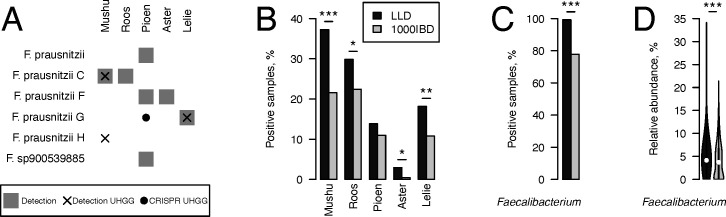
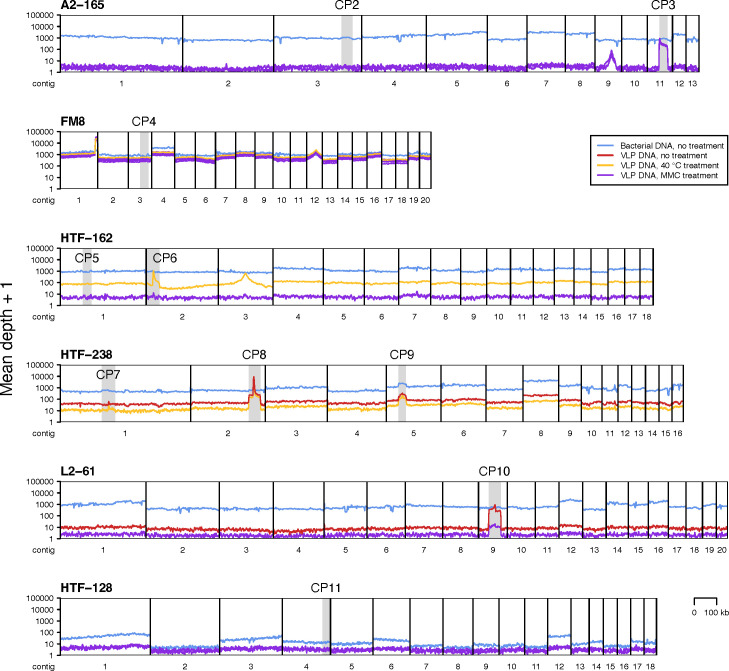
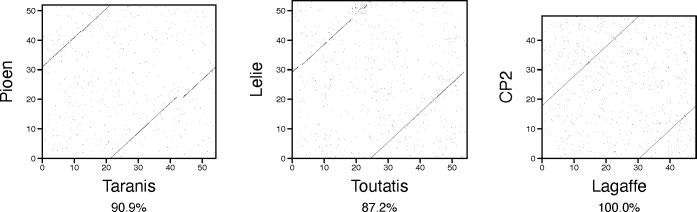
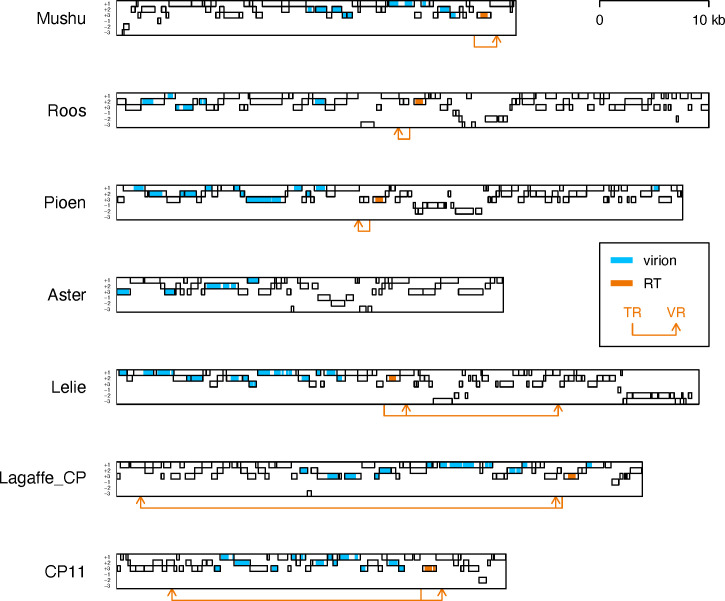
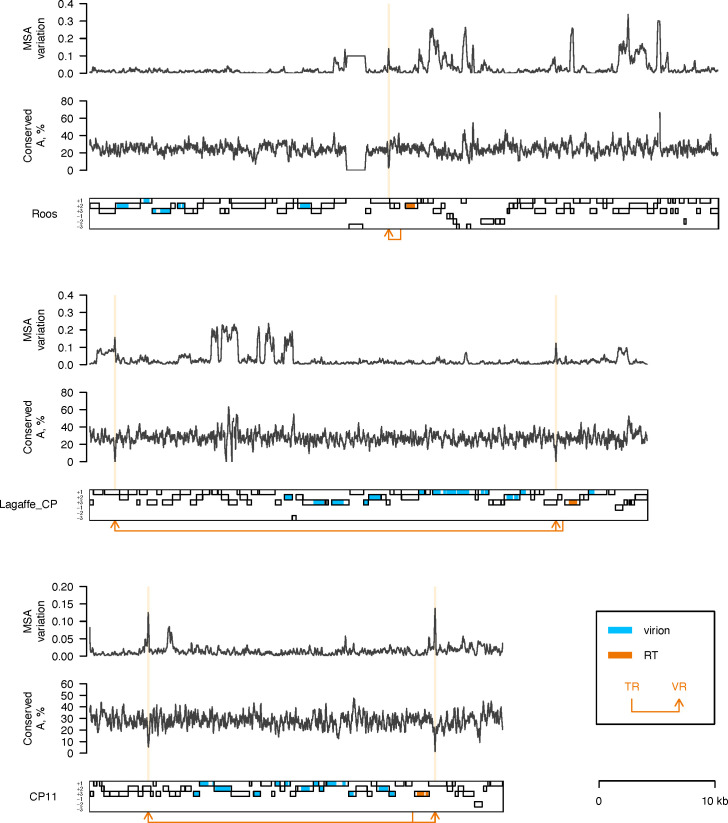
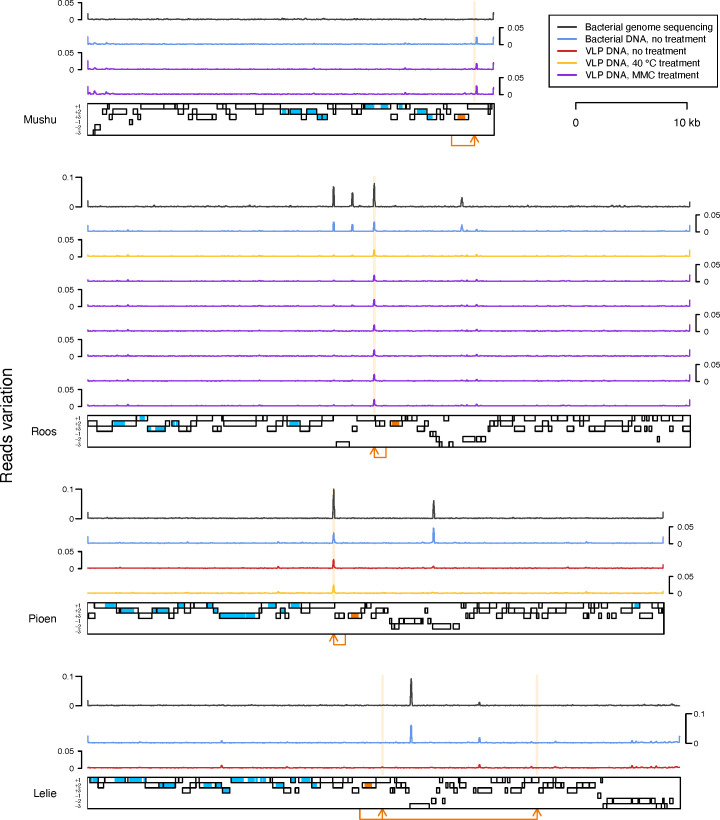
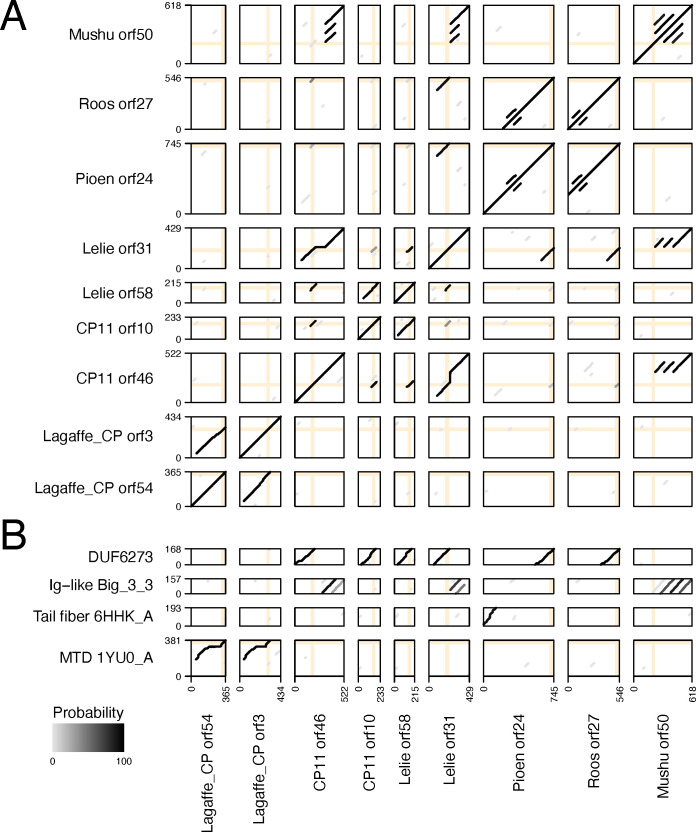
Metagenomics has revealed the incredible diversity of phages within the human gut. However, very few of these phages have been subjected to in-depth experimental characterization. One promising method of obtaining novel phages for experimental characterization is through induction of the prophages integrated into the genomes of cultured gut bacteria. Here, we developed a bioinformatic approach to prophage identification that builds on prophage genomic properties, existing prophage-detecting software, and publicly available virome sequencing data. We applied our approach to 22 strains of bacteria belonging to the genus , resulting in identification of 15 candidate prophages, and validated the approach by demonstrating the activity of five prophages from four of the strains. The genomes of three active phages were identical or similar to those of known phages, while the other two active phages were not represented in the Viral RefSeq database. Four of the active phages possessed a diversity-generating retroelement (DGR), and one retroelement had two variable regions. DGRs of two phages were active at the time of the induction experiments, as evidenced by nucleotide variation in sequencing reads. We also predicted that the host range of two active phages may include multiple bacterial species. Finally, we noted that four phages were less prevalent in the metagenomes of inflammatory bowel disease patients compared to a general population cohort, a difference mainly explained by differences in the abundance of the host bacteria. Our study highlights the utility of prophage identification and induction for unraveling phage molecular mechanisms and ecological interactions.IMPORTANCEWhile hundreds of thousands of phage genomes have been discovered in metagenomics studies, only a few of these phages have been characterized experimentally. Here, we explore phage characterization through bioinformatic identification of prophages in genomes of cultured bacteria, followed by prophage induction. Using this approach, we detect the activity of five prophages in four strains of commensal gut bacteria . We further note that four of the prophages possess diversity-generating retroelements implicated in rapid mutation of phage genome loci associated with phage-host and phage-environment interactions and analyze the intricate patterns of retroelement activity. Our study highlights the potential of prophage characterization for elucidating complex molecular mechanisms employed by the phages.
宏基因组学揭示了人类肠道中噬菌体令人难以置信的多样性。然而,这些噬菌体中很少有经过深入实验表征的。一种获得用于实验表征的新型噬菌体的有前景的方法是通过诱导整合到培养的肠道细菌基因组中的原噬菌体。在这里,我们基于原噬菌体基因组特性、现有的原噬菌体检测软件和公开可用的病毒组测序数据,开发了一种用于原噬菌体鉴定的生物信息学方法。我们将我们的方法应用于属于该属的22株细菌,鉴定出15个候选原噬菌体,并通过证明来自四株菌株的五个原噬菌体的活性来验证该方法。三个活性噬菌体的基因组与已知噬菌体的基因组相同或相似,而其他两个活性噬菌体在病毒参考序列数据库中未出现。四个活性噬菌体拥有一个多样化生成反转录元件(DGR),并且一个反转录元件有两个可变区。诱导实验时,两个噬菌体的DGR是活跃的,测序读数中的核苷酸变异证明了这一点。我们还预测两个活性噬菌体的宿主范围可能包括多个细菌物种。最后,我们注意到与普通人群队列相比,四种噬菌体在炎症性肠病患者的宏基因组中不太常见,这种差异主要由宿主细菌丰度的差异解释。我们的研究强调了原噬菌体鉴定和诱导在揭示噬菌体分子机制和生态相互作用方面的实用性。
重要性
虽然在宏基因组学研究中已经发现了数十万噬菌体基因组,但其中只有少数噬菌体经过了实验表征。在这里,我们通过对培养细菌基因组中的原噬菌体进行生物信息学鉴定,然后进行原噬菌体诱导来探索噬菌体表征。使用这种方法,我们检测到四株共生肠道细菌中五个原噬菌体的活性。我们进一步注意到,其中四个原噬菌体拥有多样化生成反转录元件,这些元件与噬菌体基因组位点的快速突变有关,而这些位点与噬菌体 - 宿主和噬菌体 - 环境相互作用有关,并分析了反转录元件活性的复杂模式。我们的研究强调了原噬菌体表征在阐明噬菌体所采用的复杂分子机制方面的潜力。