Li Jicheng, Zhang Kai, Pang Xingru, Huang Lele, Tian Xiaoxue, Liu Jiangyan
Department of Nuclear Medicine, Lanzhou University Second Hospital, Lanzhou, 730030, China.
Second Clinical School, Lanzhou University, Lanzhou, 730030, China.
EJNMMI Phys. 2025 Jan 2;12(1):1. doi: 10.1186/s40658-024-00709-0.
The aim of the study was to investigate the value of SwiftScan Step-and-Shoot Continuous (SSC) scanning mode in enhancing image quality and to explore appropriate scanning parameters for reducing scan time.
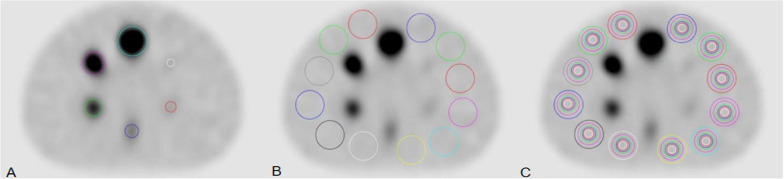
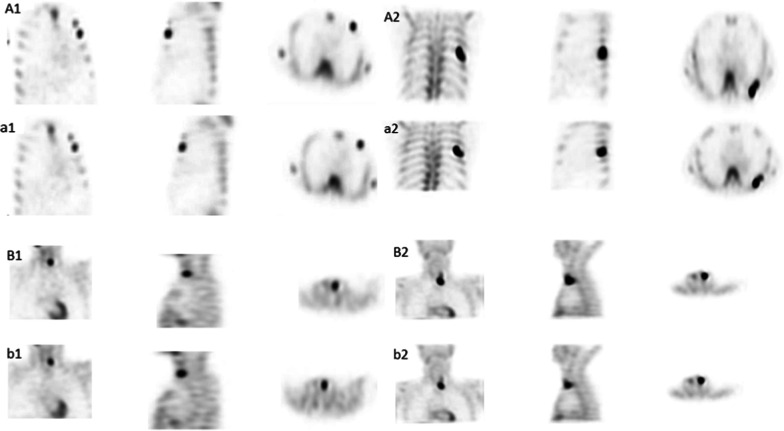
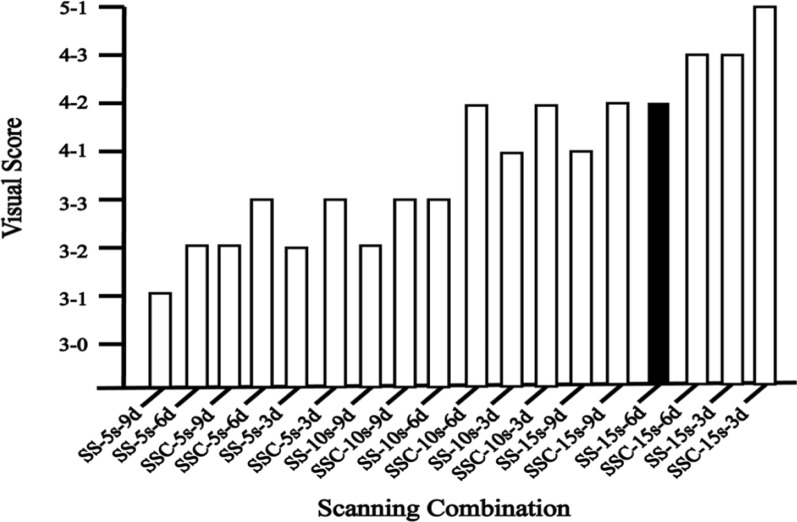
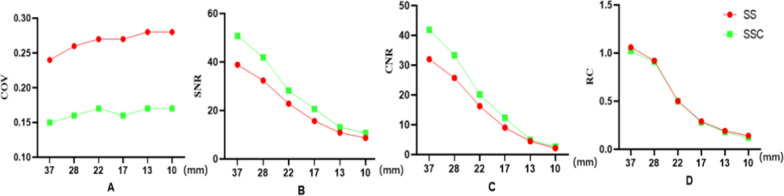
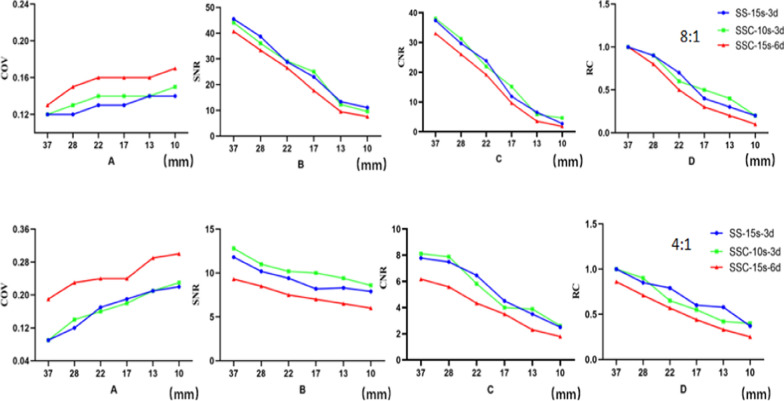
This study was composed of a phantom study and two clinical tests. The differences in visual image quality scores, coefficient of variance (COV) of the background, image signal-to-noise ratio (SNR), contrast-to-noise ratio (CNR), and recovery coefficient (RC) of the sphere were compared between SSC mode and traditional Step-and-Shoot (SS) mode in the phantom study. Various "shoot" acquisition times (5s, 10s, 15s) and "step" angles (3-degree, 6-degree, 9-degree) were evaluated and verified. In the clinical tests, bone tomography and parathyroid tomography were performed on 30 patients each. Differences in visual image quality scores, background COV, image SNR, CNR, and standardized uptake value (SUV) of lesions were compared between the two modes.
In the phantom study, SSC mode demonstrated higher visual scores and significantly reduced background COV (P < 0.05), and significantly increased SNR and CNR (P < 0.05) compared to SS mode. No significant alteration in RC was observed (P > 0.05). In the clinical tests, no significant differences were found between the optimal SSC scan combination (10s "shoot" and 6-degree "step")/ (10s "shoot" and 3-degree "step") and the traditional SS scan combination (15s "shoot" and 6-degree "step")/ (15s "shoot" and 3-degree "step") in visual image quality scores, background COV, image SNR, CNR, and SUV of bone and parathyroid high uptake lesions (P > 0.05).
The SwiftScan SSC mode can reduce acquisition time by 33% while maintaining similar image quality and quantification accuracy compared to SS mode. An SSC scanning protocol with a 10s "shoot" acquisition and 6-degree "step" or with a 10s "shoot" acquisition and 3-degree "step" over a 360-degree rotation, is recommended for clinical use.
本研究旨在探讨SwiftScan步进-采集连续(SSC)扫描模式在提高图像质量方面的价值,并探索减少扫描时间的合适扫描参数。
本研究包括一项模体研究和两项临床试验。在模体研究中,比较了SSC模式和传统步进-采集(SS)模式在视觉图像质量评分、背景变异系数(COV)、图像信噪比(SNR)、对比噪声比(CNR)以及球体恢复系数(RC)方面的差异。评估并验证了各种“采集”采集时间(5秒、10秒、15秒)和“步进”角度(3度、6度、9度)。在临床试验中,对30例患者分别进行了骨断层扫描和甲状旁腺断层扫描。比较了两种模式在视觉图像质量评分、背景COV、图像SNR、CNR以及病变标准化摄取值(SUV)方面的差异。
在模体研究中,与SS模式相比,SSC模式显示出更高的视觉评分,背景COV显著降低(P<0.05),SNR和CNR显著增加(P<0.05)。未观察到RC有显著变化(P>0.05)。在临床试验中,最佳SSC扫描组合(10秒“采集”和6度“步进”)/(10秒“采集”和3度“步进”)与传统SS扫描组合(15秒“采集”和6度“步进”)/(15秒“采集”和3度“步进”)在视觉图像质量评分、背景COV、图像SNR、CNR以及骨和甲状旁腺高摄取病变的SUV方面无显著差异(P>0.05)。
与SS模式相比,SwiftScan SSC模式可将采集时间减少33%,同时保持相似的图像质量和定量准确性。建议临床使用360度旋转时采用10秒“采集”采集和6度“步进”或10秒“采集”采集和3度“步进”的SSC扫描方案。