Li Jingwen, Lin Yan, Ni Liping, Mei Yufang, Zhou Yan, Jiang Xianguo, Wan Wenbin
Department of Neurology, Renji Hospital, Shanghai Jiao Tong University School of Medicine, Shanghai, China.
Am J Case Rep. 2025 Jan 2;26:e945521. doi: 10.12659/AJCR.945521.
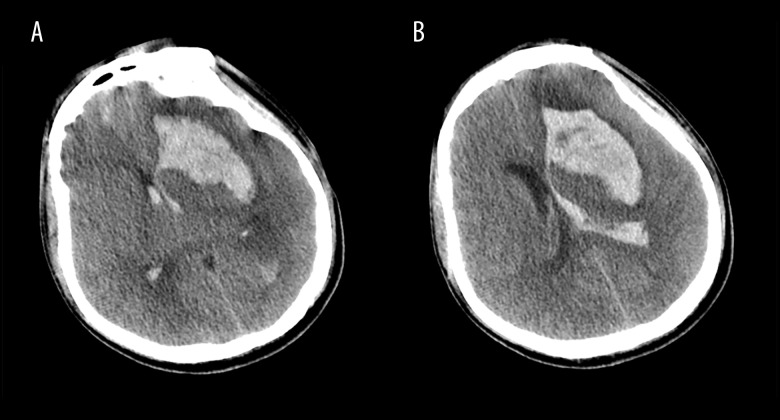
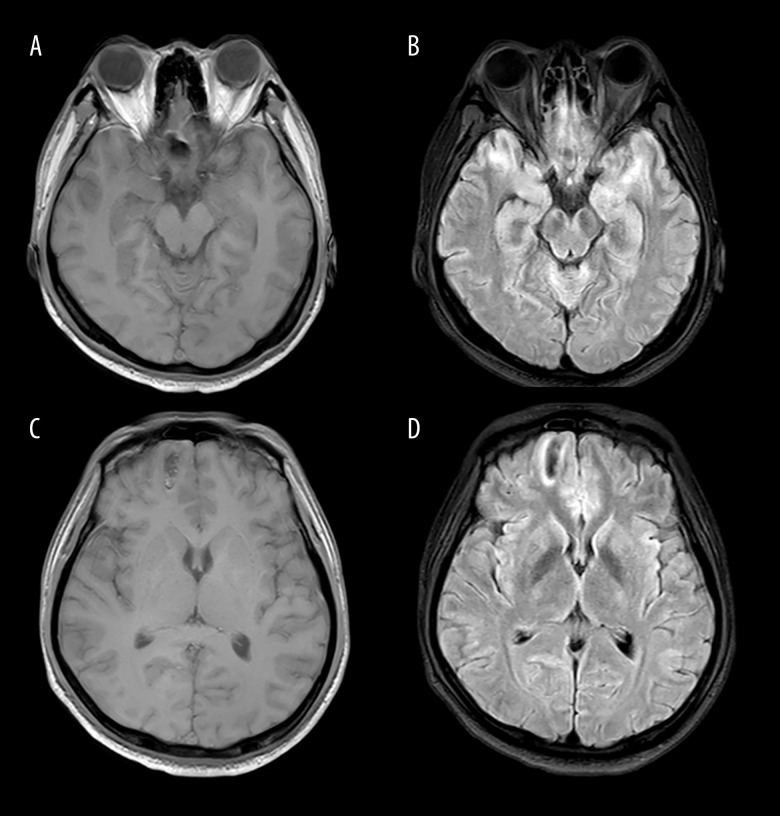
BACKGROUND Varicella-zoster virus (VZV) encephalitis is a commonly reported form of encephalitis that clinically manifests as skin lesions, fever, headache, and neuropsychiatric symptoms. We present a case of a patient with VZV encephalitis complicated by cerebral hemorrhagic transformation, characterized by high levels of inflammation and protein in the cerebrospinal fluid. The aim is to highlight the risk of hemorrhagic transformation associated with VZV encephalitis. CASE REPORT The patient exhibited scattered herpes lesions on the head, neck, and chest. Notably, the cerebrospinal fluid (CSF) protein concentration was markedly elevated at 9049.3 mg/L, with a CSF white blood cell count of 950×10⁶/L, of which lymphocytes constituted 80%. MRI revealed abnormal signal foci in the bilateral temporal lobes and the right frontal lobe, consistent with findings associated with herpes encephalitis. Despite initial treatment with anti-inflammatory agents, acyclovir antiviral, and antiepileptic medications, the patient did not show improvement, prompting the addition of double filtration plasmapheresis. However, the patient experienced hemorrhagic transformation and succumbed to the illness. CONCLUSIONS This case highlights the challenge of managing VZV encephalitis in the context of significant inflammation and protein elevation in the CSF, and underscores the need for further research into more effective therapeutic strategies for this rare but potentially devastating condition.
背景 水痘带状疱疹病毒(VZV)脑炎是一种常见的脑炎形式,临床表现为皮肤病变、发热、头痛和神经精神症状。我们报告一例VZV脑炎并发脑内出血转化的患者,其特点是脑脊液中炎症水平和蛋白含量高。目的是强调VZV脑炎相关的出血转化风险。病例报告 患者头部、颈部和胸部出现散在疱疹病变。值得注意的是,脑脊液(CSF)蛋白浓度显著升高至9049.3mg/L,脑脊液白细胞计数为950×10⁶/L,其中淋巴细胞占80%。MRI显示双侧颞叶和右侧额叶有异常信号灶,与疱疹性脑炎的表现一致。尽管最初使用了抗炎药、阿昔洛韦抗病毒药和抗癫痫药物进行治疗,但患者病情未见改善,因此加用了双重过滤血浆置换。然而,患者发生了出血转化,最终死亡。结论 本病例突出了在脑脊液中存在显著炎症和蛋白升高的情况下管理VZV脑炎的挑战,并强调需要进一步研究针对这种罕见但可能具有毁灭性疾病的更有效治疗策略。