• 文献检索
  • 文档翻译
  • 深度研究
  • 学术资讯
  • Suppr Zotero 插件Zotero 插件
  • 邀请有礼
  • 套餐&价格
  • 历史记录
应用&插件
Suppr Zotero 插件Zotero 插件浏览器插件Mac 客户端Windows 客户端微信小程序
定价
高级版会员购买积分包购买API积分包
服务
文献检索文档翻译深度研究API 文档MCP 服务
关于我们
关于 Suppr公司介绍联系我们用户协议隐私条款
关注我们

Suppr 超能文献

核心技术专利:CN118964589B侵权必究
粤ICP备2023148730 号-1Suppr @ 2026

文献检索

告别复杂PubMed语法,用中文像聊天一样搜索,搜遍4000万医学文献。AI智能推荐,让科研检索更轻松。

立即免费搜索

文件翻译

保留排版,准确专业,支持PDF/Word/PPT等文件格式,支持 12+语言互译。

免费翻译文档

深度研究

AI帮你快速写综述,25分钟生成高质量综述,智能提取关键信息,辅助科研写作。

立即免费体验

基于机器学习验证的用于5G物联网应用的具有360°覆盖的3D高度隔离6端口三频段MIMO天线系统

3D highly isolated 6-port tri-band MIMO antenna system with 360° coverage for 5G IoT applications based machine learning verification.

作者信息

Rahman Md Afzalur, Al-Bawri Samir Salem, Alharbi Sultan S, Abdulkawi Wazie M, Jizat Noorlindawaty Md, Islam Mohammad Tariqul, Sheta Abdel-Fattah A

机构信息

Space Science Centre, Climate Change Institute, Universiti Kebangsaan Malaysia (UKM), 43600, Bangi, Malaysia.

Department of Computer Science & Information Technology, Gulf Colleges, Hafar Al-Batin, Saudi Arabia.

出版信息

Sci Rep. 2025 Jan 2;15(1):204. doi: 10.1038/s41598-024-84010-1.

DOI:10.1038/s41598-024-84010-1
PMID:39747617
原文链接:https://pmc.ncbi.nlm.nih.gov/articles/PMC11697114/
Abstract

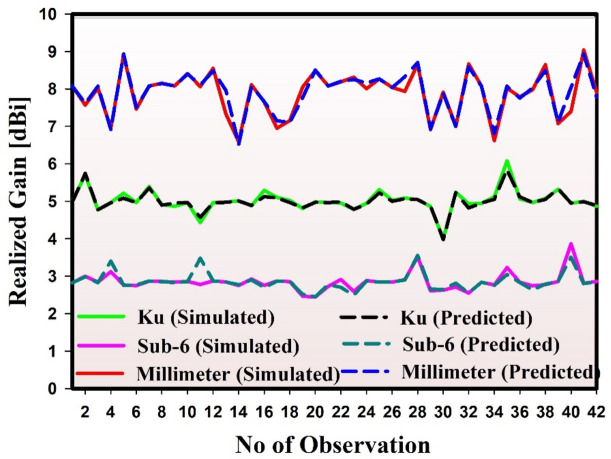
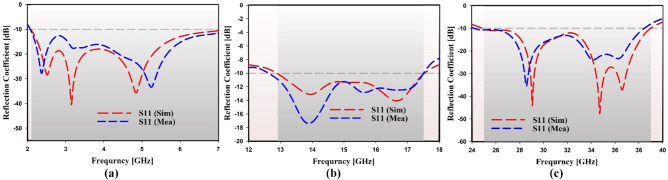
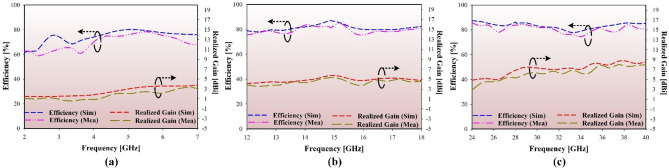
A multipurpose antenna system that can handle a broad area of frequencies is crucial in the effort to build up widespread 5G Internet-of-Things (IoT) networks. For fifth-generation Internet-of-things applications, this research introduces a new multi-band antenna that can operate in the sub-6 GHz band (2-7 GHz), Ku-band (13-17.5 GHz), and millimeter wave band (25-39 GHz). The antenna achieves a remarkable three-band operational bandwidth through cleverly integrated slots and parasitic components. Maximum realized gain of 4.3 dBi in the sub-6 GHz band, 5.5 dBi in the Ku-band, and 9.9 dBi in the millimeter wave (mm-wave) band for 3D MIMO setup is ensured. In addition, the machine learning prediction is used to verify the single element realized gain, and the results demonstrate that it performs admirably with an accuracy of more than 89% using the random forest regression model throughout the entire frequency spectrum. A 6-port, one-of-a-kind MIMO design with strong diversity performance is built from the single-element configuration. This 6-port MIMO system uses a new codesign technique to achieve 360-degree coverage in the elevation and azimuth planes, exceptional isolation (21 dB at sub-6 GHz band, 25 dB at the Ku-band, and 30 dB at mm-wave band), and pattern diversity. This MIMO antenna module is a shining example of the future, with the potential to completely alter the state of affairs in terms of 5G IoT connectivity in settings such as smart homes, offices, cities, vehicle-to-everything communications, and broadcast satellite service (BSS).

摘要

一个能够处理广泛频率范围的多功能天线系统对于构建广泛的5G物联网(IoT)网络至关重要。对于第五代物联网应用,本研究推出了一种新型多频段天线,它可以在低于6GHz频段(2 - 7GHz)、Ku频段(13 - 17.5GHz)和毫米波频段(25 - 39GHz)工作。该天线通过巧妙集成的缝隙和寄生元件实现了显著的三频段工作带宽。对于3D MIMO设置,在低于6GHz频段实现的最大增益为4.3dBi,在Ku频段为5.5dBi,在毫米波频段为9.9dBi。此外,使用机器学习预测来验证单元素实现增益,结果表明,使用随机森林回归模型在整个频谱范围内其准确率超过89%,表现出色。基于单元素配置构建了一种具有强大分集性能的6端口、独一无二的MIMO设计。这个6端口MIMO系统采用了一种新的协同设计技术,以在仰角和方位平面上实现360度覆盖、出色的隔离度(在低于6GHz频段为21dB,在Ku频段为25dB,在毫米波频段为30dB)以及方向图分集。这种MIMO天线模块是未来的一个杰出典范,有可能在智能家居、办公室、城市、车联网通信和广播卫星服务(BSS)等场景中彻底改变5G物联网连接的现状。

https://cdn.ncbi.nlm.nih.gov/pmc/blobs/87be/11697114/53f6618c0c18/41598_2024_84010_Fig27_HTML.jpg
https://cdn.ncbi.nlm.nih.gov/pmc/blobs/87be/11697114/ca3bb0f8a1bc/41598_2024_84010_Fig1_HTML.jpg
https://cdn.ncbi.nlm.nih.gov/pmc/blobs/87be/11697114/5c858923debd/41598_2024_84010_Fig2_HTML.jpg
https://cdn.ncbi.nlm.nih.gov/pmc/blobs/87be/11697114/796b8173458a/41598_2024_84010_Fig3_HTML.jpg
https://cdn.ncbi.nlm.nih.gov/pmc/blobs/87be/11697114/886ba165ee49/41598_2024_84010_Fig4_HTML.jpg
https://cdn.ncbi.nlm.nih.gov/pmc/blobs/87be/11697114/47c5c1552290/41598_2024_84010_Fig5_HTML.jpg
https://cdn.ncbi.nlm.nih.gov/pmc/blobs/87be/11697114/91acf26162d3/41598_2024_84010_Fig6_HTML.jpg
https://cdn.ncbi.nlm.nih.gov/pmc/blobs/87be/11697114/a8edc73617c9/41598_2024_84010_Fig7_HTML.jpg
https://cdn.ncbi.nlm.nih.gov/pmc/blobs/87be/11697114/7b58ef632ffb/41598_2024_84010_Fig8_HTML.jpg
https://cdn.ncbi.nlm.nih.gov/pmc/blobs/87be/11697114/9343843b2a46/41598_2024_84010_Fig9_HTML.jpg
https://cdn.ncbi.nlm.nih.gov/pmc/blobs/87be/11697114/7ba20c7bf333/41598_2024_84010_Fig10_HTML.jpg
https://cdn.ncbi.nlm.nih.gov/pmc/blobs/87be/11697114/7ba7deb2a08f/41598_2024_84010_Fig11_HTML.jpg
https://cdn.ncbi.nlm.nih.gov/pmc/blobs/87be/11697114/0de05898dfde/41598_2024_84010_Fig12_HTML.jpg
https://cdn.ncbi.nlm.nih.gov/pmc/blobs/87be/11697114/e00e997a2eeb/41598_2024_84010_Fig13_HTML.jpg
https://cdn.ncbi.nlm.nih.gov/pmc/blobs/87be/11697114/ffb1f522783e/41598_2024_84010_Fig14_HTML.jpg
https://cdn.ncbi.nlm.nih.gov/pmc/blobs/87be/11697114/d85adae512f3/41598_2024_84010_Fig15_HTML.jpg
https://cdn.ncbi.nlm.nih.gov/pmc/blobs/87be/11697114/49aa08449a66/41598_2024_84010_Fig16_HTML.jpg
https://cdn.ncbi.nlm.nih.gov/pmc/blobs/87be/11697114/8003f779db54/41598_2024_84010_Fig17_HTML.jpg
https://cdn.ncbi.nlm.nih.gov/pmc/blobs/87be/11697114/1f1be915b4e8/41598_2024_84010_Fig18_HTML.jpg
https://cdn.ncbi.nlm.nih.gov/pmc/blobs/87be/11697114/67bb0243179e/41598_2024_84010_Fig19_HTML.jpg
https://cdn.ncbi.nlm.nih.gov/pmc/blobs/87be/11697114/21f5976f3645/41598_2024_84010_Fig20_HTML.jpg
https://cdn.ncbi.nlm.nih.gov/pmc/blobs/87be/11697114/bab4b93386a5/41598_2024_84010_Fig21_HTML.jpg
https://cdn.ncbi.nlm.nih.gov/pmc/blobs/87be/11697114/7764e7b73302/41598_2024_84010_Fig22_HTML.jpg
https://cdn.ncbi.nlm.nih.gov/pmc/blobs/87be/11697114/18ba1028ac44/41598_2024_84010_Fig23_HTML.jpg
https://cdn.ncbi.nlm.nih.gov/pmc/blobs/87be/11697114/b35b0aa96f6e/41598_2024_84010_Fig24_HTML.jpg
https://cdn.ncbi.nlm.nih.gov/pmc/blobs/87be/11697114/2b4d50b027e0/41598_2024_84010_Fig25_HTML.jpg
https://cdn.ncbi.nlm.nih.gov/pmc/blobs/87be/11697114/772e2231245e/41598_2024_84010_Fig26_HTML.jpg
https://cdn.ncbi.nlm.nih.gov/pmc/blobs/87be/11697114/53f6618c0c18/41598_2024_84010_Fig27_HTML.jpg
https://cdn.ncbi.nlm.nih.gov/pmc/blobs/87be/11697114/ca3bb0f8a1bc/41598_2024_84010_Fig1_HTML.jpg
https://cdn.ncbi.nlm.nih.gov/pmc/blobs/87be/11697114/5c858923debd/41598_2024_84010_Fig2_HTML.jpg
https://cdn.ncbi.nlm.nih.gov/pmc/blobs/87be/11697114/796b8173458a/41598_2024_84010_Fig3_HTML.jpg
https://cdn.ncbi.nlm.nih.gov/pmc/blobs/87be/11697114/886ba165ee49/41598_2024_84010_Fig4_HTML.jpg
https://cdn.ncbi.nlm.nih.gov/pmc/blobs/87be/11697114/47c5c1552290/41598_2024_84010_Fig5_HTML.jpg
https://cdn.ncbi.nlm.nih.gov/pmc/blobs/87be/11697114/91acf26162d3/41598_2024_84010_Fig6_HTML.jpg
https://cdn.ncbi.nlm.nih.gov/pmc/blobs/87be/11697114/a8edc73617c9/41598_2024_84010_Fig7_HTML.jpg
https://cdn.ncbi.nlm.nih.gov/pmc/blobs/87be/11697114/7b58ef632ffb/41598_2024_84010_Fig8_HTML.jpg
https://cdn.ncbi.nlm.nih.gov/pmc/blobs/87be/11697114/9343843b2a46/41598_2024_84010_Fig9_HTML.jpg
https://cdn.ncbi.nlm.nih.gov/pmc/blobs/87be/11697114/7ba20c7bf333/41598_2024_84010_Fig10_HTML.jpg
https://cdn.ncbi.nlm.nih.gov/pmc/blobs/87be/11697114/7ba7deb2a08f/41598_2024_84010_Fig11_HTML.jpg
https://cdn.ncbi.nlm.nih.gov/pmc/blobs/87be/11697114/0de05898dfde/41598_2024_84010_Fig12_HTML.jpg
https://cdn.ncbi.nlm.nih.gov/pmc/blobs/87be/11697114/e00e997a2eeb/41598_2024_84010_Fig13_HTML.jpg
https://cdn.ncbi.nlm.nih.gov/pmc/blobs/87be/11697114/ffb1f522783e/41598_2024_84010_Fig14_HTML.jpg
https://cdn.ncbi.nlm.nih.gov/pmc/blobs/87be/11697114/d85adae512f3/41598_2024_84010_Fig15_HTML.jpg
https://cdn.ncbi.nlm.nih.gov/pmc/blobs/87be/11697114/49aa08449a66/41598_2024_84010_Fig16_HTML.jpg
https://cdn.ncbi.nlm.nih.gov/pmc/blobs/87be/11697114/8003f779db54/41598_2024_84010_Fig17_HTML.jpg
https://cdn.ncbi.nlm.nih.gov/pmc/blobs/87be/11697114/1f1be915b4e8/41598_2024_84010_Fig18_HTML.jpg
https://cdn.ncbi.nlm.nih.gov/pmc/blobs/87be/11697114/67bb0243179e/41598_2024_84010_Fig19_HTML.jpg
https://cdn.ncbi.nlm.nih.gov/pmc/blobs/87be/11697114/21f5976f3645/41598_2024_84010_Fig20_HTML.jpg
https://cdn.ncbi.nlm.nih.gov/pmc/blobs/87be/11697114/bab4b93386a5/41598_2024_84010_Fig21_HTML.jpg
https://cdn.ncbi.nlm.nih.gov/pmc/blobs/87be/11697114/7764e7b73302/41598_2024_84010_Fig22_HTML.jpg
https://cdn.ncbi.nlm.nih.gov/pmc/blobs/87be/11697114/18ba1028ac44/41598_2024_84010_Fig23_HTML.jpg
https://cdn.ncbi.nlm.nih.gov/pmc/blobs/87be/11697114/b35b0aa96f6e/41598_2024_84010_Fig24_HTML.jpg
https://cdn.ncbi.nlm.nih.gov/pmc/blobs/87be/11697114/2b4d50b027e0/41598_2024_84010_Fig25_HTML.jpg
https://cdn.ncbi.nlm.nih.gov/pmc/blobs/87be/11697114/772e2231245e/41598_2024_84010_Fig26_HTML.jpg
https://cdn.ncbi.nlm.nih.gov/pmc/blobs/87be/11697114/53f6618c0c18/41598_2024_84010_Fig27_HTML.jpg

相似文献

1
3D highly isolated 6-port tri-band MIMO antenna system with 360° coverage for 5G IoT applications based machine learning verification.基于机器学习验证的用于5G物联网应用的具有360°覆盖的3D高度隔离6端口三频段MIMO天线系统
Sci Rep. 2025 Jan 2;15(1):204. doi: 10.1038/s41598-024-84010-1.
2
A low profile super UWB- MIMO antenna with d-shaped for satellite communications, 5G and beyond applications.一种用于卫星通信、5G及未来应用的具有D形的低剖面超宽带多输入多输出天线。
Sci Rep. 2025 May 5;15(1):15660. doi: 10.1038/s41598-025-96017-3.
3
A Multiband Shared Aperture MIMO Antenna for Millimeter-Wave and Sub-6GHz 5G Applications.一种用于毫米波和低于6GHz 5G应用的多频段共享孔径MIMO天线。
Sensors (Basel). 2022 Feb 25;22(5):1808. doi: 10.3390/s22051808.
4
Isolation enhancement of a capacitively-fed MIMO antenna using a quasi-fractal parasitic element and defected ground structure.基于准分形寄生元件和缺陷接地结构的电容馈电多输入多输出天线的隔离增强
Heliyon. 2024 Oct 12;10(20):e39228. doi: 10.1016/j.heliyon.2024.e39228. eCollection 2024 Oct 30.
5
Four port tri-circular ring MIMO antenna with wide-band characteristics for future 5G and mmWave applications.具有宽带特性的四端口三环MIMO天线,适用于未来5G和毫米波应用。
Heliyon. 2024 Apr 5;10(8):e28714. doi: 10.1016/j.heliyon.2024.e28714. eCollection 2024 Apr 30.
6
Wideband high gain metasurface-based 4T4R MIMO antenna with highly isolated ports for sub-6 GHz 5G applications.用于6GHz以下5G应用的具有高度隔离端口的基于超表面的宽带高增益4T4R MIMO天线。
Sci Rep. 2024 Jun 24;14(1):14448. doi: 10.1038/s41598-024-65135-9.
7
A 4-port flexible MIMO antenna with isolation enhancement for wireless IoT applications.一种用于无线物联网应用的具有隔离增强功能的四端口柔性多输入多输出天线。
Heliyon. 2024 May 31;10(11):e32216. doi: 10.1016/j.heliyon.2024.e32216. eCollection 2024 Jun 15.
8
A closely spaced two-port MIMO antenna with a radiation null for out-of-band suppressions for 5G Sub-6 GHz applications.一种用于 5G 低于 6GHz 应用的带辐射零点的紧密间隔双端口 MIMO 天线,用于带外抑制。
PLoS One. 2024 Jul 26;19(7):e0306446. doi: 10.1371/journal.pone.0306446. eCollection 2024.
9
Compact Wideband Four-Port MIMO Antenna for Sub-6 GHz and Internet of Things Applications.用于6GHz以下频段及物联网应用的紧凑型宽带四端口MIMO天线
Micromachines (Basel). 2022 Dec 12;13(12):2202. doi: 10.3390/mi13122202.
10
Enhancing gain and isolation of a quad-element MIMO antenna array design for 5G sub-6 GHz applications assisted with characteristic mode analysis.借助特征模式分析增强用于5G亚6GHz应用的四元MIMO天线阵列设计的增益和隔离度。
Sci Rep. 2024 May 15;14(1):11111. doi: 10.1038/s41598-024-61789-7.

引用本文的文献

1
High performance grid structured MIMO antenna with regression machine learning for high-speed sub THz and THz 6G IoT applications.用于高速太赫兹及太赫兹6G物联网应用的基于回归机器学习的高性能网格结构MIMO天线。
Sci Rep. 2025 Aug 26;15(1):31410. doi: 10.1038/s41598-025-15773-4.
2
Regression machine learning-based highly efficient dual band MIMO antenna design for mm-Wave 5G application and gain prediction.基于回归机器学习的毫米波5G应用高效双频段MIMO天线设计与增益预测。
Sci Rep. 2025 Aug 6;15(1):28730. doi: 10.1038/s41598-025-13514-1.
3
Metamaterial based tri-band compact MIMO antenna system for 5G IoT applications with machine learning performance verification.

本文引用的文献

1
Machine learning-based technique for resonance and directivity prediction of UMTS LTE band quasi Yagi antenna.基于机器学习的UMTS LTE频段准八木天线谐振和方向性预测技术
Heliyon. 2023 Sep 1;9(9):e19548. doi: 10.1016/j.heliyon.2023.e19548. eCollection 2023 Sep.
2
Machine learning-based technique for gain and resonance prediction of mid band 5G Yagi antenna.基于机器学习的5G中频段八木天线增益和共振预测技术。
Sci Rep. 2023 Aug 3;13(1):12590. doi: 10.1038/s41598-023-39730-1.
3
Millimeter-wave planar antenna array augmented with a low-cost 3D printed dielectric polarizer for sensing and internet of things (IoT) applications.
基于超材料的三频段紧凑型MIMO天线系统,用于具有机器学习性能验证的5G物联网应用。
Sci Rep. 2025 Jul 2;15(1):22866. doi: 10.1038/s41598-025-06391-1.
用于感测和物联网 (IoT) 应用的毫米波平面天线阵列,具有低成本的 3D 打印介电偏光器增强功能。
Sci Rep. 2023 Jun 14;13(1):9646. doi: 10.1038/s41598-023-35707-2.
4
A novel approach for low mutual coupling and ultra-compact Two Port MIMO antenna development for UWB wireless application.一种用于超宽带无线应用的低互耦和超紧凑双端口多输入多输出天线开发的新方法。
Heliyon. 2022 Mar 5;8(3):e09057. doi: 10.1016/j.heliyon.2022.e09057. eCollection 2022 Mar.