Liu Mian, Chen Pei, Wei Bo, Tan Hai-Long, Zhao Ya-Xin, Ai Lei, Li Ning, Jiang Ying-Ke, Lin Jing, Li Shi-Jin, Chang Shi
Department of General Surgery, XiangYa Hospital Central South University, No. 87 XiangYa Road, Changsha, 410008, Hunan, China.
National Clinical Research Center for Geriatric Disorders, Xiangya Hospital, Central South University, Xiangya Road 87, Changsha, 410008, Hunan, China.
Sci Rep. 2025 Jan 2;15(1):327. doi: 10.1038/s41598-024-83369-5.
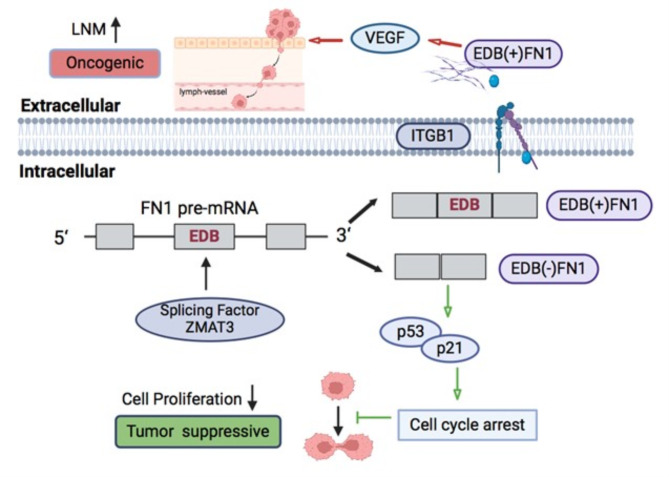
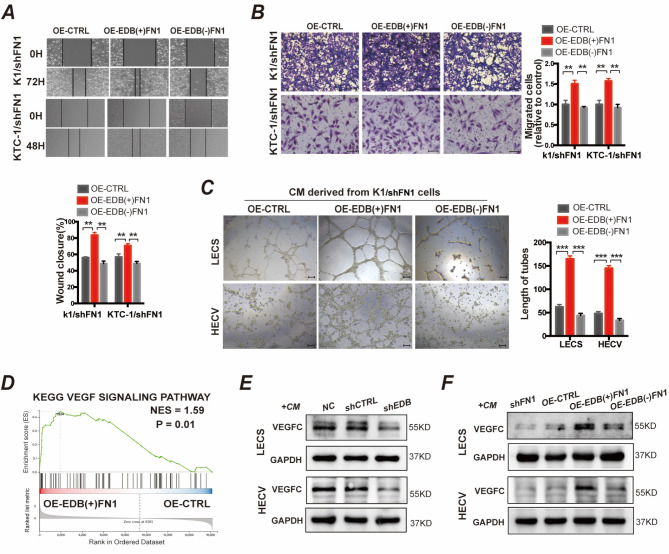
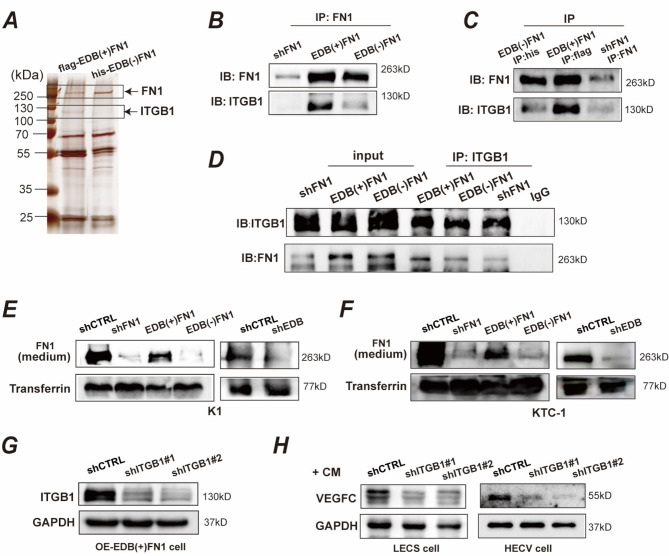
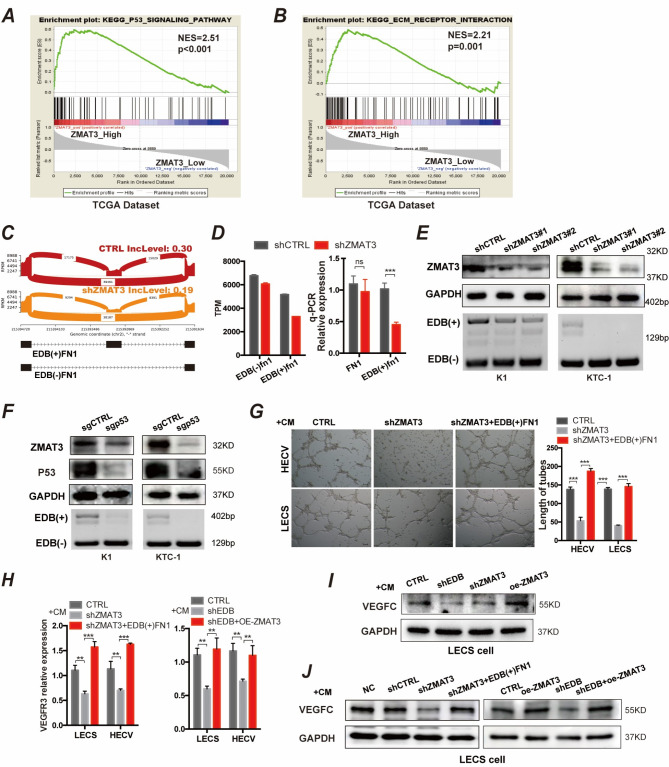
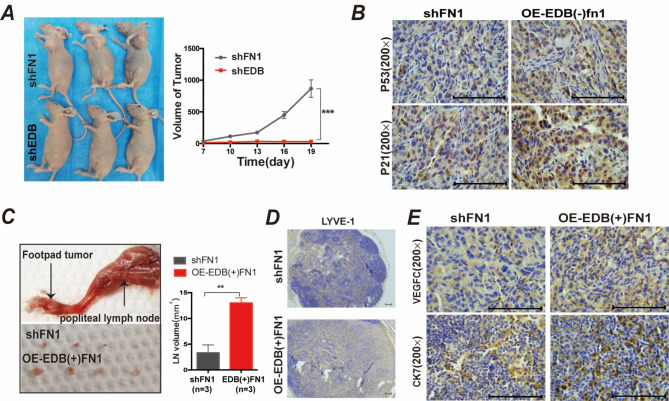
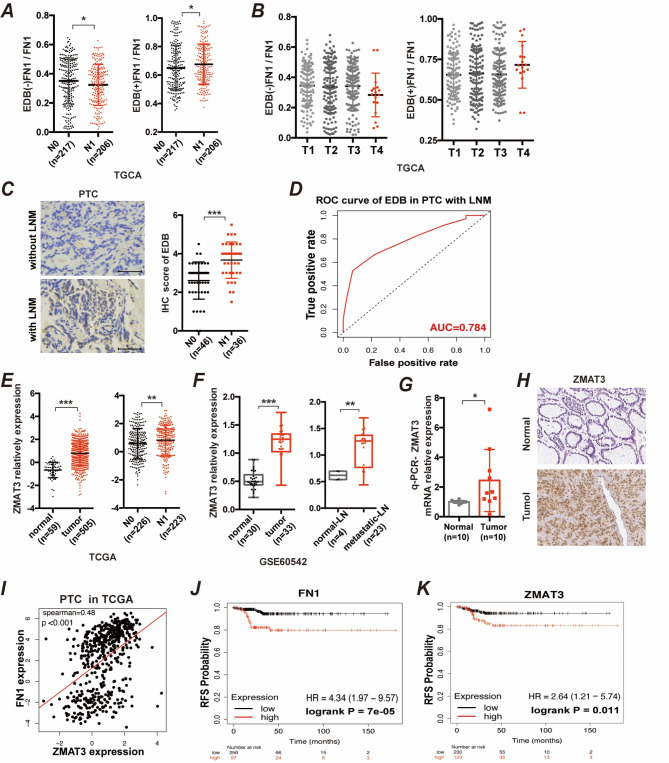
Papillary thyroid cancer (PTC) is often characterized by indolent behavior, small tumors with slow cell proliferation and a tendency to metastasize to cervical lymph node simultaneously, and the molecular mechanisms underlying that remain poorly understood. In this study, FN1 was the hottest gene of PTC and distinctive expression in PTC cells. FN1 deficiency severely inhibited the p53 signaling pathway, especially cyclin proteins, resulting in increased cell growth but hampered invasion. The alternatively splicing EDB region of FN1 was exclusively expressed in tumors, which impacted integrin β1 (ITGB1) bonding FN1 and its secretion process, resulting in completely distinct roles of two isoforms that FN1 including and skipping EDB domain. The isoform EDB(-)FN1 intracellularly inhibited tumor proliferation by upregulating p21 expression, whereas extracellular EDB(+)FN1 promoted lymph node metastasis via the VEGF signaling pathway in vitro and in vivo. Moreover, the alternative splicing EDB region of FN1 was modulated by p53-targeted protein ZMAT3 which activated cell migration and lymphoangiogenesis. Collectively, combined with p53-induced proteins, FN1 played both anti- and pro-cancer roles owing to EDB domain alternative splicing. FN1 is a potential determinant behind the characteristic behavior of PTC, which may contribute to a deeper understanding of the peculiarity of PTC and provide a promising target for regional lymph node metastasis.
甲状腺乳头状癌(PTC)通常具有惰性生物学行为,肿瘤较小,细胞增殖缓慢,且往往同时转移至颈部淋巴结,但其潜在的分子机制仍知之甚少。在本研究中,纤连蛋白1(FN1)是PTC中最热门的基因,在PTC细胞中呈特异性表达。FN1缺陷严重抑制p53信号通路,尤其是细胞周期蛋白,导致细胞生长增加但侵袭受阻。FN1的可变剪接EDB区域仅在肿瘤中表达,影响整合素β1(ITGB1)与FN1的结合及其分泌过程,导致包含和跳过EDB结构域的两种FN1亚型具有完全不同的作用。EDB(-)FN1亚型通过上调p21表达在细胞内抑制肿瘤增殖,而细胞外EDB(+)FN1在体外和体内通过VEGF信号通路促进淋巴结转移。此外,FN1的可变剪接EDB区域受p53靶向蛋白ZMAT3调控,ZMAT3激活细胞迁移和淋巴管生成。总体而言,与p53诱导的蛋白相结合,由于EDB结构域的可变剪接,FN1发挥了抗癌和促癌的双重作用。FN1是PTC特征性行为背后的一个潜在决定因素,这可能有助于更深入地理解PTC的特殊性,并为区域淋巴结转移提供一个有前景的靶点。