Mohammadzade Mohammadjavad, Amini-Rarani Mostafa, Zamani-Alavijeh Fereshteh, Karimi Saeed
Student Research Committee, School of Management and Medical Sciences, Isfahan University of Medical Sciences, Isfahan, Iran.
Social Determinants of Health Research Center, Isfahan University of Medical Sciences, Isfahan, Iran.
Health Res Policy Syst. 2025 Jan 2;23(1):2. doi: 10.1186/s12961-024-01280-x.
Over the recent years, the self-care program has been a significant policy in the field of health. The WHO recommended self-care for every country and economic setting for reaching universal health coverage, promoting health, keeping the world safe and serving the vulnerable. Conducting a policy analysis study can be useful in closely examining the self-care program's content, process, context and actors.
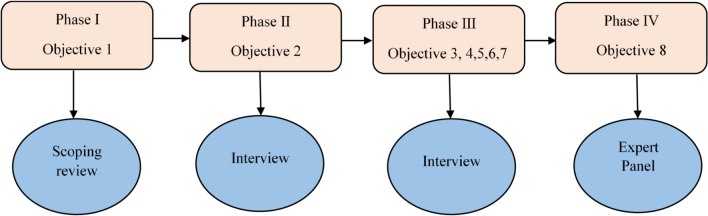
A qualitative policy analysis will be conducted in four phases to analyse the self-care program, focussing in Iran. The first phase will involve a scoping review to identify policies related to self-care worldwide. In the second phase, a qualitative study will be conducted to determine the status of the self-care program in Iran. The third phase will involve analysing the self-care program in Iran using the policy triangle framework of Walt and Gilson (1994). In the final phase, initial policy recommendations related to the self-care program will be formulated, and validation and finalization of the initial recommendations will be carried out in a panel of experts.
To thoroughly examine the self-care program's content, process, context and actors, a policy analysis study can be helpful. Therefore, this study will aim to analyse the self-care program using policy analysis approach. By identifying the challenges of the program's content, process, context and actors, corrective solutions to improve the program's current status, as well as policy recommendations appropriate to the country's context, will be provided. In addition, policy-makers in various authorities at the national, regional and provincial levels would benefit from the results of this study.
近年来,自我保健计划已成为卫生领域的一项重要政策。世界卫生组织建议每个国家和不同经济环境都推行自我保健,以实现全民健康覆盖、促进健康、保障全球安全并服务弱势群体。开展政策分析研究有助于深入审视自我保健计划的内容、过程、背景和参与主体。
将分四个阶段进行定性政策分析,以分析聚焦于伊朗的自我保健计划。第一阶段将进行范围界定审查,以确定全球范围内与自我保健相关的政策。第二阶段将开展定性研究,以确定伊朗自我保健计划的现状。第三阶段将使用沃尔特和吉尔森(1994年)的政策三角框架分析伊朗的自我保健计划。在最后阶段,将制定与自我保健计划相关的初步政策建议,并在专家小组中对初步建议进行验证和定稿。
为了全面审视自我保健计划的内容、过程、背景和参与主体,政策分析研究可能会有所帮助。因此,本研究旨在采用政策分析方法分析自我保健计划。通过识别该计划在内容、过程、背景和参与主体方面的挑战,将提供改善该计划当前状况的纠正性解决方案以及适合该国情况的政策建议。此外,国家、地区和省级各级不同当局的政策制定者将受益于本研究的结果。