Kim Hojin, Park Sangjoon, Kim Jihun, Kim Jin Sung, Kim Dong Wook, Kim Nalee, Uhm Jae-Sun, Kim Daehoon, Pak Hui-Nam, Hong Chae-Seon, Yoon Hong In
Department of Radiation Oncology, Yonsei Cancer Center, Heavy Ion Therapy Research Institute, Yonsei University College of Medicine, Seoul, Republic of Korea.
Department of Radiation Oncology, Gangnam Severance Hospital, Yonsei University College of Medicine, Seoul, Republic of Korea.
Radiat Oncol J. 2024 Dec;42(4):319-329. doi: 10.3857/roj.2024.00262. Epub 2024 Dec 24.
Cardiac radioablation is a novel, non-invasive treatment for ventricular tachycardia (VT), involving a single fractional stereotactic ablative body radiotherapy (SABR) session with a prescribed dose of 25 Gy. This complex procedure requires a detailed workflow and stringent dose constraints compared to conventional radiation therapy. This study aims to establish a consistent institutional workflow for single-fraction cardiac VT-SABR, emphasizing robust plan evaluation and quality assurance.
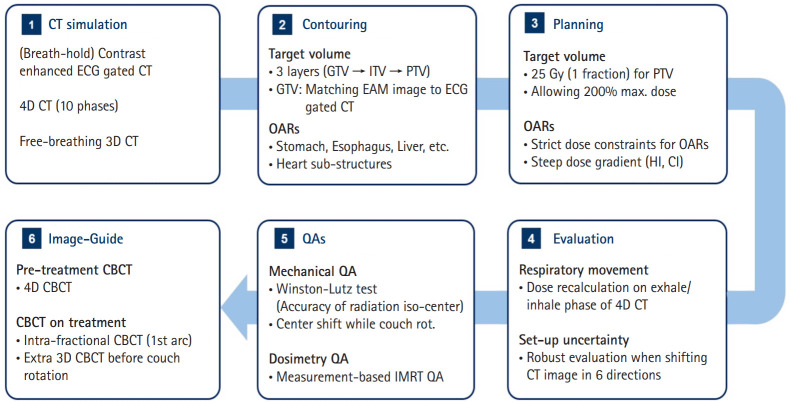
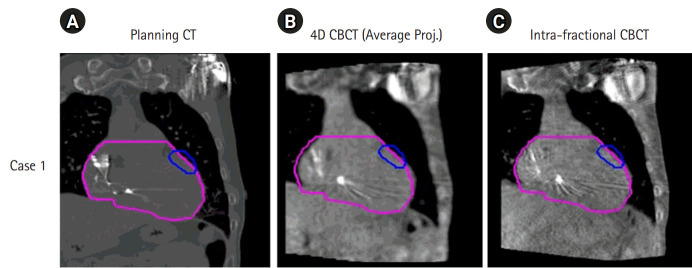
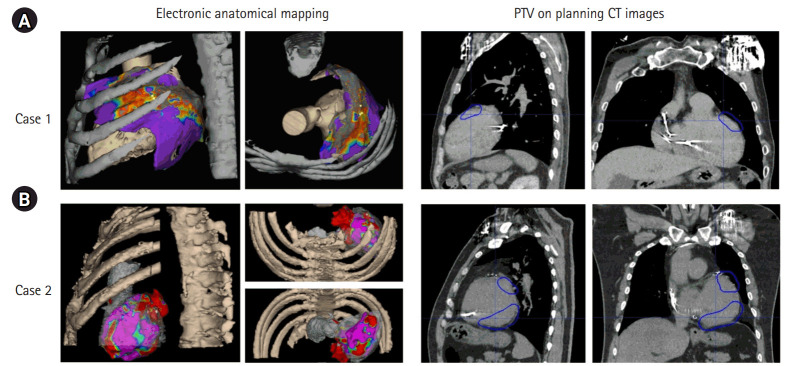
The study developed a consistent institutional workflow for VT-SABR, including computed tomography (CT) simulation, target volume definition, treatment planning, robust plan evaluation, quality assurance, and image-guided strategy. The workflow was implemented for two patients with cardiac arrhythmia. Accurate target volume definition using planning CT images and electronic anatomical mapping was critical. A four-dimensional (4D) cone-beam CT (CBCT) and breath-hold electrocardiographic gated CT images reliably detected target motion.
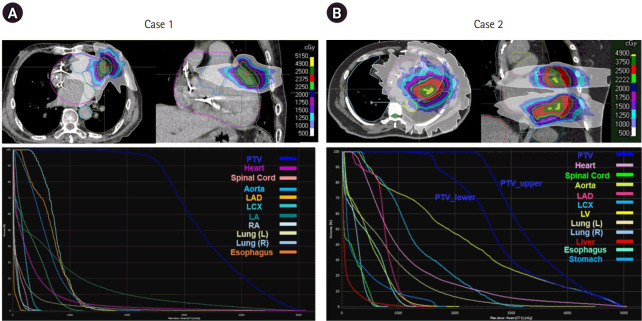
The resulting plans exhibited a conformity index greater than 0.7 and a gradient index around G4.0. Dose constraints for the planning target volume (PTV) aimed for 95% or higher PTV dose coverage, with a maximum dose of 200% or lower. However, one case did not meet the PTV dose coverage due to the proximity of the PTV to gastrointestinal organs. Plans adhered to dose constraints for organs at risk near the heart, but meeting constraints for specific cardiac sub-structures was challenging and dependent on PTV location.
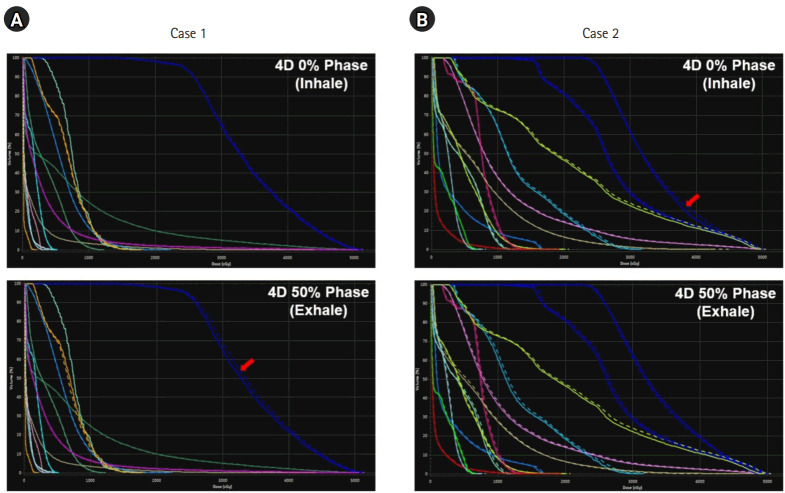
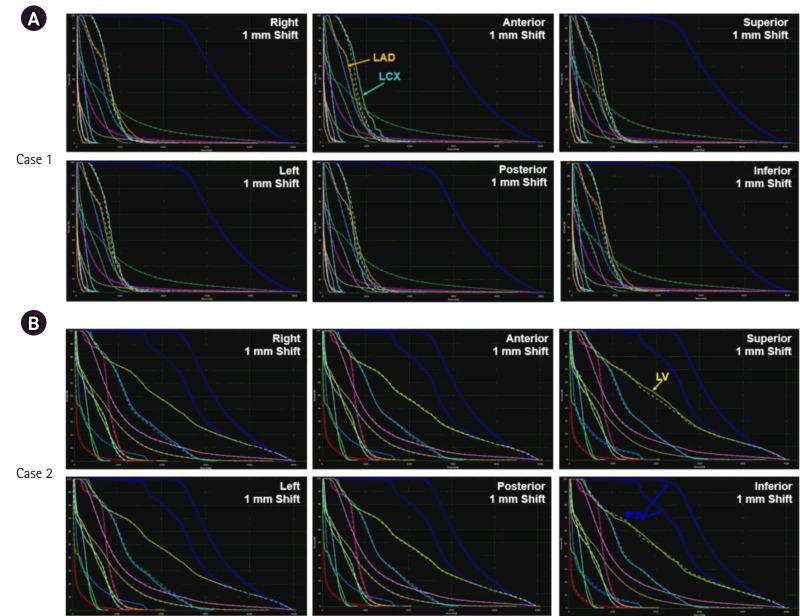
The plans demonstrated robustness against respiratory motion and patient positional uncertainty through a robust evaluation function. The 4D and intra-fractional CBCT were effective in verifying target motion and setup stability.
心脏放射消融是一种针对室性心动过速(VT)的新型非侵入性治疗方法,涉及单次立体定向消融体部放射治疗(SABR),规定剂量为25 Gy。与传统放射治疗相比,这一复杂过程需要详细的工作流程和严格的剂量限制。本研究旨在建立单分割心脏VT-SABR的一致机构工作流程,强调稳健的计划评估和质量保证。
该研究为VT-SABR制定了一致的机构工作流程,包括计算机断层扫描(CT)模拟、靶区定义、治疗计划、稳健的计划评估、质量保证和图像引导策略。该工作流程应用于两名心律失常患者。使用计划CT图像和电子解剖图谱准确确定靶区至关重要。四维(4D)锥形束CT(CBCT)和屏气心电图门控CT图像能可靠地检测靶区运动。
最终计划的适形指数大于0.7,梯度指数约为G4.0。计划靶区(PTV)的剂量限制目标是PTV剂量覆盖率达到95%或更高,最大剂量为200%或更低。然而,有一例因PTV靠近胃肠道器官而未达到PTV剂量覆盖率。计划符合心脏附近危及器官的剂量限制,但满足特定心脏亚结构的限制具有挑战性,且取决于PTV的位置。
通过稳健的评估功能,这些计划显示出对呼吸运动和患者体位不确定性的稳健性。4D和分次内CBCT在验证靶区运动和摆位稳定性方面有效。