Meng Youshuai, Chen Chuan, Lin Ronggui, Zheng Linlin, Fan Yanying, Zhang Mengdi, Zhang Ziqi, Shi Han, Zheng Xiaohan, Chen Junyu, Chen Dezhao, Teng Tianhong, Chen Bing
Key Laboratory of Nanomedical Technology (Education Department of Fujian Province), Department of Pharmaceutical Analysis, School of Pharmacy, Fujian Medical University, Fuzhou, 350122, People's Republic of China.
Innovation Center for Enzyme Catalysis and Drug Synthesis, School of Pharmacy, Xiamen Medical College, Xiamen, 361023, People's Republic of China.
Int J Nanomedicine. 2024 Dec 28;19:14059-14074. doi: 10.2147/IJN.S497346. eCollection 2024.
The dense and fibrotic nature of the pancreatic tumor microenvironment significantly contributes to tumor invasion and metastasis. This challenging environment acts as a formidable barrier, hindering effective drug penetration and delivery, which ultimately limits the efficacy of conventional cancer treatments. Gold nanoparticles (AuNPs) have emerged as promising nanocarriers to overcome the extracellular matrix barrier; however, their limited targeting precision, poor delivery efficiency, and insufficient photothermal conversion present challenges.
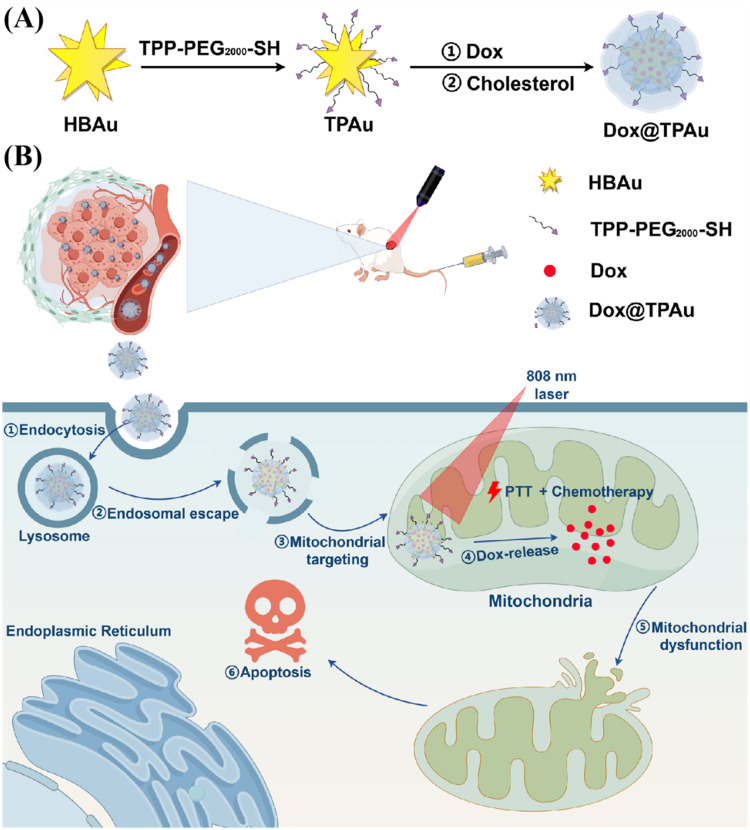
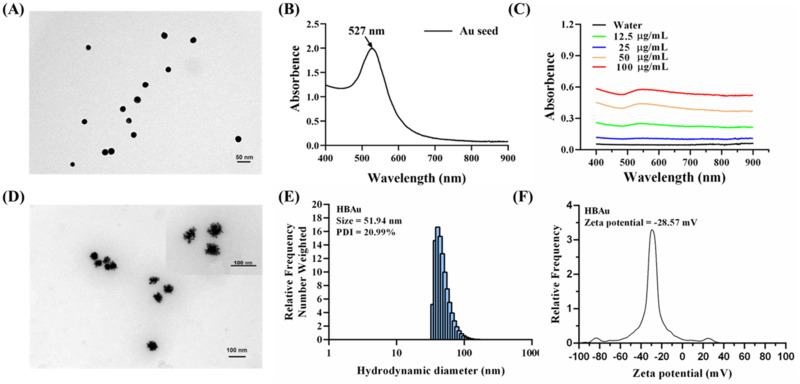
We developed triphenyl phosphonium-functionalized high-branch gold nanoparticles, denoted as Dox@TPAu, to enhance drug delivery and targeting capabilities. The targeted penetration, biopharmaceutical and pharmacokinetic properties of Dox@TPAu were characterized, and the synergistic therapeutic effect was evaluated by the BxPC-3 xenograft tumor mouse model.
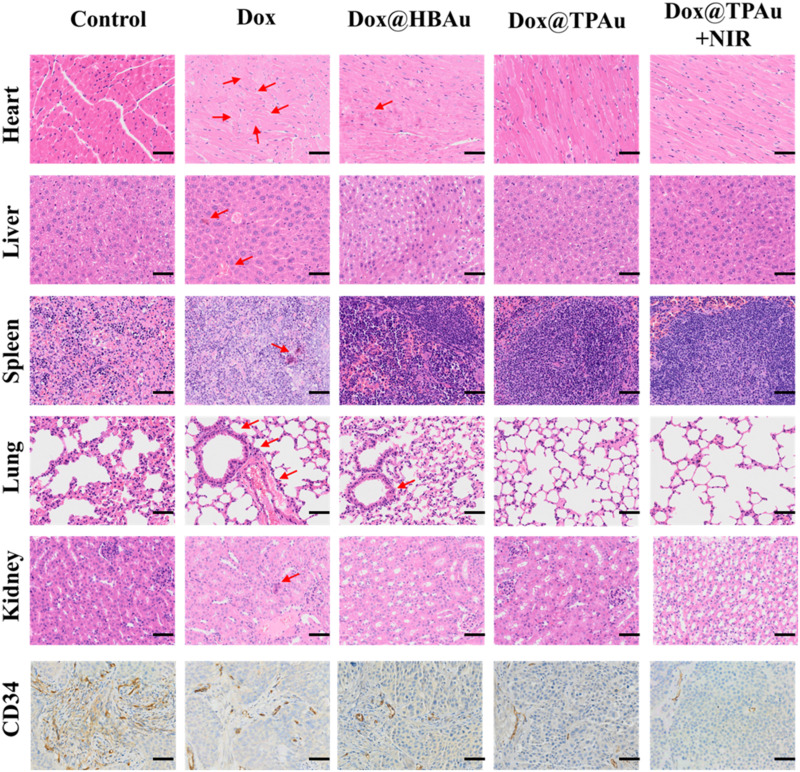
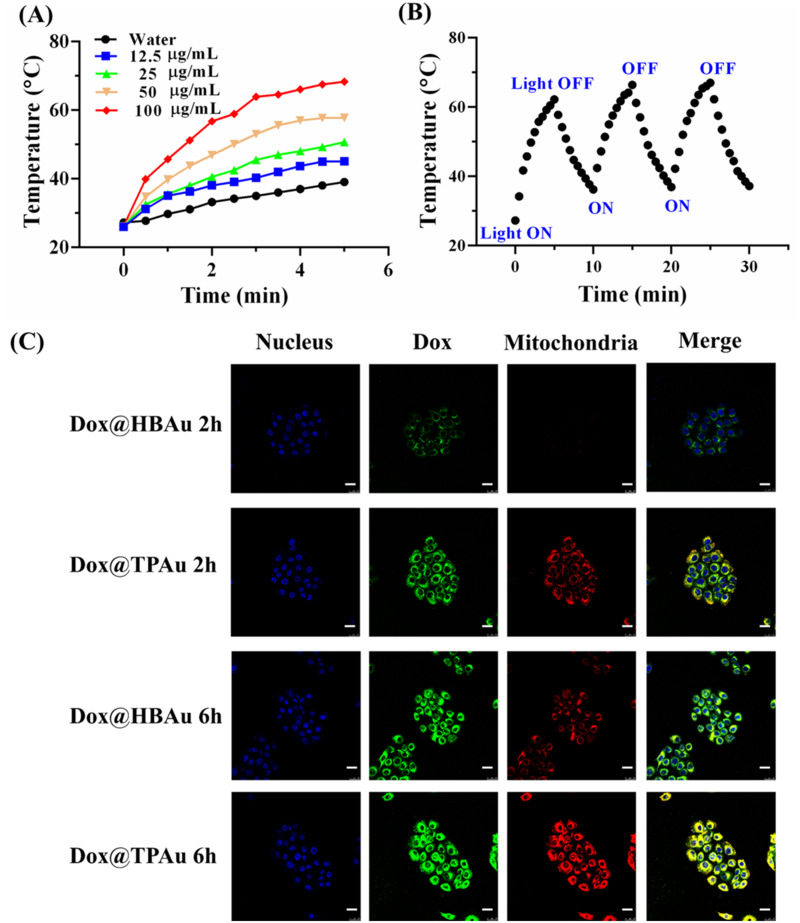
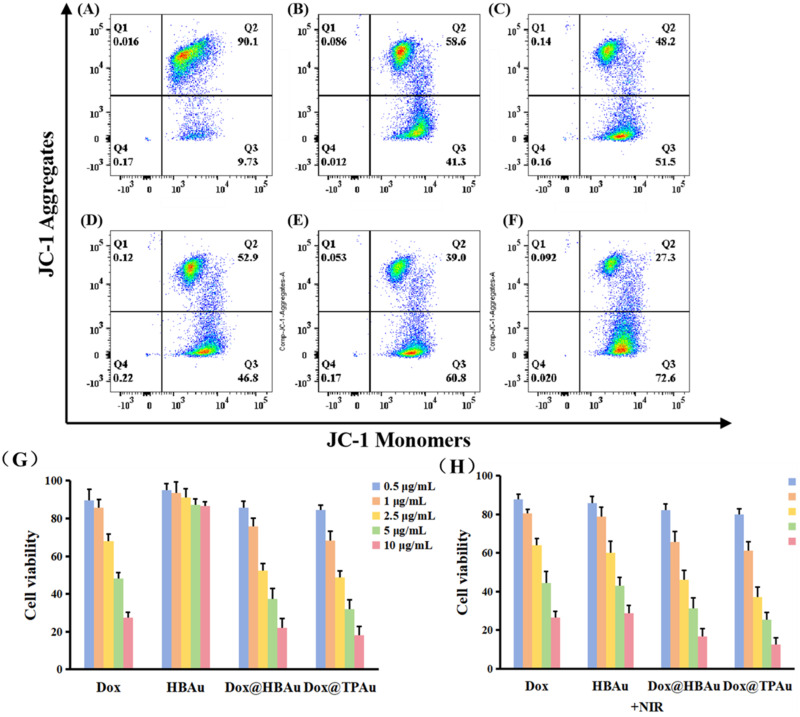
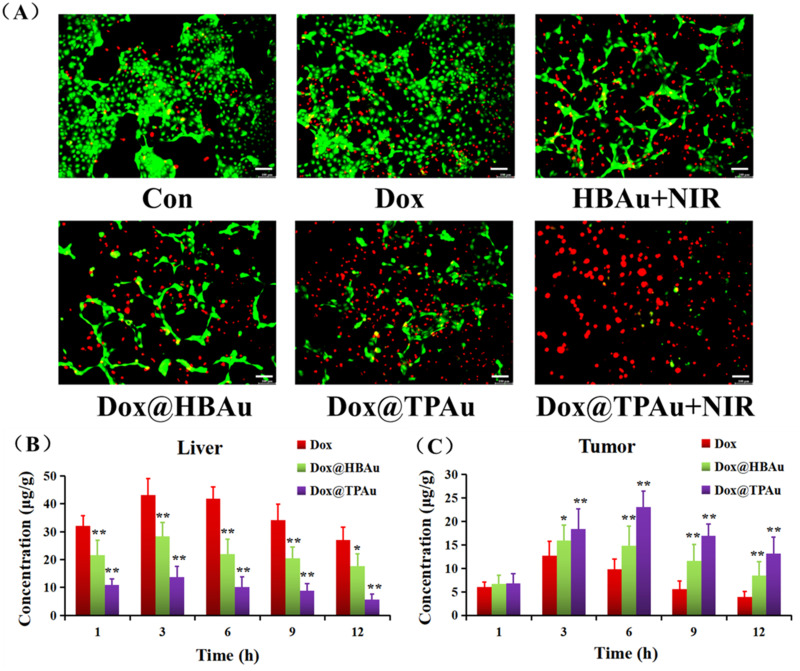
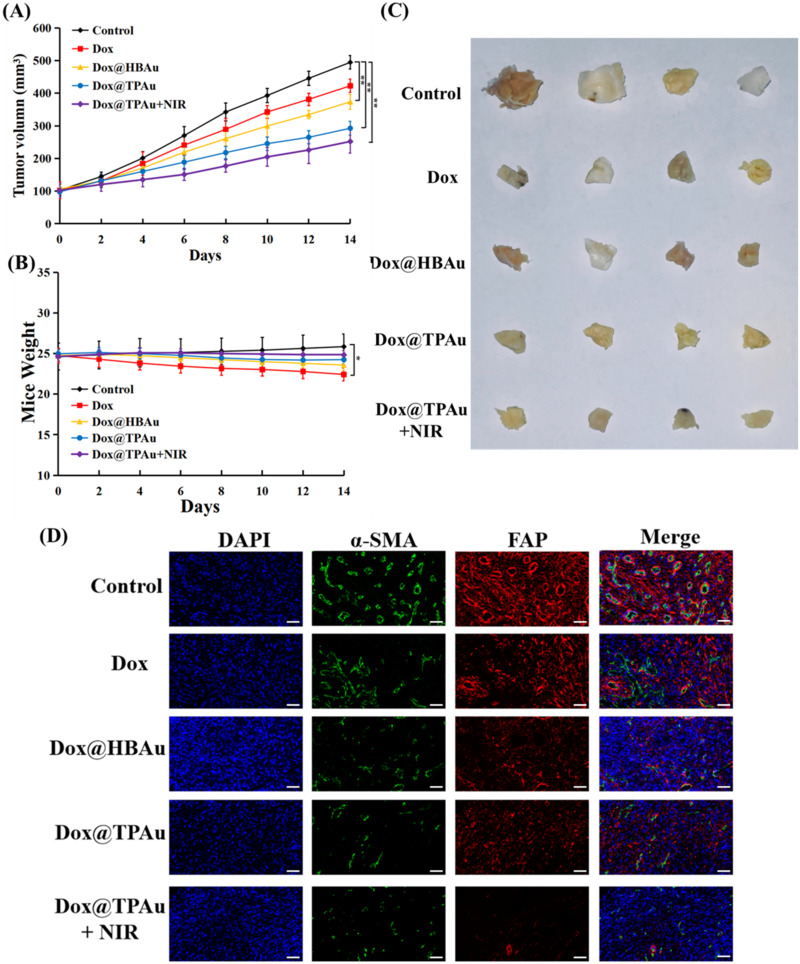
Dox@TPAu exhibits superior photothermal conversion efficiency (91.0%) alongside a high drug loading efficiency (26%) and effective photo-triggered drug-release potential. This Dox@TPAu drug delivery system adeptly accumulates at tumor sites due to its unique properties, enabling targeted localization within cancer cells and the mitochondria of stromal fibroblasts. This localization disrupts mitochondrial function and transfer-processes crucial for energy production, metabolism, and cell signaling within the tumor microenvironment. Pharmacokinetic analyses revealed an optimal spatiotemporal distribution of Dox@TPAu at the tumor site. This strategic accumulation enables precise disruption of both the physical barrier and cancer cells, enhancing treatment efficacy through near-infrared light-triggered local chemo-photothermal synergistic therapy.
Our findings demonstrate that this innovative strategy effectively leverages the unique properties of mitochondria-targeting, virus-like AuNPs for precise and efficient stromal depletion, presenting a promising approach to enhance the efficacy of pancreatic cancer treatment.
胰腺肿瘤微环境的致密性和纤维化特性显著促进了肿瘤的侵袭和转移。这种具有挑战性的环境构成了巨大的障碍,阻碍了药物的有效渗透和递送,最终限制了传统癌症治疗的疗效。金纳米颗粒(AuNPs)已成为克服细胞外基质屏障的有前景的纳米载体;然而,它们有限的靶向精度、较差的递送效率和不足的光热转换带来了挑战。
我们开发了三苯基膦功能化的高分支金纳米颗粒,称为Dox@TPAu,以增强药物递送和靶向能力。对Dox@TPAu的靶向渗透、生物药剂学和药代动力学特性进行了表征,并通过BxPC-3异种移植肿瘤小鼠模型评估了其协同治疗效果。
Dox@TPAu具有卓越的光热转换效率(91.0%),同时具有高载药效率(26%)和有效的光触发药物释放潜力。这种Dox@TPAu药物递送系统因其独特的性质能够巧妙地在肿瘤部位积累,实现癌细胞和基质成纤维细胞线粒体中的靶向定位。这种定位破坏了线粒体功能以及肿瘤微环境中能量产生、代谢和细胞信号传导所必需的转运过程。药代动力学分析显示Dox@TPAu在肿瘤部位具有最佳的时空分布。这种策略性积累能够精确破坏物理屏障和癌细胞,通过近红外光触发的局部化学-光热协同治疗提高治疗效果。
我们的研究结果表明,这种创新策略有效地利用了靶向线粒体、病毒样AuNPs的独特性质进行精确高效的基质清除,为提高胰腺癌治疗效果提供了一种有前景的方法。