Mathewos Tsega, Tesfahun Esubalew, Aemiro Muluken Tessema, Dejene Tadesse Mamo
Department of Public Health, School of Public Health, Asrat Woldeyes Health Science Campus, Debre Berhan University, Debre Birhan, Ethiopia.
Department of Epidemiology, Biostatistics and Health Informatics, School of Public Health, Asrat Woldeyes Health Science Campus, Debre Berhan University, Debre Birhan, Ethiopia.
Front Reprod Health. 2024 Dec 19;6:1491617. doi: 10.3389/frph.2024.1491617. eCollection 2024.
Today's youth are adopting a new trend: casual sex. College students are expected to engage in a range of potentially harmful sexual activities, such as casual sex. Numerous factors can lead students to engage in casual sexual encounters. However, there has been limited research on the prevalence of casual sex and related issues in higher education institutions in Ethiopia.
To assess the prevalence of casual sex and its associated factors among regular undergraduate students at Debre Berhan University in 2023.
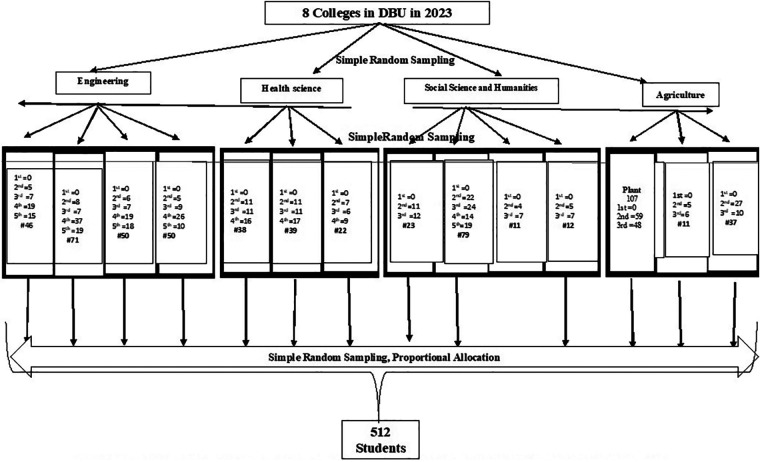
From 15 May 2023, to 30 May 2023, regular undergraduate students from Debre Berhan University participated in a cross-sectional study. A total of 512 samples were collected using a multistage sampling technique. Subsequently, a simple random sampling technique was employed to select the students, with a proportionate allocation of samples distributed to randomly selected colleges, departments, and academic years. The data were collected using a structured, pretested, and self-administered questionnaire. Once the data were imported into Epi-data version 4.6 and exported to SPSS version 20 for analysis, frequencies, percentages, and tables were generated. Bivariate and multivariate logistic regression models were used to identify characteristics associated with casual sex.
The prevalence of casual sex among regular undergraduate students at Debre Berhan University was 31.0% 95% CI (27.2-34.6). Several factors were significantly associated with casual sex. These included students from urban areas [AOR: 2.95; 95% CI (1.66-5.24)], students with poor academic performance [AOR: 2.81; 95% CI (1.51-5.22)], alcohol consumption [AOR: 4.59; 95% CI (2.60-8.12)], attending nightclubs [AOR: 2.75; 95% CI (1.47-5.16)], watching pornography [AOR: 2.59; 95% CI (1.47-5.16)], and peer pressure [AOR: 2.24; 95% CI (1.38-3.65)].
The prevalence of casual sex was high among Debre Berhan University students. In order to lessen the negative effects of casual sex practices, this study found predictors that can be avoided through various interventions. Key preventative measures include improving student academic performance, providing engaging and free entertainment, restricting access to pornographic websites on university Wi-Fi, and employing peer educators.
当今的年轻人正流行一种新趋势:随意性行为。大学生被认为会参与一系列潜在有害的性活动,比如随意性行为。众多因素会导致学生进行随意性接触。然而,关于埃塞俄比亚高等教育机构中随意性行为的流行程度及相关问题的研究一直有限。
评估2023年德布雷伯尔汉大学普通本科学生中随意性行为的流行程度及其相关因素。
2023年5月15日至5月30日,德布雷伯尔汉大学的普通本科学生参与了一项横断面研究。使用多阶段抽样技术共收集了512个样本。随后,采用简单随机抽样技术选取学生,按比例将样本分配到随机选择的学院、系和学年。数据通过一份结构化、经过预测试且由学生自行填写的问卷收集。数据导入Epi - data 4.6版本并导出到SPSS 20版本进行分析后,生成了频率、百分比和表格。使用二元和多元逻辑回归模型来确定与随意性行为相关的特征。
德布雷伯尔汉大学普通本科学生中随意性行为的流行率为31.0%,95%置信区间为(27.2 - 34.6)。几个因素与随意性行为显著相关。这些因素包括来自城市地区的学生[AOR:2.95;95%置信区间(1.66 - 5.24)]、学业成绩差的学生[AOR:2.81;95%置信区间(1.51 - 5.22)]、饮酒[AOR:4.59;95%置信区间(2.60 - 8.12)]、去夜店[AOR:2.75;95%置信区间(1.47 - 5.16)]、观看色情内容[AOR:2.59;95%置信区间(1.47 - 5.16)]以及同伴压力[AOR:2.24;95%置信区间(1.38 - 3.65)]。
德布雷伯尔汉大学学生中随意性行为的流行率较高。为了减轻随意性行为带来的负面影响,本研究发现了一些可通过各种干预措施避免的预测因素。关键的预防措施包括提高学生的学业成绩、提供有趣且免费的娱乐活动、限制通过大学无线网络访问色情网站以及聘请同伴教育者。