Li Guanmou, Peng Bo, Fan Junqiao, Lin Dongqun, He Kunyang, Zou Rongjun, Fan Xiaoping
Department of Cardiovascular Surgery, Guangdong Provincial Hospital of Chinese Medicine, the Second Affiliated Hospital of Guangzhou University of Chinese Medicine, the Second Clinical College of Guangzhou University of Chinese Medicine, Guangzhou 510120, Guangdong, China.
Zhujiang Hospital of Southern Medical University, Guangzhou 510120, Guangdong, China.
Int J Cardiol Heart Vasc. 2024 Aug 28;55:101501. doi: 10.1016/j.ijcha.2024.101501. eCollection 2024 Dec.
There are some common pathophysiological risk factors between myocardial infarction and osteoporosis, and the exact relationship between the two is not yet clear. Our study aims to provide evidence on the relationship between myocardial infarction and osteoporosis through the analysis of data from the National Health and Nutrition Examination Survey (NHANES) and Mendelian Randomization (MR) analysis from 2015 to 2018.
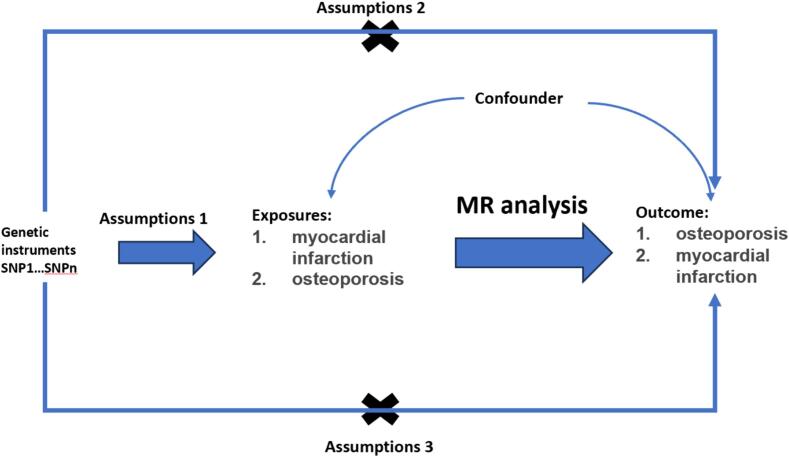
A two-sample MR study using summary statistics from genome-wide association studies (GWAS) was conducted to determine the causal relationship between myocardial infarction and osteoporosis. The Inverse Variance Weighted (IVW) method and other supplementary MR methods were used to validate the causal relationship between myocardial infarction and osteoporosis. Sensitivity analysis was performed to verify the robustness of the results. Weighted multivariable adjusted logistic regression was used on the NHANES 2015-2018 data to evaluate the relationship between HDL, LDL, and BMD factors closely related to myocardial infarction.
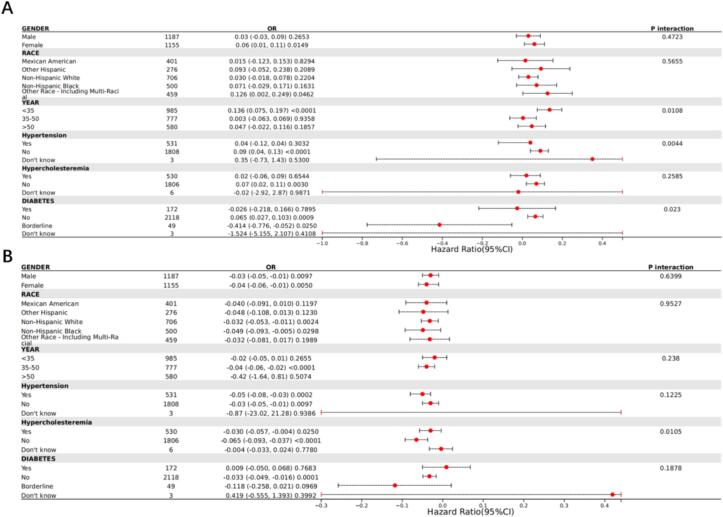
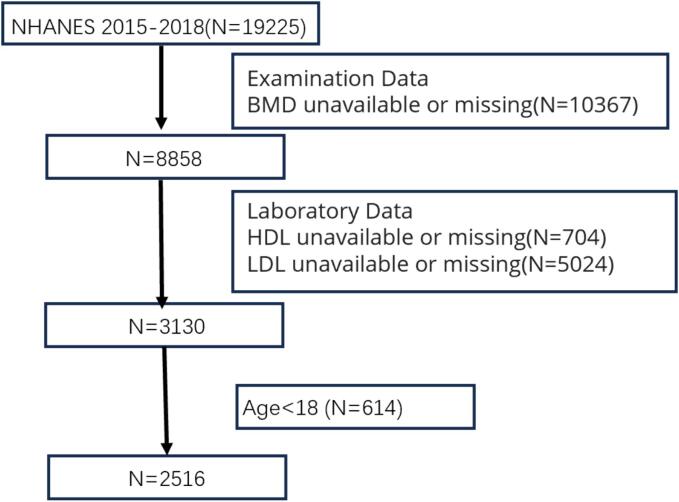
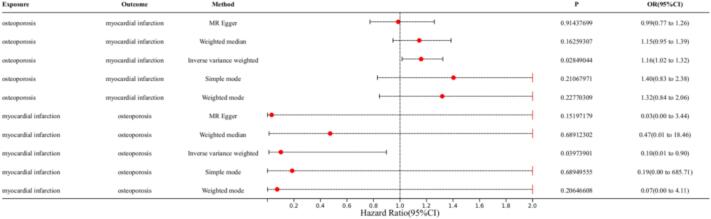
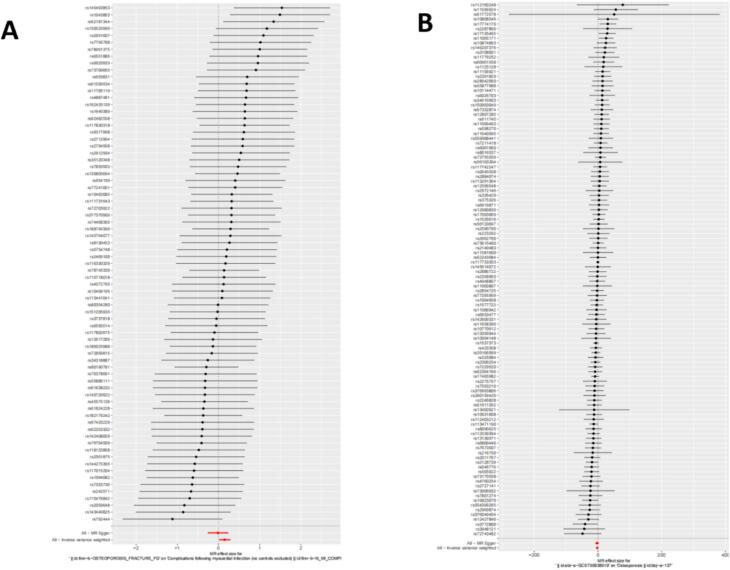
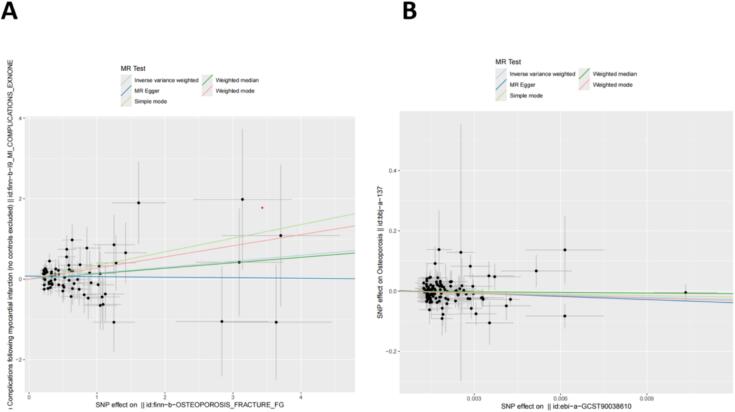
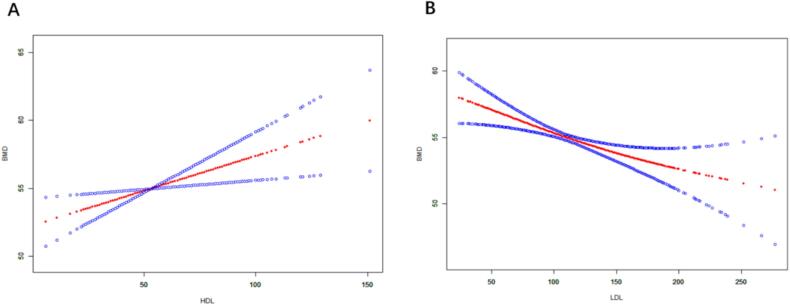
An observational study conducted in NHANES included a total of 2516 participants. Weighted multivariable adjusted logistic regression analysis showed that HDL was positively correlated with BMD, with OR and 95 % CI of 0.051 and 0.013-0.088, respectively. LDL was negatively correlated with BMD. The MR analysis also indicated a causal relationship between myocardial infarction and osteoporosis (IVW (OR = 1.16, 95 % CI = 1.02-1.32, P = 0.03)). Sensitivity analysis further confirmed the robustness and reliability of these study results (all P > 0.05).
There is a causal relationship between myocardial infarction and osteoporosis.
心肌梗死和骨质疏松症之间存在一些共同的病理生理风险因素,两者之间的确切关系尚不清楚。我们的研究旨在通过分析2015年至2018年美国国家健康与营养检查调查(NHANES)的数据和孟德尔随机化(MR)分析,为心肌梗死与骨质疏松症之间的关系提供证据。
采用两样本MR研究,利用全基因组关联研究(GWAS)的汇总统计数据来确定心肌梗死与骨质疏松症之间的因果关系。使用逆方差加权(IVW)方法和其他补充MR方法来验证心肌梗死与骨质疏松症之间的因果关系。进行敏感性分析以验证结果的稳健性。对2015 - 2018年NHANES数据采用加权多变量调整逻辑回归,以评估与心肌梗死密切相关的高密度脂蛋白(HDL)、低密度脂蛋白(LDL)和骨密度(BMD)因素之间的关系。
在NHANES中进行的一项观察性研究共纳入2516名参与者。加权多变量调整逻辑回归分析显示,HDL与BMD呈正相关,比值比(OR)和95%置信区间(CI)分别为0.051和0.013 - 0.088。LDL与BMD呈负相关。MR分析还表明心肌梗死与骨质疏松症之间存在因果关系(IVW(OR = 1.16,95% CI = 1.02 - 1.32,P = 0.03))。敏感性分析进一步证实了这些研究结果的稳健性和可靠性(所有P > 0.05)。
心肌梗死与骨质疏松症之间存在因果关系。