Fu Enze, Pan Kai, Li Zongjin
School of Medicine, Nankai University, Tianjin, China.
Institute of Ophthalmology, Nankai University, Tianjin, China.
Front Cardiovasc Med. 2024 Dec 19;11:1503830. doi: 10.3389/fcvm.2024.1503830. eCollection 2024.
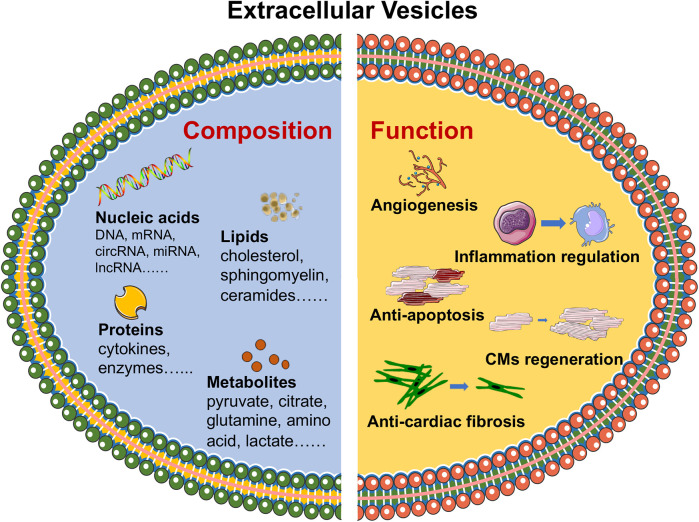
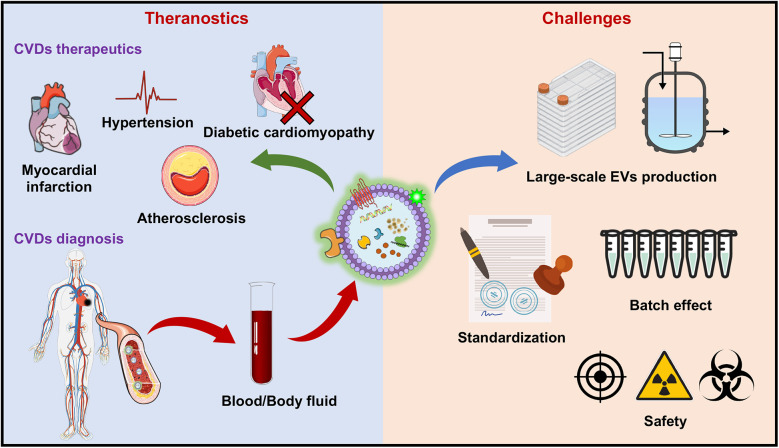
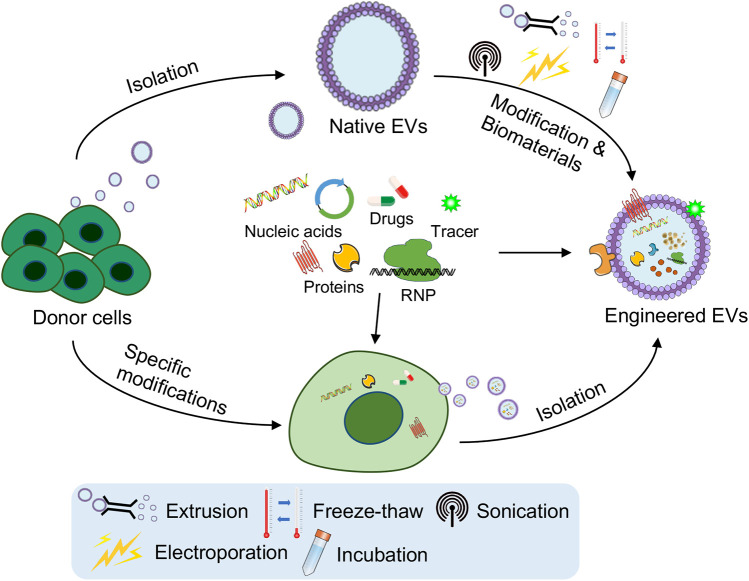
Extracellular vesicles (EVs) are nanosized particles secreted by cells that play crucial roles in intercellular communication, especially in the context of cardiovascular diseases (CVDs). These vesicles carry complex cargo, including proteins, lipids, and nucleic acids, that reflects the physiological or pathological state of their cells of origin. Multiomics analysis of cell-derived EVs has provided valuable insights into the molecular mechanisms underlying CVDs by identifying specific proteins and EV-bound targets involved in disease progression. Recent studies have demonstrated that engineered EVs, which are designed to carry specific therapeutic molecules or modified to enhance their targeting capabilities, hold promise for treating CVDs. Analysis of the EV proteome has been instrumental in identifying key proteins that can be targeted or modulated within these engineered vesicles. For example, proteins involved in inflammation, thrombosis, and cardiac remodeling have been identified as potential therapeutic targets. Furthermore, the engineering of EVs to increase their delivery to specific tissues, such as the myocardium, or to modulate their immunogenicity and therapeutic efficacy is an emerging area of research. By leveraging the insights gained from multiomics analyses, researchers are developing EV-based therapies that can selectively target pathological processes in CVDs, offering a novel and potentially more effective treatment strategy. This review integrates the core findings from EV multiomics analysis in the context of CVDs and highlights the potential of engineered EVs in therapeutic applications.
细胞外囊泡(EVs)是细胞分泌的纳米级颗粒,在细胞间通讯中发挥着关键作用,尤其是在心血管疾病(CVD)的背景下。这些囊泡携带包括蛋白质、脂质和核酸在内的复杂货物,反映了其起源细胞的生理或病理状态。对细胞衍生的EVs进行多组学分析,通过识别参与疾病进展的特定蛋白质和与EV结合的靶点,为了解CVD的分子机制提供了有价值的见解。最近的研究表明,经过工程改造的EVs,旨在携带特定的治疗分子或经过修饰以增强其靶向能力,有望用于治疗CVD。对EV蛋白质组的分析有助于识别这些工程化囊泡中可以被靶向或调节的关键蛋白质。例如,参与炎症、血栓形成和心脏重塑的蛋白质已被确定为潜在的治疗靶点。此外,对EVs进行工程改造,以增加它们向特定组织(如心肌)的递送,或调节它们的免疫原性和治疗效果,是一个新兴的研究领域。通过利用从多组学分析中获得的见解,研究人员正在开发基于EVs的疗法,这些疗法可以选择性地靶向CVD中的病理过程,提供一种新颖且可能更有效的治疗策略。这篇综述整合了在CVD背景下EV多组学分析的核心发现,并强调了工程化EVs在治疗应用中的潜力。