Laugwitz Lucia, Buchert Rebecca, Olguín Patricio, Estiar Mehrdad A, Atanasova Mihaela, Jr Wilson Marques, Enssle Jörg, Marsden Brian, Avilés Javiera, González-Gutiérrez Andrés, Candia Noemi, Fabiano Marietta, Morlot Susanne, Peralta Susana, Groh Alisa, Schillinger Carmen, Kuehn Carolin, Sofan Linda, Sturm Marc, Bender Benjamin, Tomaselli Pedro J, Diebold Uta, Mueller Amelie J, Spranger Stephanie, Fuchs Maren, Freua Fernando, Melo Uirá Souto, Mattas Lauren, Ashtiani Setareh, Suchowersky Oksana, Groeschel Samuel, Rouleau Guy A, Yosovich Keren, Michelson Marina, Leibovitz Zvi, Bilal Muhammad, Uctepe Eyyup, Yesilyurt Ahmet, Ozdogan Orhan, Celik Tamer, Krägeloh-Mann Ingeborg, Riess Olaf, Rosewich Hendrik, Umair Muhammad, Lev Dorit, Zuchner Stephan, Schweizer Ulrich, Lynch David S, Gan-Or Ziv, Haack Tobias B
Institute of Medical Genetics and Applied Genomics, University of Tübingen, 72076 Tübingen, Germany; Neuropediatrics, General Paediatrics, Diabetology, Endocrinology and Social Paediatrics, University of Tübingen, University Hospital Tübingen, 72016 Tübingen, Germany.
Institute of Medical Genetics and Applied Genomics, University of Tübingen, 72076 Tübingen, Germany.
Am J Hum Genet. 2025 Jan 2;112(1):168-180. doi: 10.1016/j.ajhg.2024.12.001.
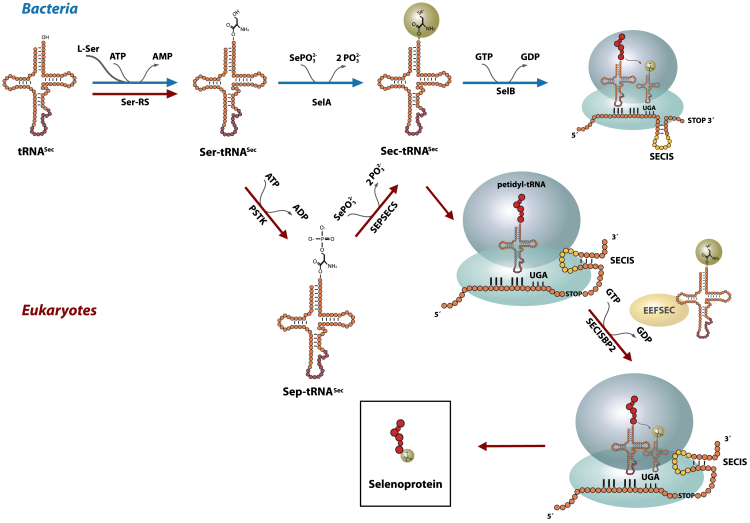
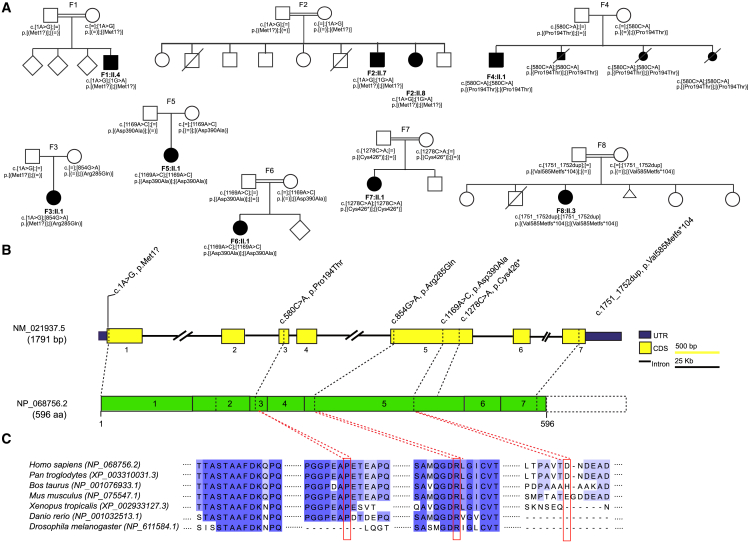
Inborn errors of selenoprotein expression arise from deleterious variants in genes encoding selenoproteins or selenoprotein biosynthetic factors, some of which are associated with neurodegenerative disorders. This study shows that bi-allelic selenocysteine tRNA-specific eukaryotic elongation factor (EEFSEC) variants cause selenoprotein deficiency, leading to progressive neurodegeneration. EEFSEC deficiency, an autosomal recessive disorder, manifests with global developmental delay, progressive spasticity, ataxia, and seizures. Cerebral MRI primarily demonstrated a cerebellar pathology, including hypoplasia and progressive atrophy. Exome or genome sequencing identified six different bi-allelic EEFSEC variants in nine individuals from eight unrelated families. These variants showed reduced EEFSEC function in vitro, leading to lower levels of selenoproteins in fibroblasts. In line with the clinical phenotype, an eEFSec-RNAi Drosophila model displays progressive impairment of motor function, which is reflected in the synaptic defects in this model organisms. This study identifies EEFSEC deficiency as an inborn error of selenocysteine metabolism. It reveals the pathophysiological mechanisms of neurodegeneration linked to selenoprotein metabolism, suggesting potential targeted therapies.
硒蛋白表达的先天性缺陷源于编码硒蛋白或硒蛋白生物合成因子的基因中的有害变异,其中一些与神经退行性疾病有关。本研究表明,双等位基因硒代半胱氨酸tRNA特异性真核延伸因子(EEFSEC)变异会导致硒蛋白缺乏,进而导致进行性神经退行性变。EEFSEC缺乏症是一种常染色体隐性疾病,表现为全面发育迟缓、进行性痉挛、共济失调和癫痫发作。脑部核磁共振成像主要显示小脑病变,包括发育不全和进行性萎缩。外显子组或基因组测序在来自八个无关家庭的九名个体中鉴定出六种不同的双等位基因EEFSEC变异。这些变异在体外显示出EEFSEC功能降低,导致成纤维细胞中硒蛋白水平降低。与临床表型一致,一个eEFSec-RNAi果蝇模型显示出运动功能的进行性损害,这在该模式生物的突触缺陷中得到体现。本研究将EEFSEC缺乏症确定为硒代半胱氨酸代谢的先天性缺陷。它揭示了与硒蛋白代谢相关的神经退行性变的病理生理机制,提示了潜在的靶向治疗方法。