Aras Shravan G, Grant Azure D, Konhilas John P
Center for Biomedical Informatics and Biostatistics, University of Arizona Health Sciences, Tucson, AZ, 85750, USA.
Opensci, LLC, Tucson, AZ, 85750, USA.
Sci Rep. 2025 Jan 3;15(1):640. doi: 10.1038/s41598-024-84208-3.
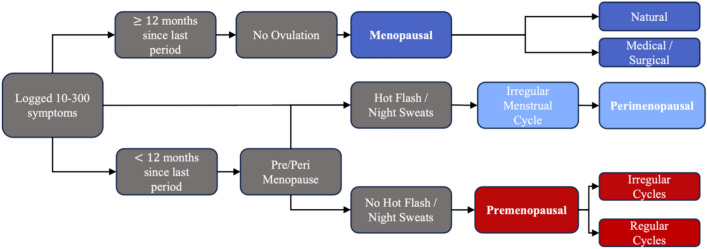
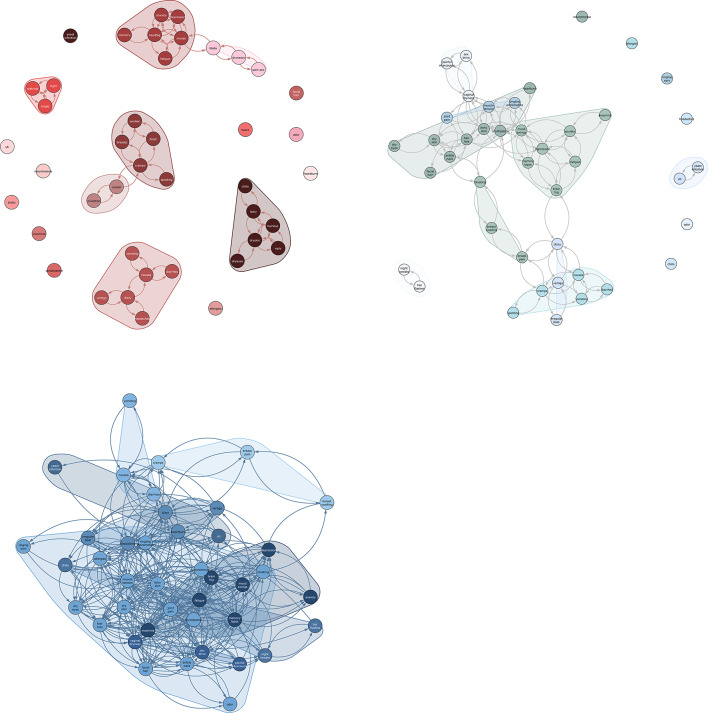
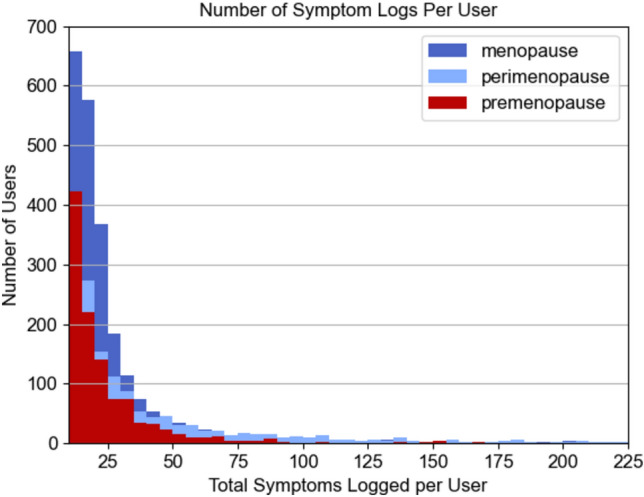
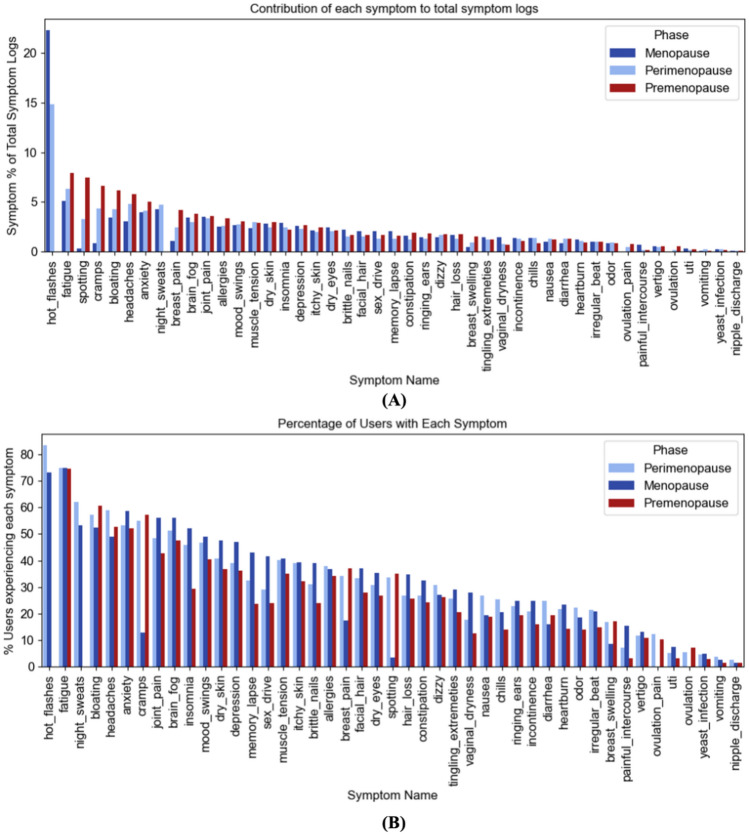
The transition to menopause is associated with disappearance of menstrual cycle symptoms and emergence of vasomotor symptoms. Although menopausal women report a variety of additional symptoms, it remains unclear which emerge prior to menopause, which occur in predictable clusters, how clusters change across the menopausal transition, or if distinct phenotypes are present within each life stage. We present an analysis of symptoms in premenopausal to menopausal women using the MenoLife app, which includes 4789 individuals (23% premenopausal, 29% perimenopausal, 48% menopausal) and 147,501 symptom logs (19% premenopausal, 39% perimenopausal, 42% menopausal). Clusters generated from logs of 45 different symptoms were assessed for similarities across methods: hierarchical clustering analysis (HCA), K-Means clustering of principal components of symptom reports, and binomial network analysis. Participants were further evaluated based on menstrual cycle regularity or natural versus medically induced menopause. Menstrual cycle-associated symptoms (e.g., cramps, breast swelling), digestive, mood, and integumentary symptoms were characteristic of premenopause. Vasomotor symptoms, pain, mood, and cognitive symptoms were characteristic of menopause. Perimenopausal women exhibited both menstrual cycle-associated and vasomotor symptoms. Subpopulations across life stages presented with additional correlated mood and cognitive, integumentary, digestive, nervous, or sexual complaints. Symptoms also differed among women depending on the reported regularity of their menstrual cycles or the way in which they entered menopause. Notably, we identified a set of symptoms that were very common across life stages: fatigue, headache, anxiety, and brain fog. Finally, we identified a lack of predictive power of hot flashes for any symptom except night sweats. Together, premenopausal women exhibit menstrual cycle-associated symptoms and menopausal women reported vasomotor symptoms, while perimenopausal women report both. All report high rates of fatigue, headache, anxiety, and brain fog. Limiting focus of menopausal treatment to vasomotor symptoms, or to premenstrual syndrome in premenopausal women, neglects a large proportion of overall symptom burden. Future interventions targeting mood and cognition, digestion, and the integumentary system are needed across stages of female reproductive life.
向更年期的过渡与月经周期症状的消失和血管舒缩症状的出现有关。尽管更年期女性报告了多种其他症状,但尚不清楚哪些症状在绝经前出现,哪些症状以可预测的集群形式出现,这些集群在更年期过渡期间如何变化,或者每个生命阶段是否存在不同的表型。我们使用MenoLife应用程序对绝经前至绝经后女性的症状进行了分析,该应用程序包括4789名个体(23%为绝经前,29%为围绝经期,48%为绝经后)和147501条症状记录(19%为绝经前,39%为围绝经期,42%为绝经后)。通过分层聚类分析(HCA)、症状报告主成分的K均值聚类和二项式网络分析等方法,对由45种不同症状的记录生成的集群进行了相似性评估。根据月经周期规律或自然绝经与药物诱导绝经情况对参与者进行了进一步评估。与月经周期相关的症状(如痉挛、乳房胀痛)、消化系统症状、情绪症状和皮肤症状是绝经前的特征。血管舒缩症状、疼痛、情绪症状和认知症状是绝经后的特征。围绝经期女性同时表现出与月经周期相关的症状和血管舒缩症状。不同生命阶段的亚人群还存在其他相关的情绪和认知、皮肤、消化、神经或性方面的不适。症状在女性中也因报告的月经周期规律或进入更年期的方式不同而有所差异。值得注意的是,我们确定了一组在各个生命阶段都非常常见的症状:疲劳、头痛、焦虑和脑雾。最后,我们发现潮热除了对盗汗外,对任何症状都缺乏预测能力。总之,绝经前女性表现出与月经周期相关的症状,绝经后女性报告有血管舒缩症状,而围绝经期女性两者都有报告。所有女性都报告有较高比例的疲劳、头痛、焦虑和脑雾。将更年期治疗的重点局限于血管舒缩症状,或局限于绝经前女性的经前综合征,忽略了很大一部分总体症状负担。在女性生殖生活的各个阶段,都需要针对情绪和认知、消化以及皮肤系统的未来干预措施。