Kim Daehwan, Chung Heekyung, Liu Wen, Jeong Kangjin, Ozmen Tugba Y, Ozmen Furkan, Rames Matthew J, Kim Sangyub, Guo Xiao, Jameson Nathan, de Jong Petrus R, Yea Steven, Harford Laurie, Li Jiali, Mathews Cara A, Doroshow Deborah B, Charles Vincent J, Kim Doris, Fischer Kimberlee, Samatar Ahmed A, Jubb Adrian, Bunker Kevin D, Blackwell Kimberly, Simpkins Fiona, Meric-Bernstam Funda, Mills Gordon B, Harismendy Olivier, Ma Jianhui, Lackner Mark R
Zentalis Pharmaceuticals, Inc., San Diego, CA, USA.
Division of Oncological Sciences, Knight Cancer Institute, Oregon Health and Science University, Portland, OR, USA.
NPJ Precis Oncol. 2025 Jan 4;9(1):3. doi: 10.1038/s41698-024-00787-4.
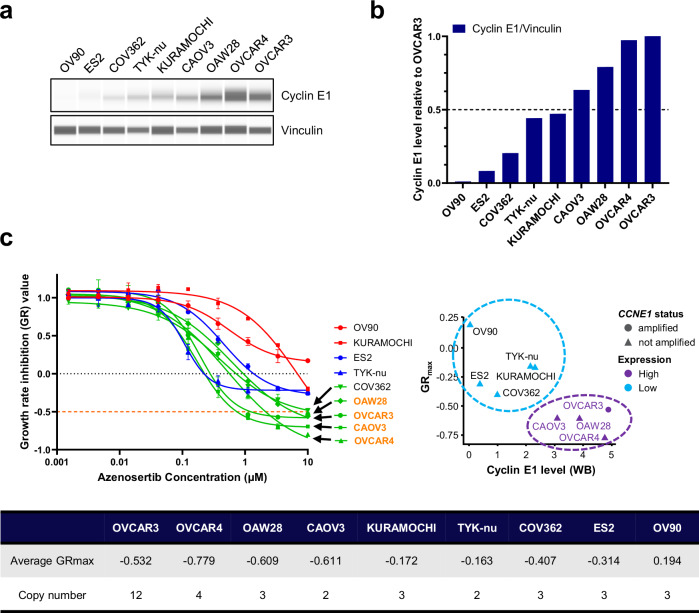
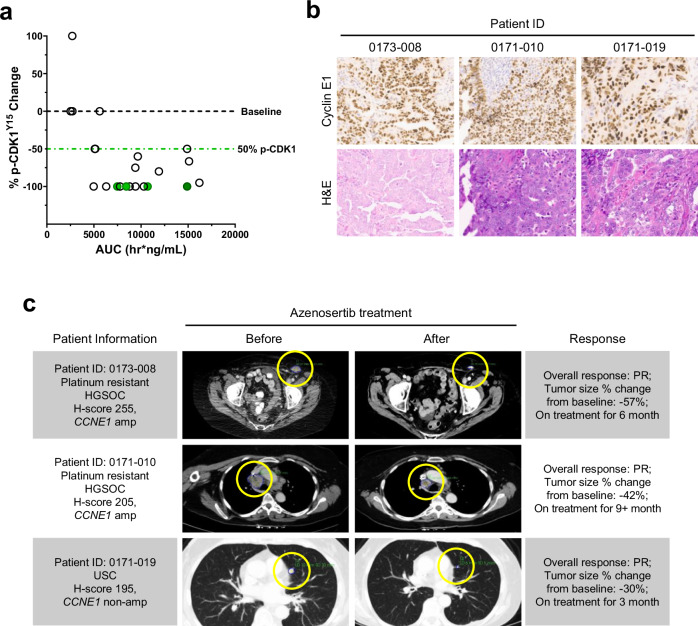
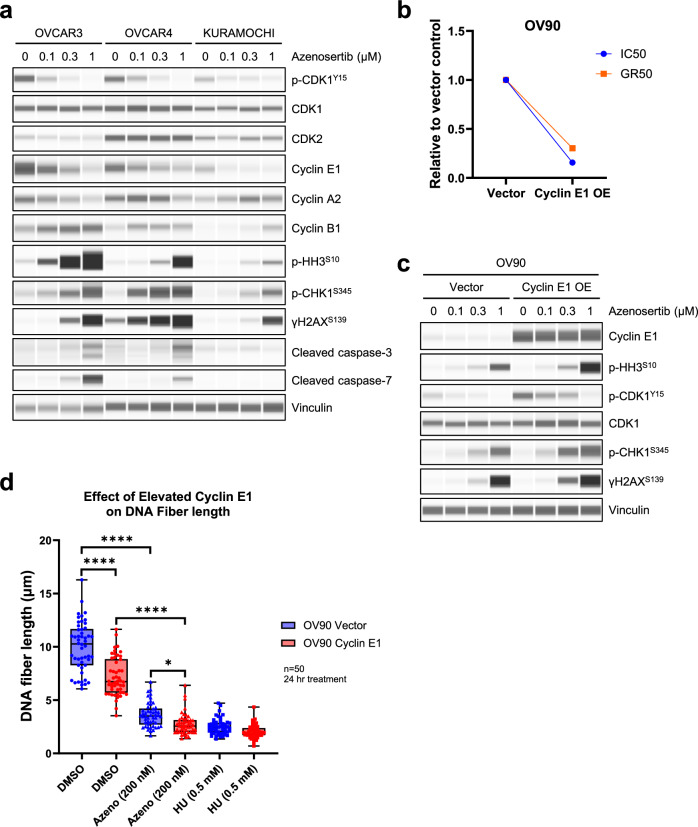
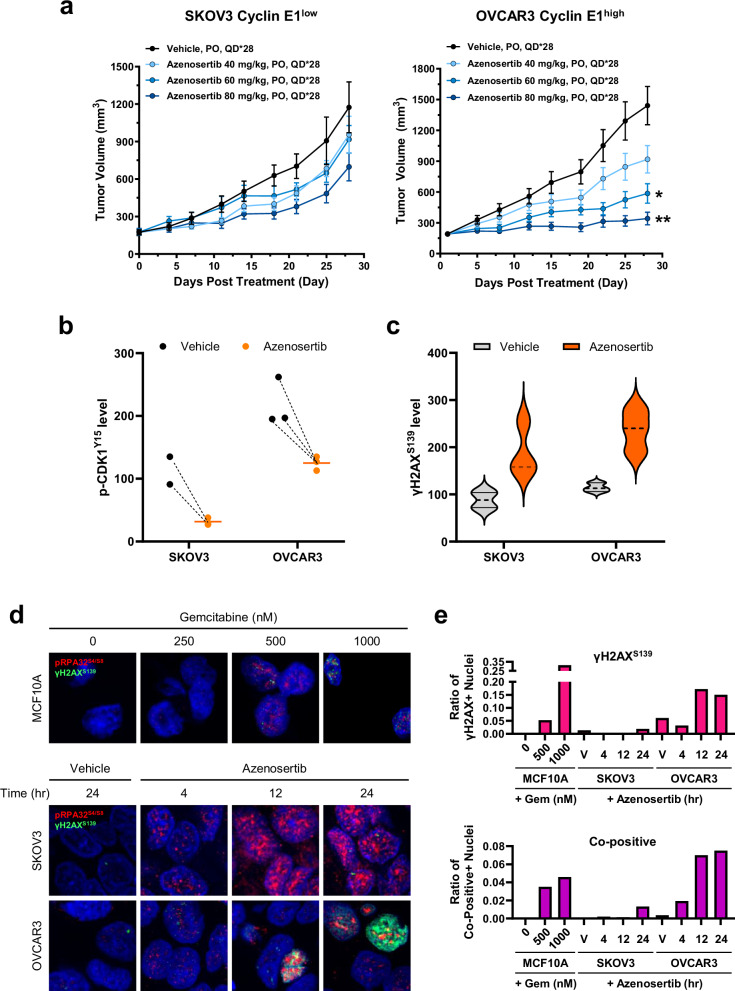
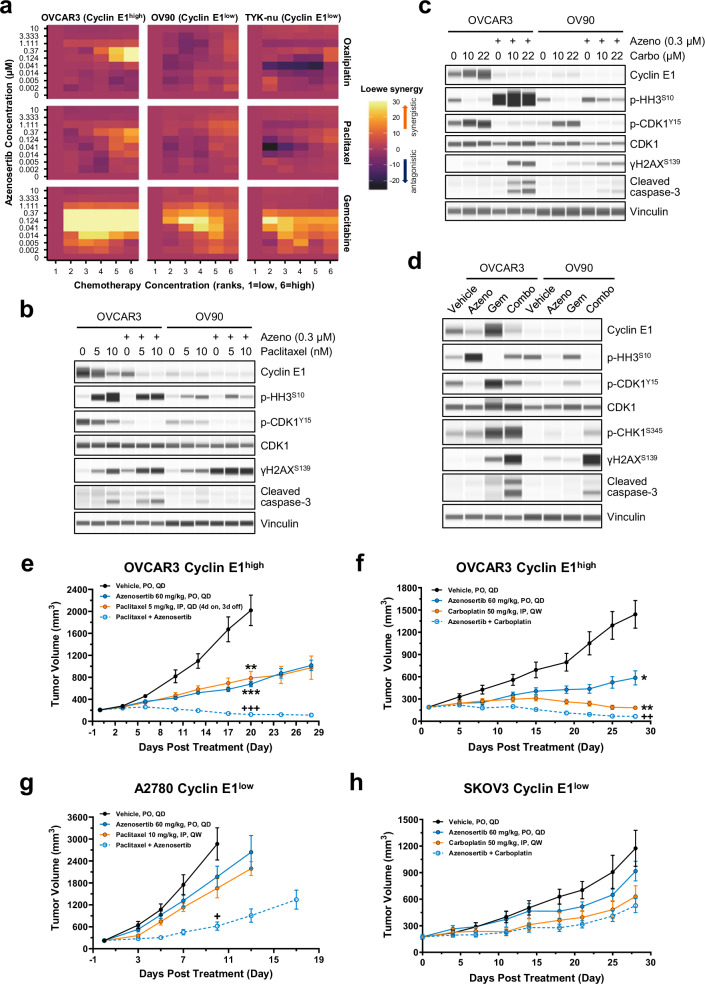
Upregulation of Cyclin E1 and subsequent activation of CDK2 accelerates cell cycle progression from G1 to S phase and is a common oncogenic driver in gynecological malignancies. WEE1 kinase counteracts the effects of Cyclin E1/CDK2 activation by regulating multiple cell cycle checkpoints. Here we characterized the relationship between Cyclin E1/CDK2 activation and sensitivity to the selective WEE1 inhibitor azenosertib. We found that ovarian cancer cell lines with high levels of endogenous Cyclin E1 expression or forced overexpression were exquisitely sensitive to azenosertib and these results extended to in vivo models of ovarian and uterine serous carcinoma. Models with high Cyclin E1 expression showed higher baseline levels of replication stress and enhanced cellular responses to azenosertib treatment. We found azenosertib synergized with different classes of chemotherapy and described distinct underlying mechanisms. Finally, we provided early evidence from an ongoing phase I study demonstrating the clinical activity of monotherapy azenosertib in patients with Cyclin E1/CDK2-activated ovarian and uterine serous carcinomas.
细胞周期蛋白E1的上调及随后细胞周期蛋白依赖性激酶2(CDK2)的激活会加速细胞周期从G1期向S期的进程,并且是妇科恶性肿瘤中常见的致癌驱动因素。WEE1激酶通过调节多个细胞周期检查点来对抗细胞周期蛋白E1/CDK2激活的影响。在此,我们阐述了细胞周期蛋白E1/CDK2激活与对选择性WEE1抑制剂阿泽诺塞替的敏感性之间的关系。我们发现,内源性细胞周期蛋白E1表达水平高或被强制过表达的卵巢癌细胞系对阿泽诺塞替极为敏感,这些结果扩展至卵巢和子宫浆液性癌的体内模型。细胞周期蛋白E1高表达的模型显示出更高的基线复制应激水平,并增强了对阿泽诺塞替治疗的细胞反应。我们发现阿泽诺塞替与不同类型的化疗具有协同作用,并描述了不同的潜在机制。最后,我们提供了一项正在进行的I期研究的早期证据,证明阿泽诺塞替单药治疗对细胞周期蛋白E1/CDK2激活的卵巢和子宫浆液性癌患者具有临床活性。