Ma Lina, He Xiaojie, He Shasha, Yu Shirui, Zhang Song, Fu Yongming
Department of Food Science and Engineering, Moutai Institute Zunyi 564507 China.
School of Physics and Electronic Engineering, State Key Laboratory of Quantum Optics and Quantum Optics Devices, Institute of Laser Spectroscopy, Shanxi University Taiyuan 030006 China
RSC Adv. 2025 Jan 3;15(1):323-330. doi: 10.1039/d4ra07645a. eCollection 2025 Jan 2.
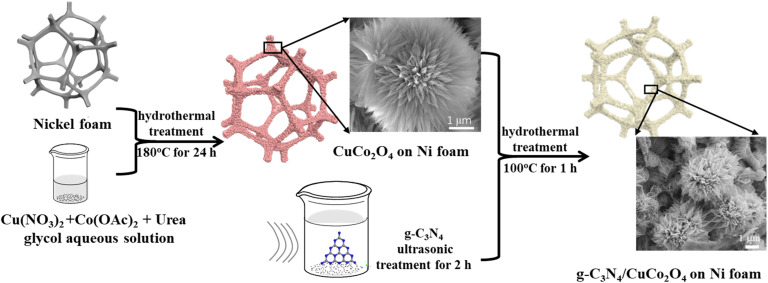
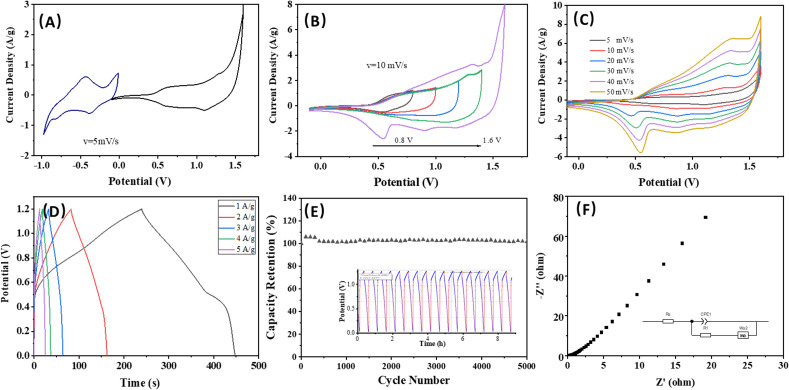
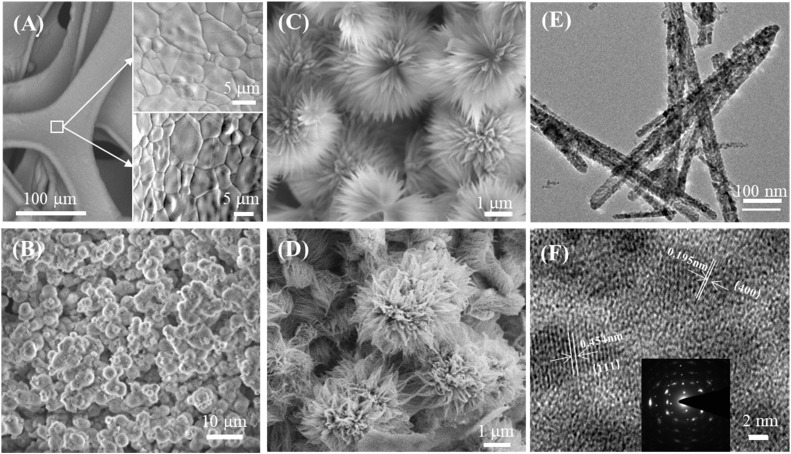
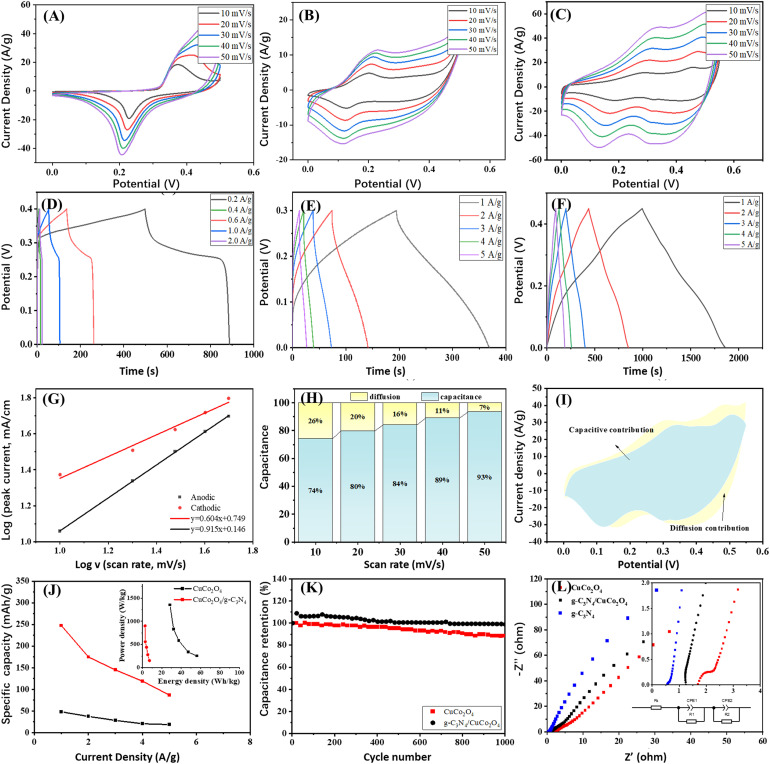
This study investigates the impact of integrating g-CN into CuCoO electrodes on electrochemical performance working as binder-free electrodes. Flower-like CuCoO nanostructures on nickel foam are decorated with few-layer g-CN using a secondary hydrothermal process. The hierarchical g-CN/CuCoO nanoflower electrode demonstrates a specific capacity of 247.5 mA h g at a current density of 1 A g, while maintaining a capacity of 87.0 mA h g at a heightened current density of 5 A g. Notably, this electrode exhibited remarkable durability, retaining 98% of its capacity after 1000 cycles. The g-CN/CuCoO heterostructure shows promise for high-performance energy storage devices.
本研究调查了将g-CN集成到CuCoO电极中对其作为无粘结剂电极的电化学性能的影响。采用二次水热法在泡沫镍上的花状CuCoO纳米结构上装饰了几层g-CN。分层的g-CN/CuCoO纳米花电极在电流密度为1 A g时的比容量为247.5 mA h g,而在电流密度提高到5 A g时仍保持87.0 mA h g的容量。值得注意的是,该电极表现出显著的耐久性,在1000次循环后仍保留其容量的98%。g-CN/CuCoO异质结构在高性能储能器件方面具有潜力。