Zhao Xi, Xu Shencheng, Geng Kexing, Zhou Ting, Xu Tianheng, Wang Zhenyu, Feng Shilun, Hu Honglin
School of Microelectronics, Shanghai University, Shanghai 200444, China.
Shanghai Advanced Research Institute, Chinese Academy of Sciences, Shanghai 201210, China.
iScience. 2024 Sep 25;27(11):111030. doi: 10.1016/j.isci.2024.111030. eCollection 2024 Nov 15.
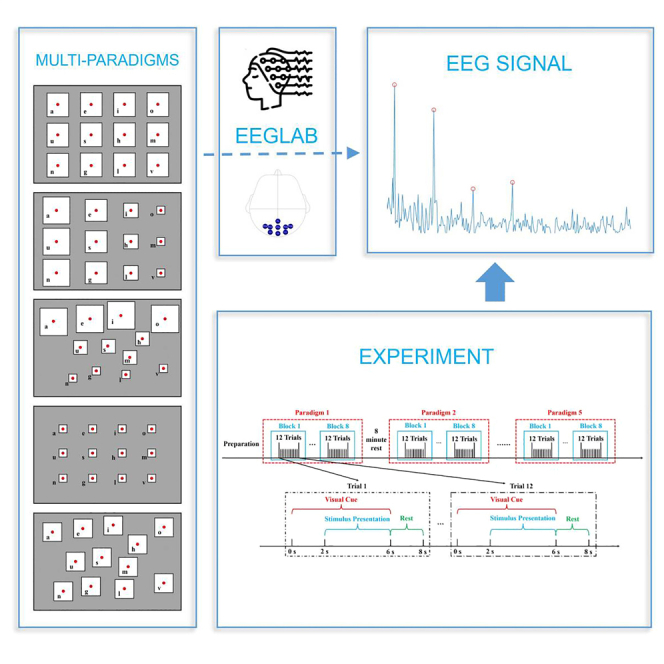
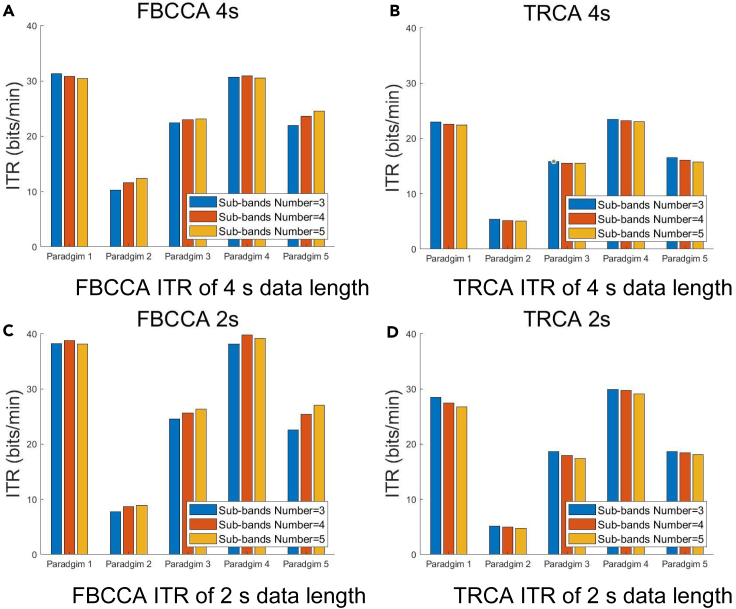
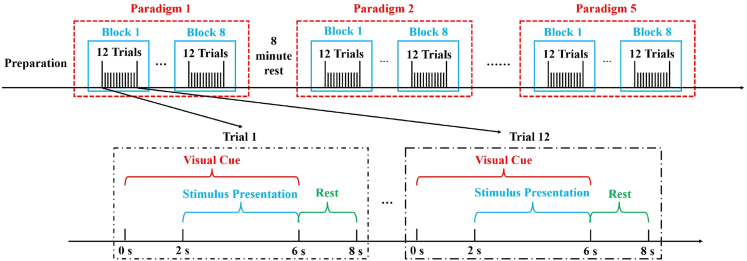
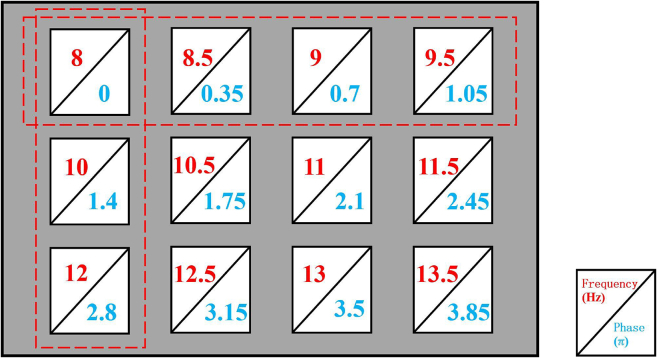
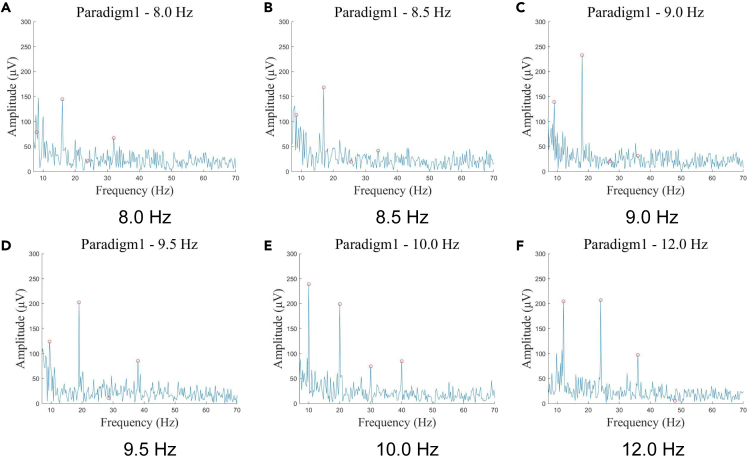
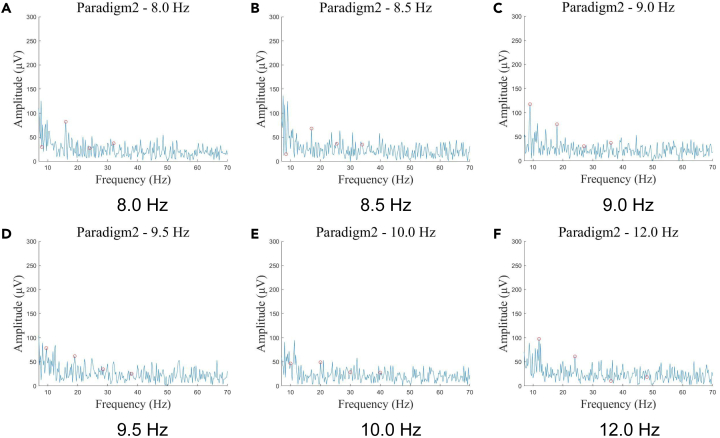
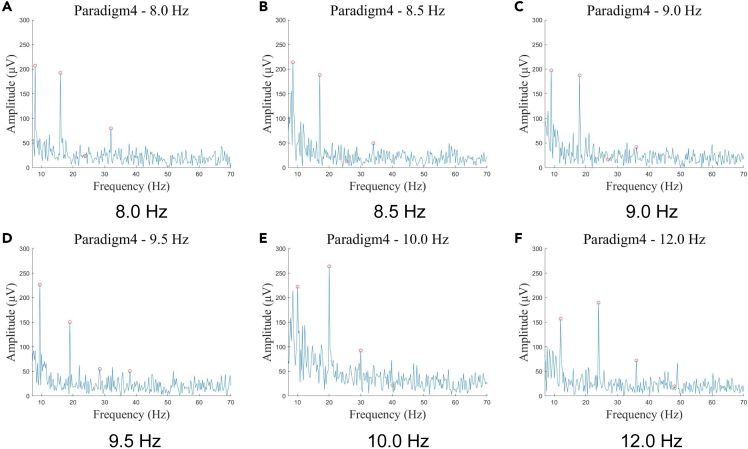
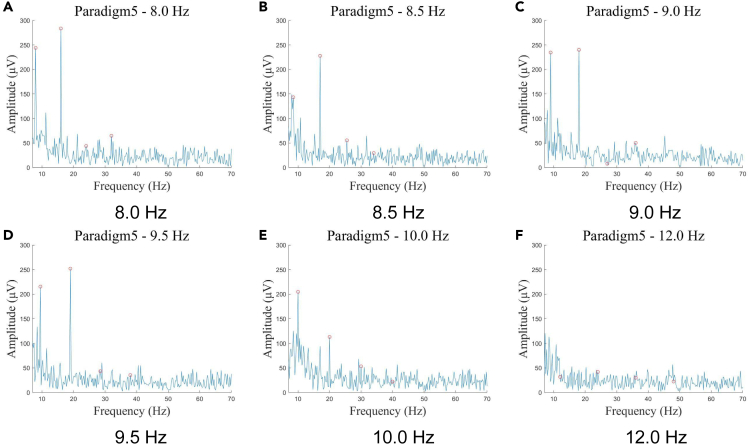
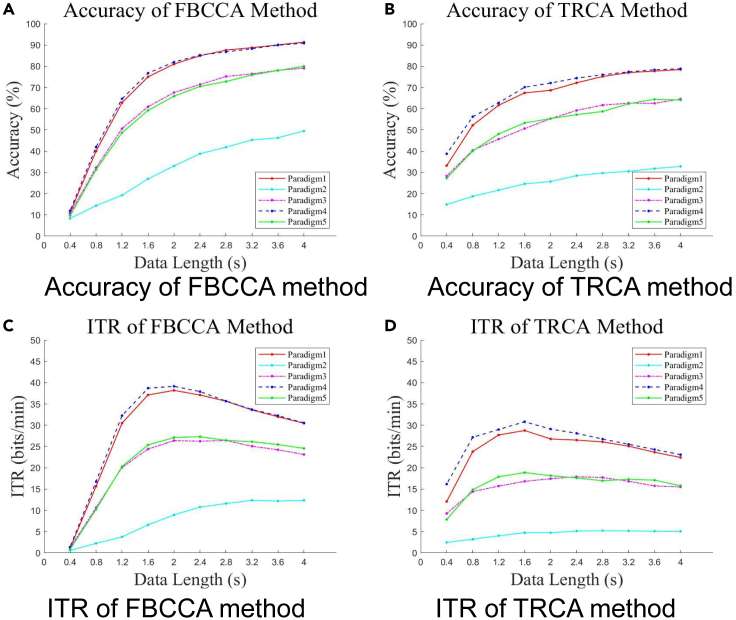
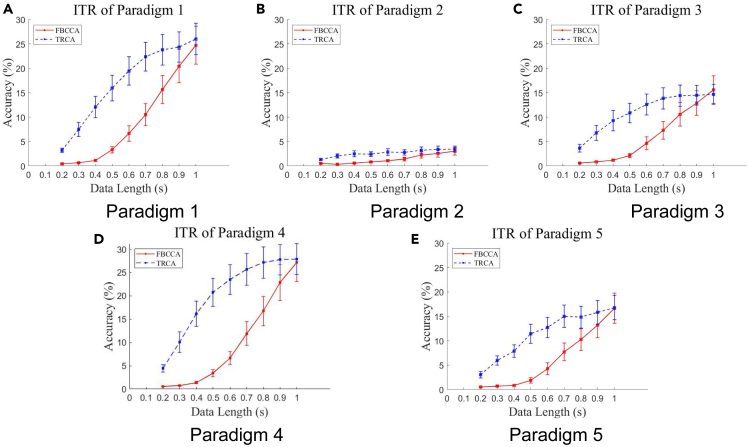
In the field of steady-state visual evoked potential (SSVEP), stimulus paradigms are regularly arranged or mimic the style of a keyboard with the same size. However, stimulation paradigms have important effects on the performance of SSVEP systems, which correlate with the electroencephalogram (EEG) signal amplitude and recognition accuracy. This paper provides MP dataset that was acquired using a 12-target BCI speller. MP dataset contains 9-channel EEG signals from the occipital region of 24 subjects under 5 stimulation paradigms with different stimulus sizes and arrangements. Stimuli were encoded using joint frequency and phase modulation (JFPM) method. Subjects completed an offline prompted spelling task using a speller under 5 paradigms. Each experiment contains 8 blocks, and each block contains 12 trials. Designers can use this dataset to test the performance of algorithms considering "stimulus size" and "stimulus arrangement". EEG data showed SSVEP features through amplitude-frequency analysis. FBCCA and TRCA confirmed its suitability.
在稳态视觉诱发电位(SSVEP)领域,刺激范式通常是规则排列的,或者模仿大小相同的键盘样式。然而,刺激范式对SSVEP系统的性能有重要影响,这与脑电图(EEG)信号幅度和识别准确率相关。本文提供了使用12目标脑机接口拼写器采集的MP数据集。MP数据集包含来自24名受试者枕叶区域的9通道EEG信号,这些信号是在5种具有不同刺激大小和排列的刺激范式下采集的。刺激采用联合频率和相位调制(JFPM)方法进行编码。受试者在5种范式下使用拼写器完成了一项离线提示拼写任务。每个实验包含8个块,每个块包含12次试验。设计者可以使用该数据集来测试考虑“刺激大小”和“刺激排列”的算法性能。通过幅度频率分析,EEG数据显示出SSVEP特征。FBCCA和TRCA证实了其适用性。