de Boer Vincent C J, Zhang Xiang
Human and Animal Physiology, Department Animal Sciences, Wageningen University, De Elst 1, 6708WD, Wageningen, the Netherlands.
Heliyon. 2024 Nov 23;10(23):e40684. doi: 10.1016/j.heliyon.2024.e40684. eCollection 2024 Dec 15.
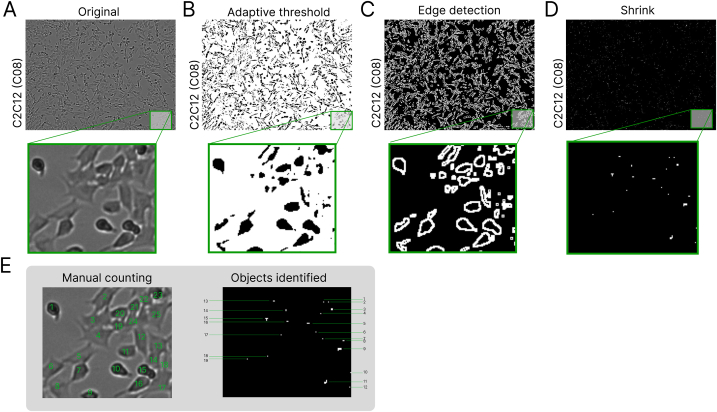
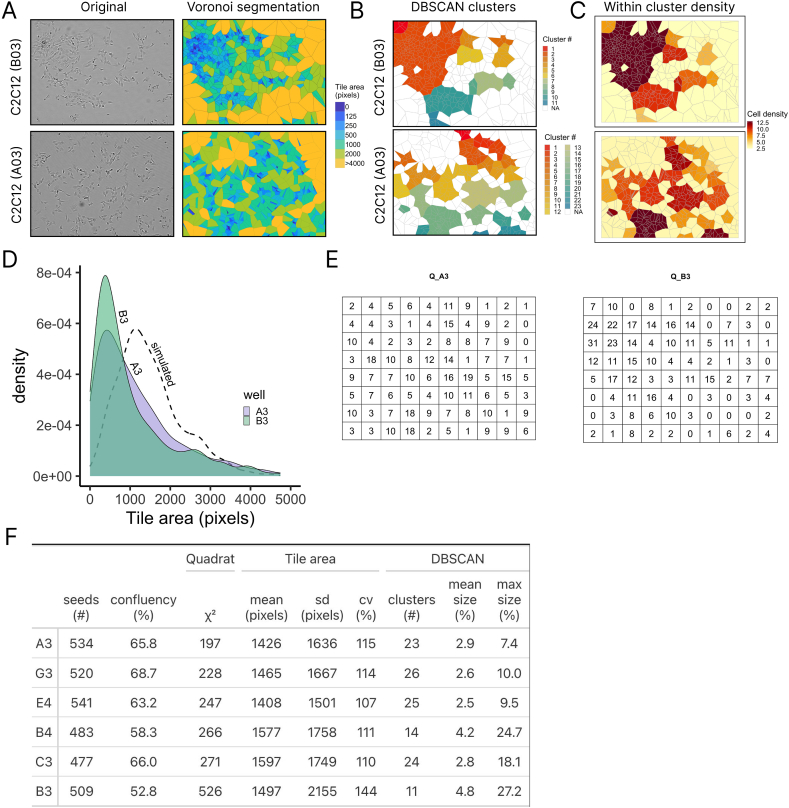
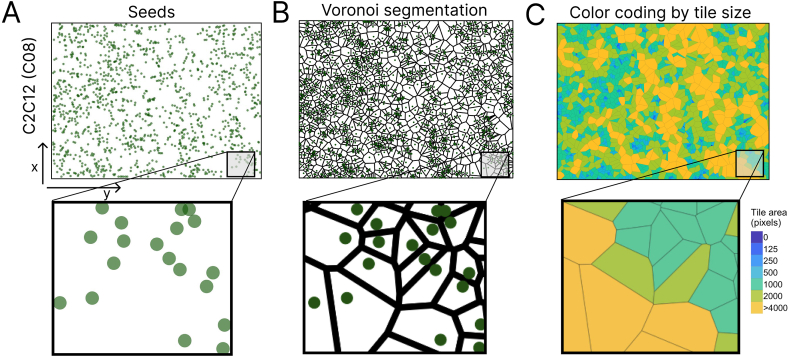
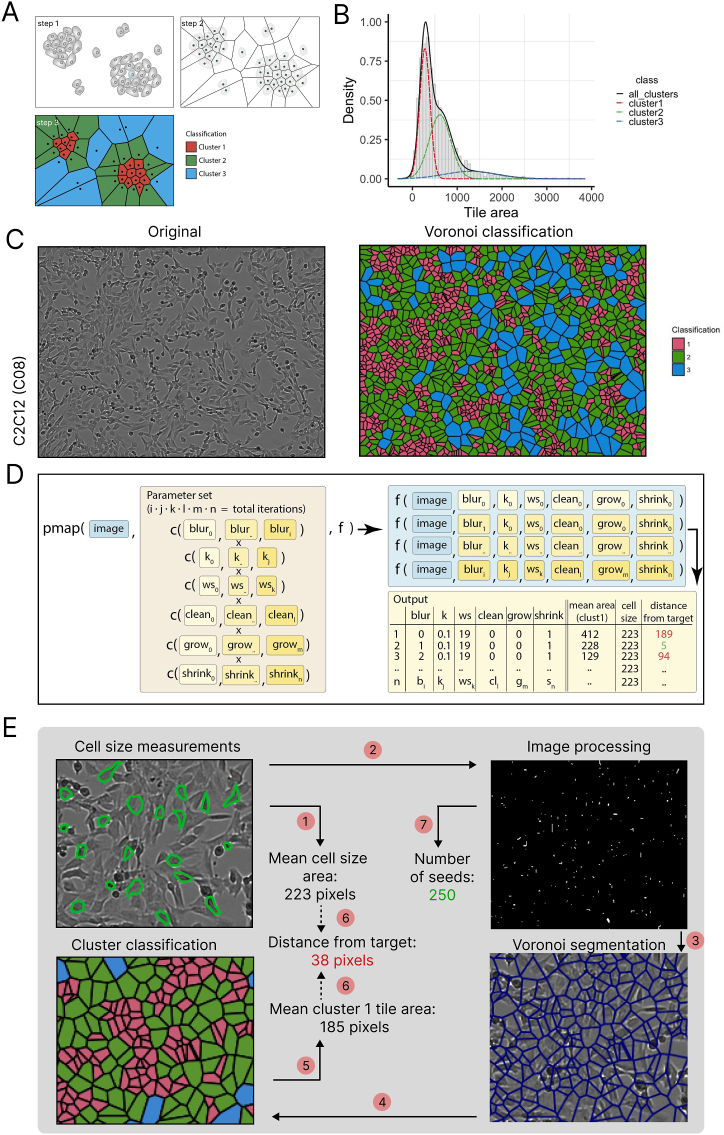
Label-free imaging is routinely used during cell culture because of its minimal interference with intracellular biology and capability of observing cells over time. However, label-free image analysis is challenging due to the low contrast between foreground signals and background. So far various deep learning tools have been developed for label-free image analysis and their performance depends on the quality of training data. In this study, we developed a simple computational pipeline that requires no training data and is suited to run on images generated using high-content microscopy equipment. By combining classical image processing functions, Voronoi segmentation, Gaussian mixture modeling and automatic parameter optimization, our pipeline can be used for cell number quantification and spatial distribution characterization based on a single label-free image. We demonstrated the applicability of our pipeline in four morphologically distinct cell types with various cell densities. Our pipeline is implemented in R and does not require excessive computational power, providing novel opportunities for automated label-free image analysis for large-scale or repeated cell culture experiments.
由于无标记成像对细胞内生物学的干扰最小且能够随时间观察细胞,因此在细胞培养过程中经常使用。然而,由于前景信号与背景之间的对比度较低,无标记图像分析具有挑战性。到目前为止,已经开发了各种深度学习工具用于无标记图像分析,其性能取决于训练数据的质量。在本研究中,我们开发了一种简单的计算流程,该流程不需要训练数据,适合在使用高内涵显微镜设备生成的图像上运行。通过结合经典图像处理函数、Voronoi分割、高斯混合建模和自动参数优化,我们的流程可用于基于单个无标记图像的细胞数量定量和空间分布表征。我们证明了我们的流程在四种形态不同、细胞密度各异的细胞类型中的适用性。我们的流程用R语言实现,不需要过多的计算能力,为大规模或重复细胞培养实验的自动化无标记图像分析提供了新的机会。