Fang Zhihao, Ren Guohong, Ke Shouyu, Xu Qimin, Chen Yuhua, Shi Xiaoyuan, Guo Cheng, Huang Jian
Department of Breast Surgery, Second Affiliated Hospital, Zhejiang University School of Medicine, Jiefang Road, Hangzhou, Zhejiang, China.
Key Laboratory of Tumor Microenvironment and Immune Therapy of Zhejiang Province, Second Affiliated Hospital, Zhejiang University School of Medicine, Hangzhou, Zhejiang, China.
Breast Cancer Res. 2025 Jan 6;27(1):2. doi: 10.1186/s13058-024-01956-w.
Neoadjuvant chemotherapy (NACT) is the standard-of-care treatment for patients with locally advanced breast cancer (LABC), providing crucial benefits in tumor downstaging. Clinical parameters, such as molecular subtypes, influence the therapeutic impact of NACT. Moreover, severe adverse events delay the treatment process and reduce the effectiveness of therapy. Although metabolic changes during cancer treatment are crucial determinant factors in therapeutic responses and toxicities, related clinical research remains limited.
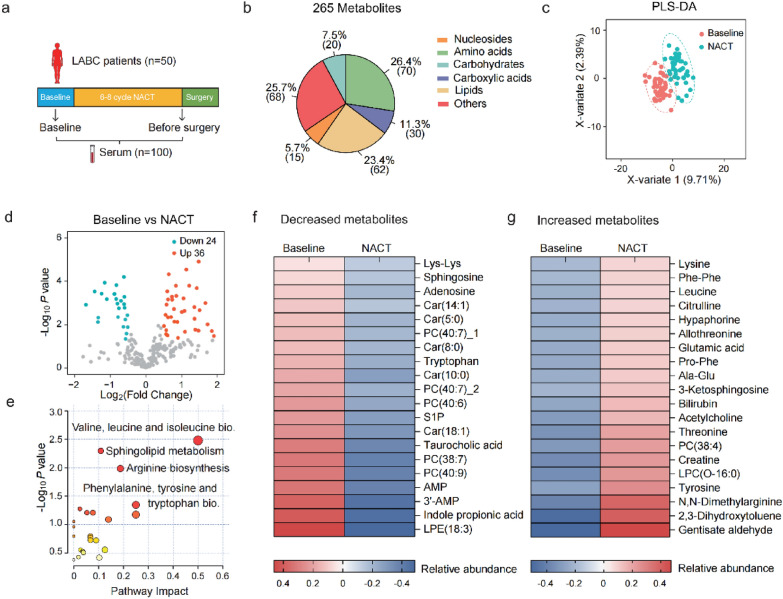
One hundred paired blood samples were collected from 50 patients with LABC before and after a complete NACT treatment cycle. Untargeted metabolomics was used by liquid chromatography-mass spectrometry (LC-MS) to investigate the relationship between dynamically changing metabolites in serum and the responses and toxicities of NACT.
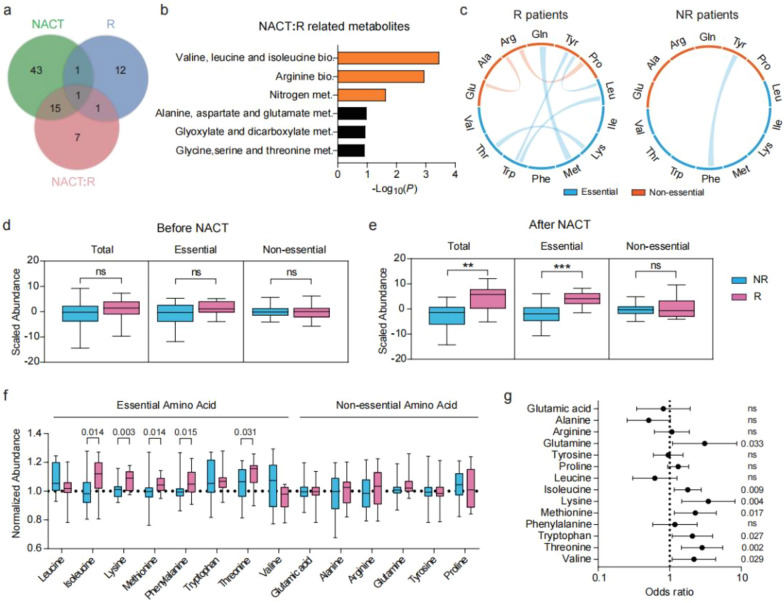
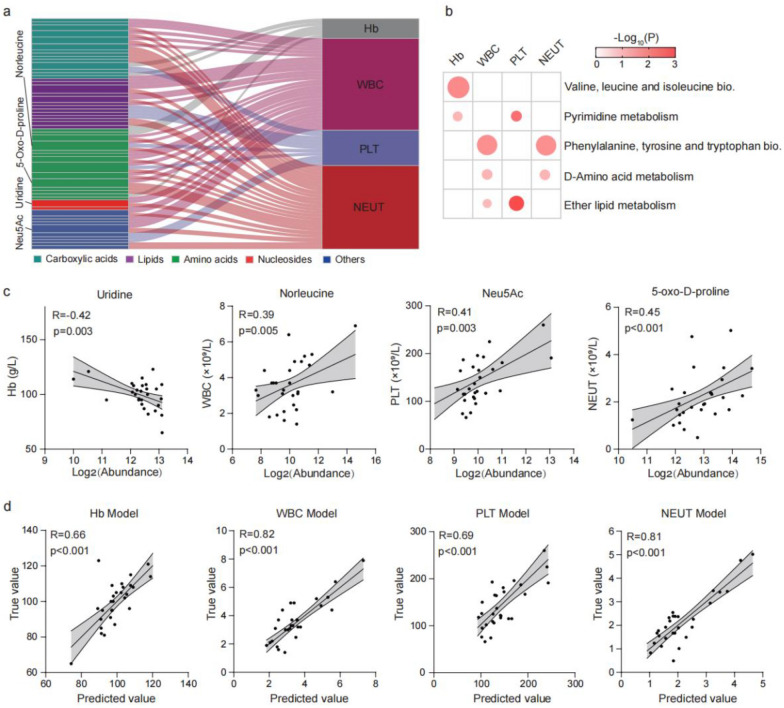
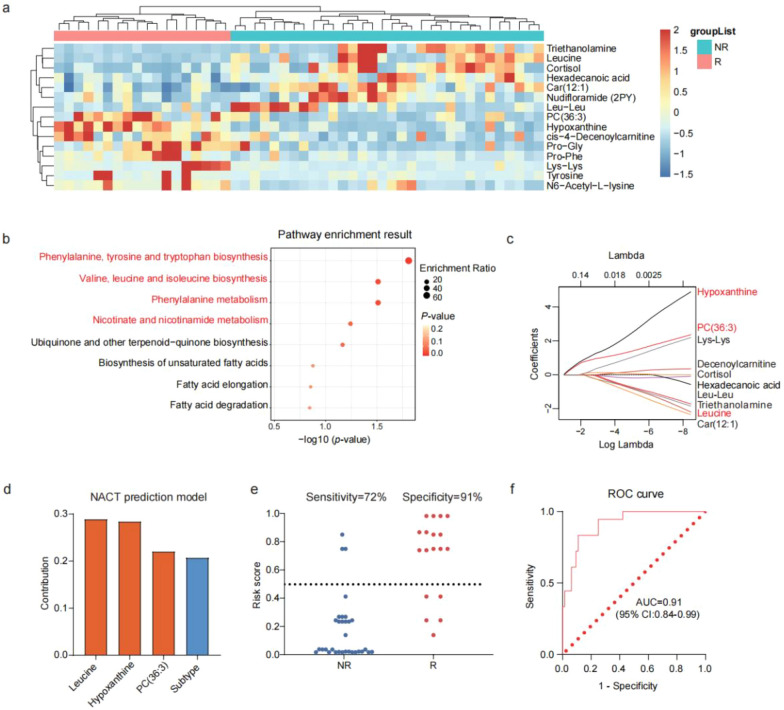
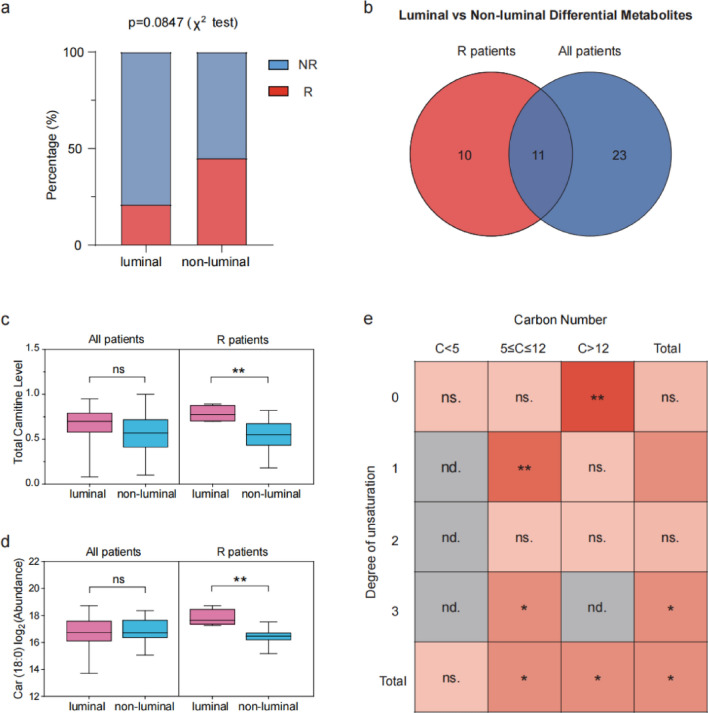
Firstly, we observed significant alterations in serum metabolite levels pre- and post-NACT, with a predominant enrichment in the sphingolipid and amino acid metabolism pathways. Second, pre-treatment serum metabolites successfully predicted the therapeutic response and hematotoxicities during NACT. In particular, molecular subtype variations in favorable treatment responses are linked to acyl carnitine levels. Finally, we discovered that the therapeutic effects of NACT could be attributed to essential amino acid metabolism.
This study elucidated the dynamic changes in metabolism during NACT treatment, providing a possibility for developing responsive metabolic signatures for personalized NACT treatment.
新辅助化疗(NACT)是局部晚期乳腺癌(LABC)患者的标准治疗方法,在肿瘤降期方面具有关键益处。分子亚型等临床参数会影响NACT的治疗效果。此外,严重不良事件会延迟治疗过程并降低治疗效果。尽管癌症治疗期间的代谢变化是治疗反应和毒性的关键决定因素,但相关临床研究仍然有限。
从50例LABC患者中收集了100对在完整的NACT治疗周期前后的血液样本。采用液相色谱 - 质谱联用(LC-MS)的非靶向代谢组学方法来研究血清中动态变化的代谢物与NACT的反应和毒性之间的关系。
首先,我们观察到NACT前后血清代谢物水平有显著变化,主要富集在鞘脂和氨基酸代谢途径中。其次,治疗前血清代谢物成功预测了NACT期间的治疗反应和血液毒性。特别是,良好治疗反应中的分子亚型变化与酰基肉碱水平有关。最后,我们发现NACT的治疗效果可归因于必需氨基酸代谢。
本研究阐明了NACT治疗期间代谢的动态变化,为开发个性化NACT治疗的反应性代谢特征提供了可能性。