Ali Asif, Khan Dawood, Dubey Vaibhav, Tarasov Andrei I, Flatt Peter R, Irwin Nigel
Centre for Diabetes, School of Biomedical Sciences, Ulster University, Cromore Road, Coleraine BT52 1SA, Northern Ireland, UK.
Biomolecules. 2024 Nov 27;14(12):1520. doi: 10.3390/biom14121520.
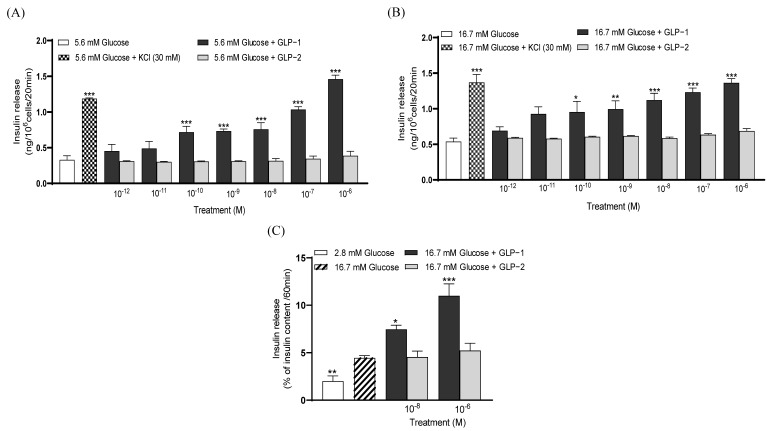
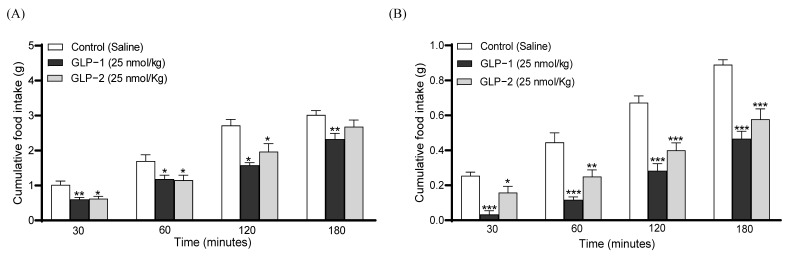
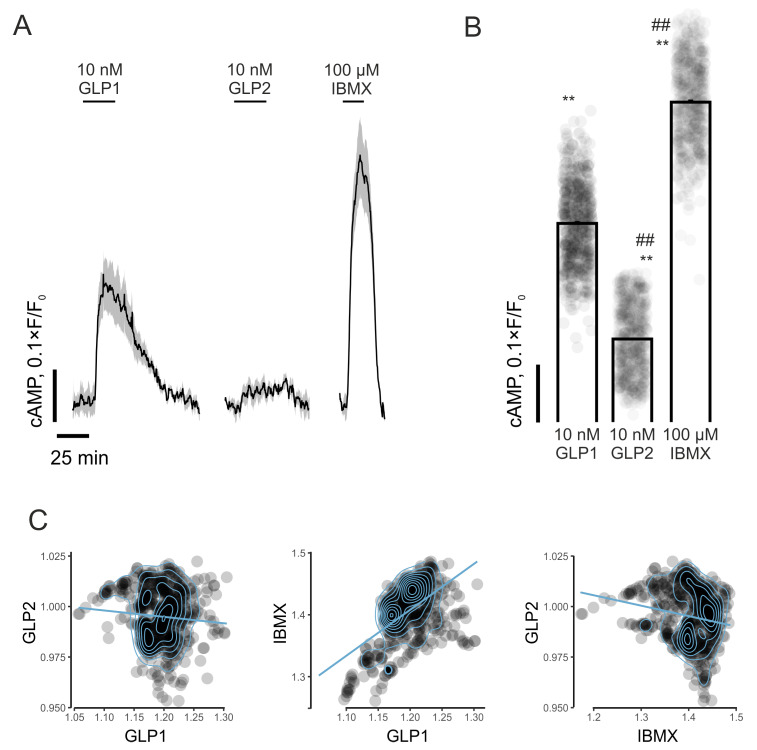
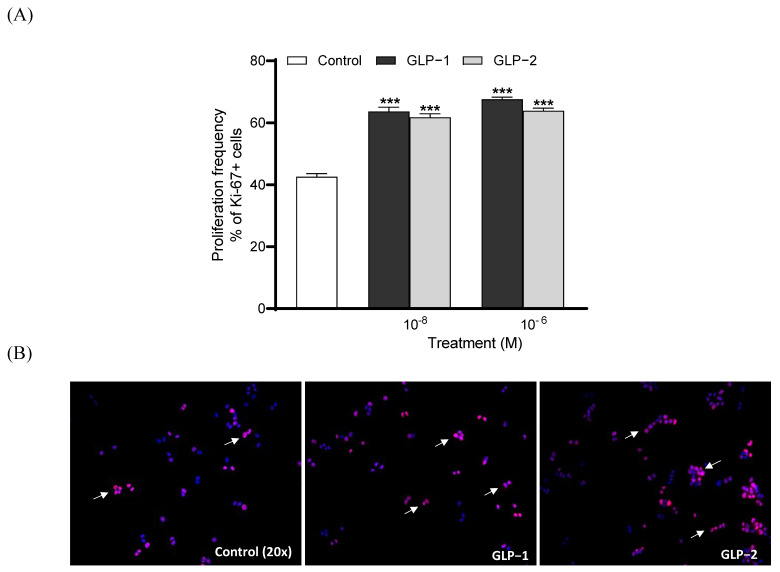
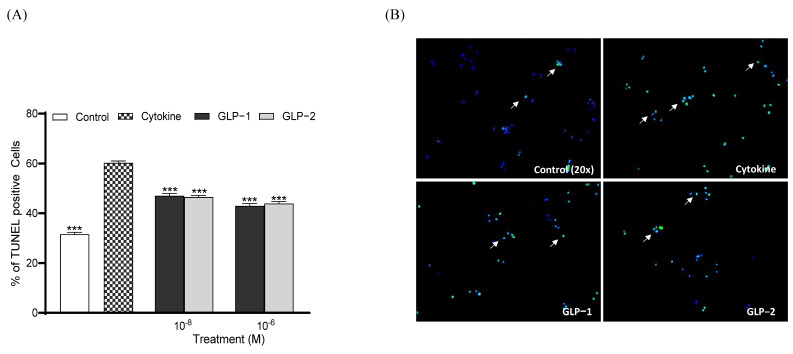
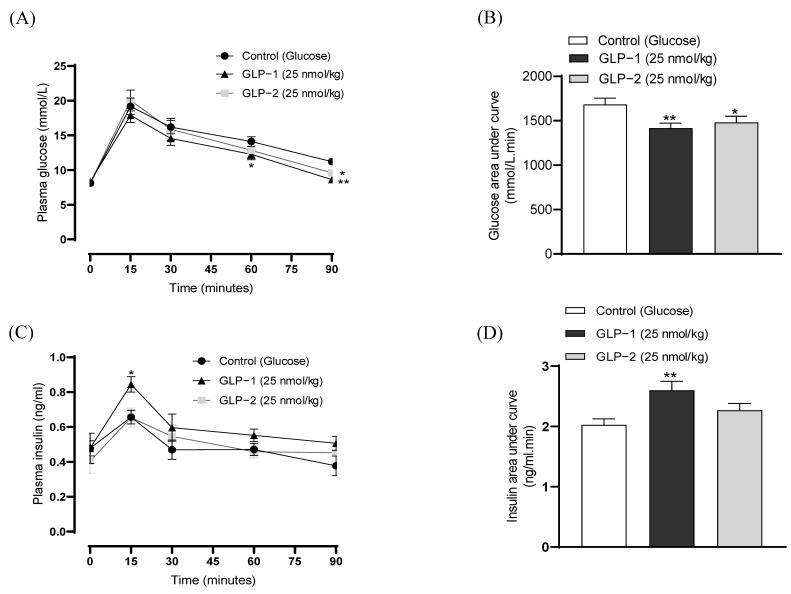
Glucagon-like peptide-1 (GLP-1) and glucagon-like peptide-2 (GLP-2) are related intestinal L-cell derived secretory products. GLP-1 has been extensively studied in terms of its influence on metabolism, but less attention has been devoted to GLP-2 in this regard. The current study compares the effects of these proglucagon-derived peptides on pancreatic beta-cell function, as well as on glucose tolerance and appetite. The insulin secretory effects of GLP-1 and GLP-2 (10-10 M) were investigated in BRIN-BD11 beta-cells as well as isolated mouse islets, with the impact of test peptides (10 nM) on real-time cytosolic cAMP levels further evaluated in mouse islets. The impact of both peptides (10-10 M) on beta-cell growth and survival was also studied in BRIN BD11 cells. Acute in vivo (peptides administered at 25 nmol/kg) glucose homeostatic and appetite suppressive actions were then examined in healthy mice. GLP-1, but not GLP-2, concentration dependently augmented insulin secretion from BRIN-BD11 cells, with similar observations made in isolated murine islets. In addition, GLP-1 substantially increased [cAMP] in islet cells and was significantly more prominent than GLP-2 in this regard. Both GLP-1 and GLP-2 promoted beta-cell proliferation and protected against cytokine-induced apoptosis. In overnight fasted healthy mice, as well as mice trained to eat for 3 h per day, the administration of GLP-1 or GLP-2 suppressed appetite. When injected conjointly with glucose, both peptides improved glucose disposal, which was associated with enhanced glucose-stimulated insulin secretion by GLP-1, but not GLP-2. To conclude, the impact of GLP-1 and GLP-2 on insulin secretion is divergent, but the effects of beta-cell signaling and overall health are similar. Moreover, the peripheral administration of either hormone in rodents results in comparable positive effects on blood glucose levels and appetite.
胰高血糖素样肽-1(GLP-1)和胰高血糖素样肽-2(GLP-2)是源自肠道L细胞的相关分泌产物。GLP-1对新陈代谢的影响已得到广泛研究,但GLP-2在这方面受到的关注较少。本研究比较了这些胰高血糖素衍生肽对胰腺β细胞功能以及葡萄糖耐量和食欲的影响。在BRIN-BD11β细胞以及分离的小鼠胰岛中研究了GLP-1和GLP-2(10⁻¹⁰ M)的胰岛素分泌作用,并在小鼠胰岛中进一步评估了测试肽(10 nM)对实时胞质cAMP水平的影响。还在BRIN BD11细胞中研究了两种肽(10⁻¹⁰ M)对β细胞生长和存活的影响。然后在健康小鼠中检查了急性体内(以25 nmol/kg给药肽)葡萄糖稳态和食欲抑制作用。GLP-1而非GLP-2浓度依赖性地增加了BRIN-BD11细胞的胰岛素分泌,在分离的小鼠胰岛中也有类似观察结果。此外,GLP-1显著增加了胰岛细胞中的[cAMP],在这方面比GLP-2明显更突出。GLP-1和GLP-2均促进β细胞增殖并防止细胞因子诱导的细胞凋亡。在过夜禁食的健康小鼠以及每天训练进食3小时的小鼠中,给予GLP-1或GLP-2可抑制食欲。当与葡萄糖联合注射时,两种肽均改善了葡萄糖处置,这与GLP-1增强葡萄糖刺激的胰岛素分泌有关,但与GLP-2无关。总之,GLP-1和GLP-2对胰岛素分泌的影响不同,但对β细胞信号传导和整体健康的影响相似。此外,在啮齿动物中对外周给予任何一种激素都会对血糖水平和食欲产生类似的积极影响。