Kawaguchi Satoshi, Sepúlveda Marisa N, Teoh Jian-Peng, Hayasaka Taiki, Moukette Bruno, Aonuma Tatsuya, Roh Hyun Cheol, Madhur Meena S, Kim Il-Man
Department of Anatomy, Cell Biology, and Physiology, Indiana University School of Medicine, Indianapolis, IN 46202, USA.
Department of Emergency Medicine, Asahikawa Medical University, Asahikawa 078-8510, Hokkaido, Japan.
Biomolecules. 2024 Dec 22;14(12):1650. doi: 10.3390/biom14121650.
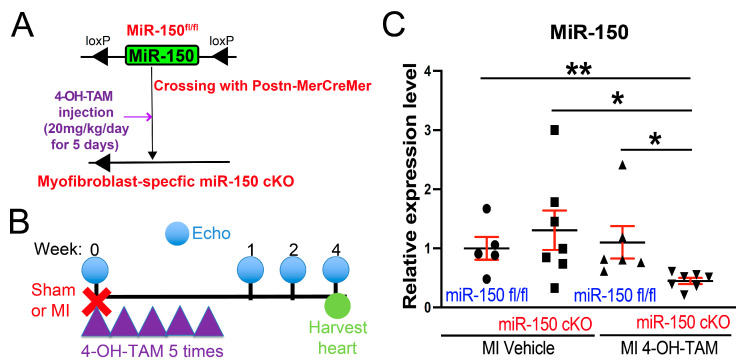
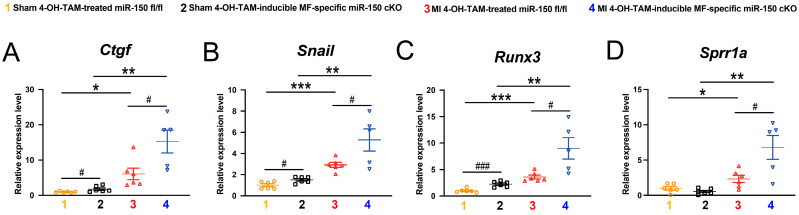
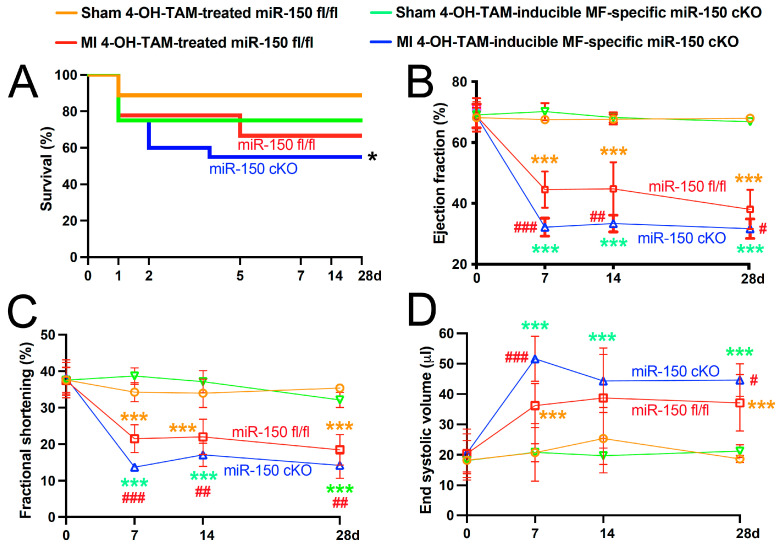
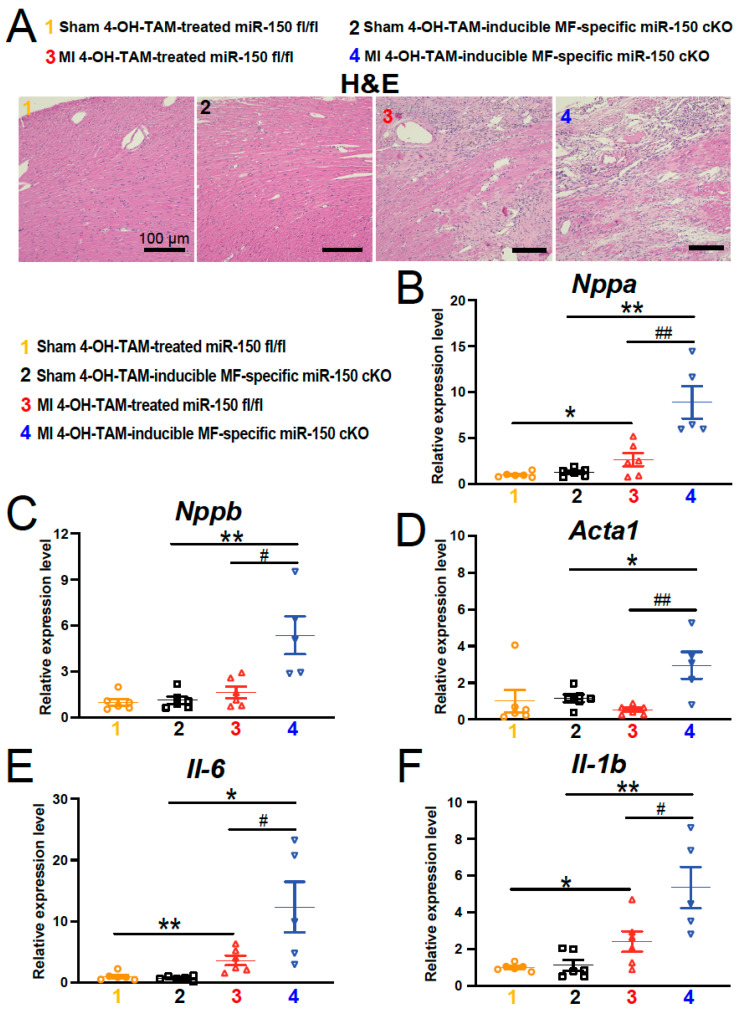
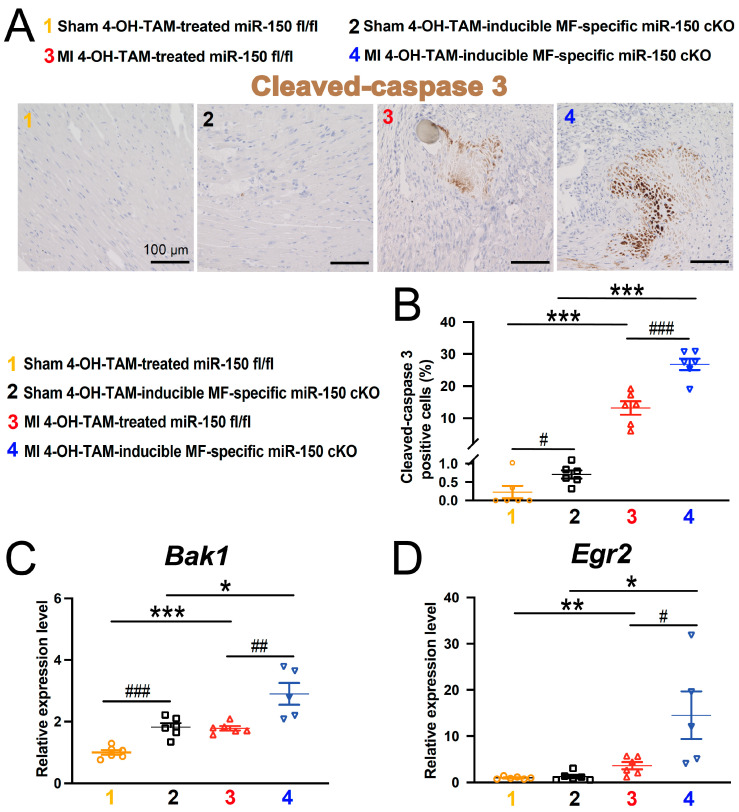
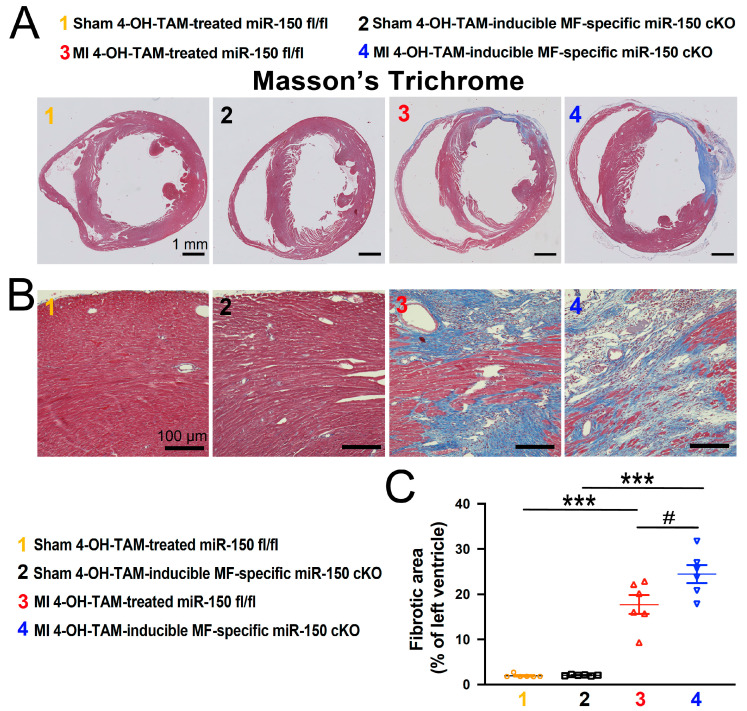
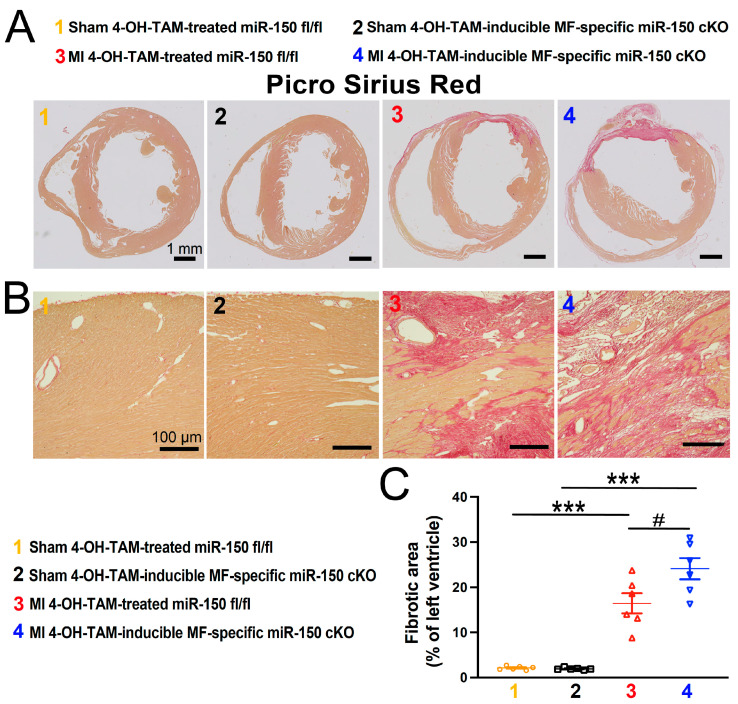
MicroRNA (miR: small noncoding RNA)-150 is evolutionarily conserved and is downregulated in patients with diverse forms of heart failure (HF) and in multiple mouse models of HF. Moreover, miR-150 is markedly correlated with the outcome of patients with HF. We previously reported that systemic or cardiomyocyte-derived miR-150 in mice elicited myocardial protection through the inhibition of cardiomyocyte death, without affecting neovascularization and T cell infiltration. Our mechanistic studies also showed that the protective roles of miR-150 in ischemic mouse hearts and human cardiac fibroblasts were, in part, attributed to the inhibition of fibroblast activation via the repression of multiple profibrotic genes. However, the extent to which miR-150 expression in adult myofibroblasts (MFs) modulates the response to myocardial infarction (MI) remains unknown. Here, we develop a novel 4-hydroxytamoxifen-inducible MF-specific miR-150 conditional knockout mouse model and demonstrate that the mouse line exhibits worse cardiac dysfunction after MI. Our studies further reveal that miR-150 ablation selectively in adult MFs exacerbates cardiac damage and apoptosis after chronic MI. Lastly, MF-specific miR-150 deletion in adult mice promotes the expression of proinflammatory and profibrotic genes as well as cardiac fibrosis following chronic MI. Our findings indicate a key protective role for MF-derived miR-150 in modulating post-MI responses.
微小RNA(miR:小非编码RNA)-150在进化上是保守的,在多种形式心力衰竭(HF)患者以及多种HF小鼠模型中表达下调。此外,miR-150与HF患者的预后显著相关。我们之前报道,小鼠体内全身性或心肌细胞来源的miR-150通过抑制心肌细胞死亡发挥心肌保护作用,而不影响新生血管形成和T细胞浸润。我们的机制研究还表明,miR-150在缺血小鼠心脏和人心脏成纤维细胞中的保护作用部分归因于通过抑制多个促纤维化基因来抑制成纤维细胞活化。然而,成年肌成纤维细胞(MFs)中miR-150表达调节心肌梗死(MI)反应的程度仍不清楚。在此,我们构建了一种新型的4-羟基他莫昔芬诱导的MF特异性miR-150条件性敲除小鼠模型,并证明该小鼠品系在MI后表现出更严重的心脏功能障碍。我们的研究进一步揭示,成年MFs中miR-150的选择性缺失会加重慢性MI后的心脏损伤和细胞凋亡。最后,成年小鼠中MF特异性miR-150缺失会促进慢性MI后促炎和促纤维化基因的表达以及心脏纤维化。我们的研究结果表明MF来源的miR-150在调节MI后反应中起关键保护作用。