Moukette Bruno, Kawaguchi Satoshi, Sepulveda Marisa N, Hayasaka Taiki, Aonuma Tatsuya, Liangpunsakul Suthat, Yang Lei, Dharmakumar Rohan, Conway Simon J, Kim Il-Man
Department of Anatomy, Cell Biology and Physiology, Indiana University School of Medicine, Indianapolis, IN, USA.
Division of Cardiology, Nephrology, Pulmonology, and Neurology, Department of Internal Medicine, Asahikawa Medical University, Asahikawa, Hokkaido, Japan.
Cell Death Discov. 2022 Dec 30;8(1):504. doi: 10.1038/s41420-022-01295-9.
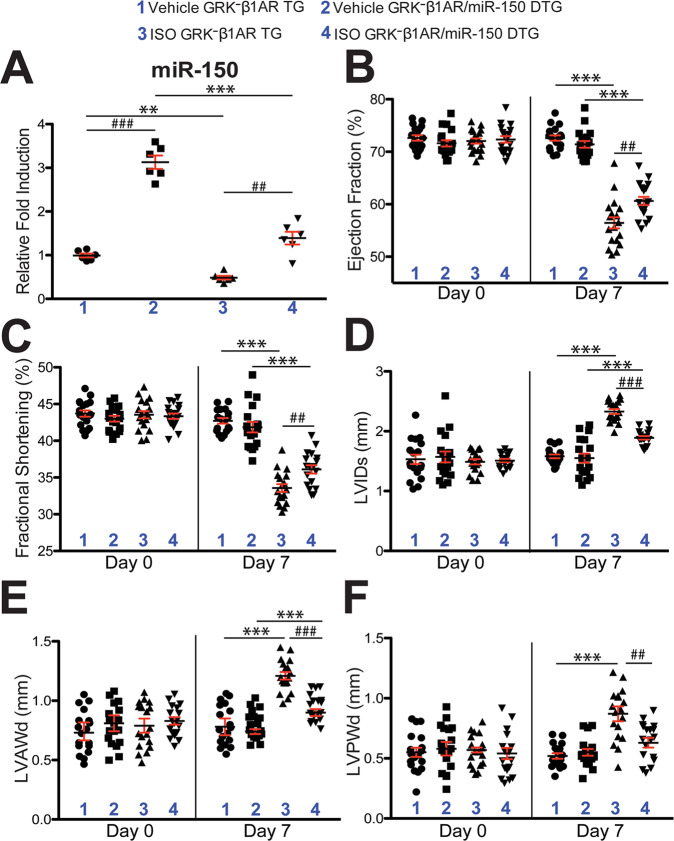
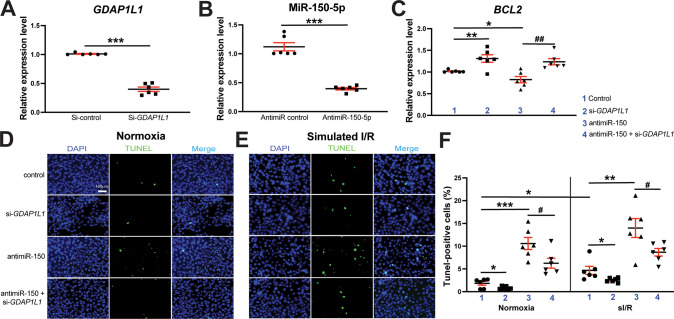
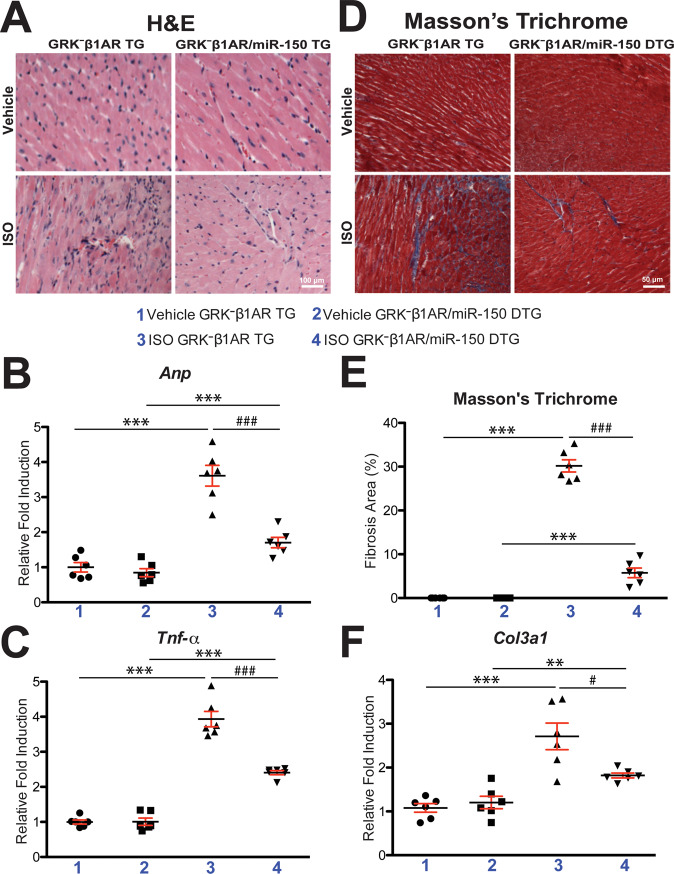
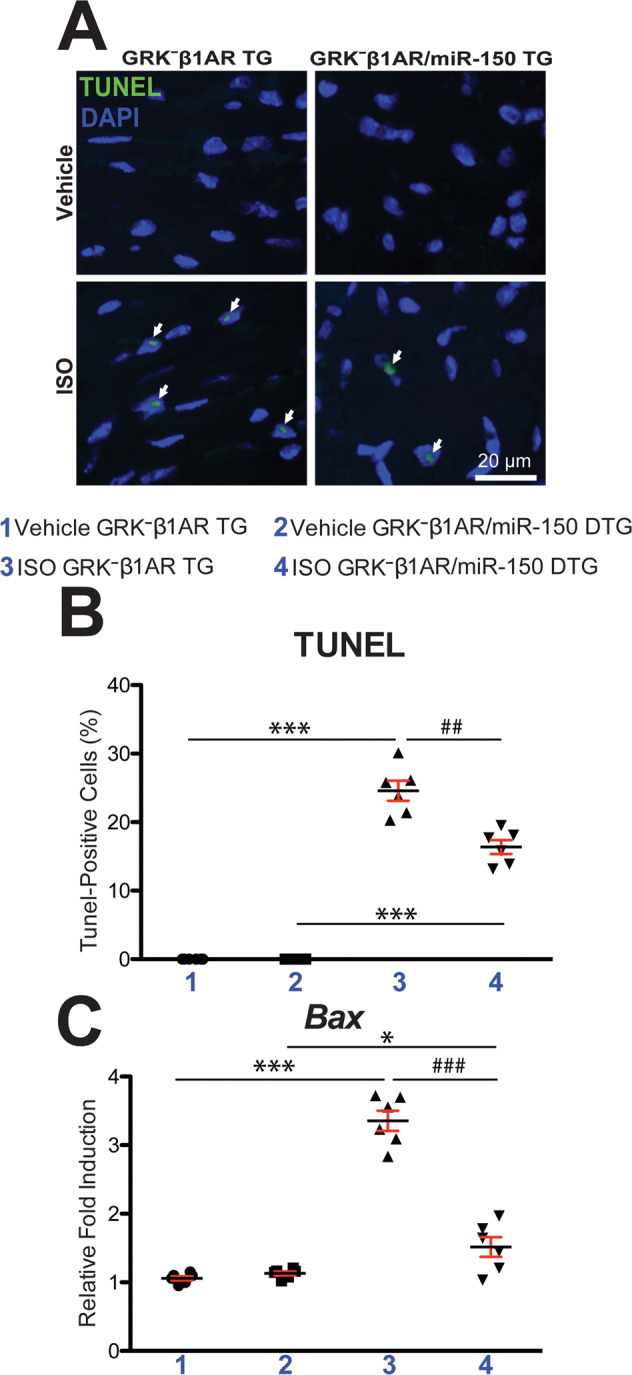
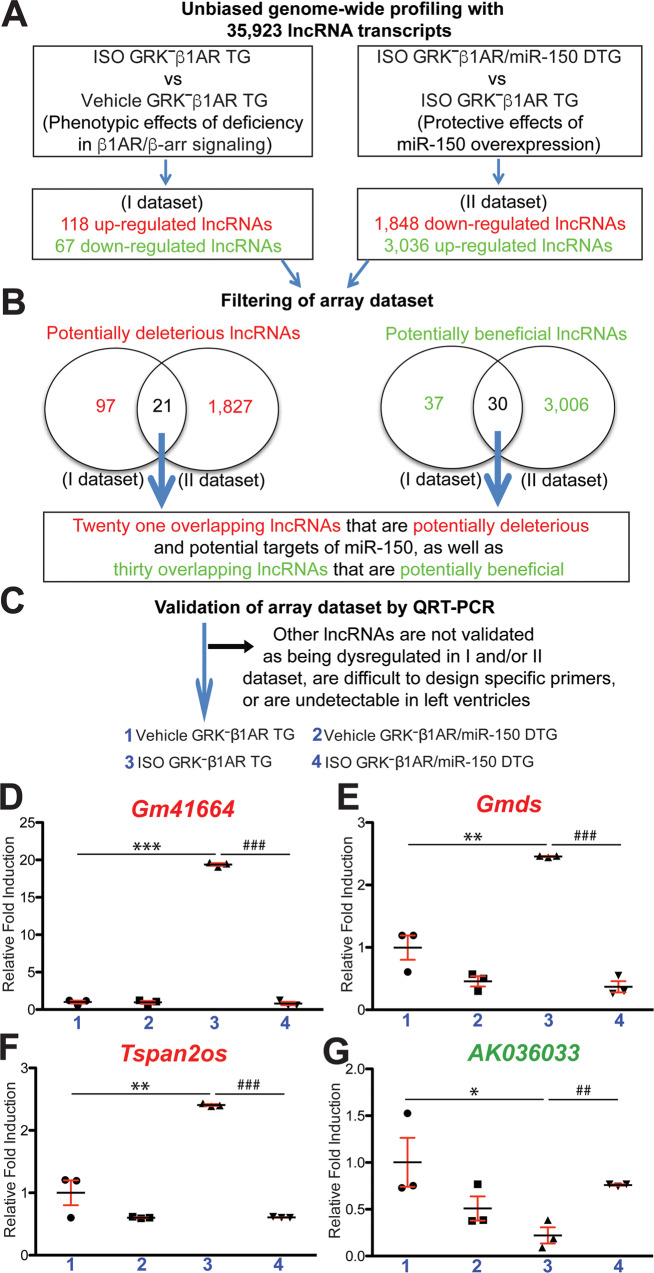
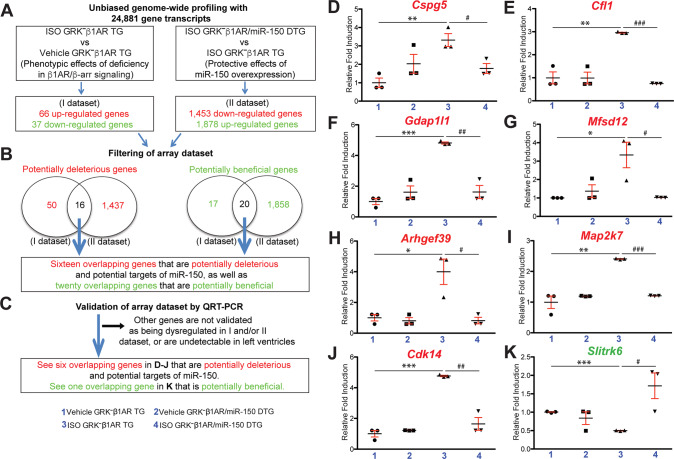
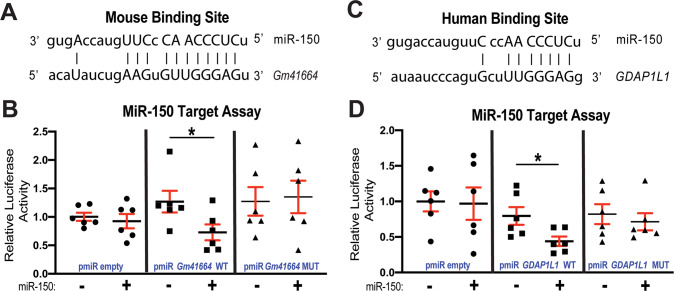
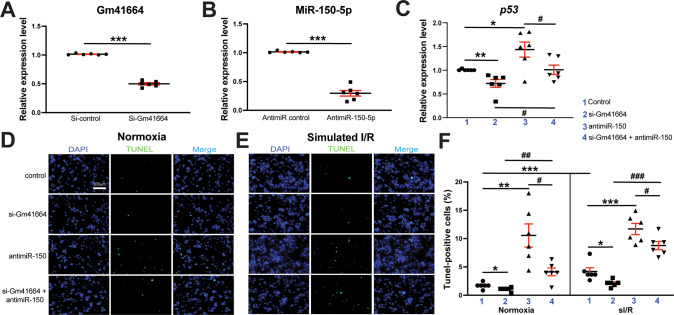
The β-adrenergic receptor (βAR) is found primarily in hearts (mainly in cardiomyocytes [CMs]) and β-arrestin-mediated βAR signaling elicits cardioprotection through CM survival. We showed that microRNA-150 (miR-150) is upregulated by β-arrestin-mediated βAR signaling and that CM miR-150 inhibits maladaptive remodeling post-myocardial infarction. Here, we investigate whether miR-150 rescues cardiac dysfunction in mice bearing CM-specific abrogation of β-arrestin-mediated βAR signaling. Using CM-specific transgenic (TG) mice expressing a mutant βAR (G protein-coupled receptor kinase [GRK]βAR that exhibits impairment in β-arrestin-mediated βAR signaling), we first generate a novel double TG mouse line overexpressing miR-150. We demonstrate that miR-150 is sufficient to improve cardiac dysfunction in CM-specific GRKβAR TG mice following chronic catecholamine stimulation. Our genome-wide circular RNA, long noncoding RNA (lncRNA), and mRNA profiling analyses unveil a subset of cardiac ncRNAs and genes as heretofore unrecognized mechanisms for beneficial actions of βAR/β-arrestin signaling or miR-150. We further show that lncRNA Gm41664 and GDAP1L1 are direct novel upstream and downstream regulators of miR-150. Lastly, CM protective actions of miR-150 are attributed to repressing pro-apoptotic GDAP1L1 and are mitigated by pro-apoptotic Gm41664. Our findings support the idea that miR-150 contributes significantly to βAR/β-arrestin-mediated cardioprotection by regulating unique ncRNA and gene signatures in CMs.
β-肾上腺素能受体(βAR)主要存在于心脏中(主要在心肌细胞[CMs]中),β-抑制蛋白介导的βAR信号传导通过CM存活引发心脏保护作用。我们发现,β-抑制蛋白介导的βAR信号传导会上调微小RNA-150(miR-150),并且CM中的miR-150可抑制心肌梗死后的适应性不良重塑。在此,我们研究miR-150是否能挽救β-抑制蛋白介导的βAR信号传导在CM中特异性缺失的小鼠的心脏功能障碍。我们使用表达突变型βAR(G蛋白偶联受体激酶[GRK]βAR,其在β-抑制蛋白介导的βAR信号传导中存在缺陷)的CM特异性转基因(TG)小鼠,首先构建了一种过表达miR-150的新型双TG小鼠品系。我们证明,在慢性儿茶酚胺刺激后,miR-150足以改善CM特异性GRKβAR TG小鼠的心脏功能障碍。我们的全基因组环状RNA、长链非编码RNA(lncRNA)和mRNA谱分析揭示了一组心脏非编码RNA和基因,它们是βAR/β-抑制蛋白信号传导或miR-150有益作用的迄今未被认识的机制。我们进一步表明,lncRNA Gm41664和GDAP1L1是miR-150直接的新型上游和下游调节因子。最后,miR-150的CM保护作用归因于抑制促凋亡的GDAP1L1,并且会被促凋亡的Gm41664减弱。我们的研究结果支持这样一种观点,即miR-150通过调节CM中独特的非编码RNA和基因特征,对βAR/β-抑制蛋白介导的心脏保护作用有显著贡献。