Picone Maria, Ascencion Frederik, Horsnell Matthew, Zhang Enming, Dougherty Lauren, DeFelice Christopher, Flurie Maurice, Cook Rachelle, Morse Anne Marie, Ortiz Luis E, Wassman E Robert, Gudeman Jennifer
TREND Community, Philadelphia, PA 19102, USA.
PWN4PWN, Tampa, FL 33602, USA.
Brain Sci. 2024 Nov 26;14(12):1189. doi: 10.3390/brainsci14121189.
BACKGROUND/OBJECTIVES: Narcolepsy is a chronic neurologic disorder associated with substantial challenges that affect the social, emotional, and financial quality-of-life domains. A social listening analysis and structured survey were conducted to better understand the candid perspective of people with narcolepsy (PWN) and their experience with twice-nightly sodium oxybate (SXB).
To characterize conversations and experiences in narcolepsy communities where SXB was mentioned, a social media analysis was conducted from August 2011 to October 2022. A structured survey was administered to PWN taking oxybate therapy from October 2022 to November 2022.
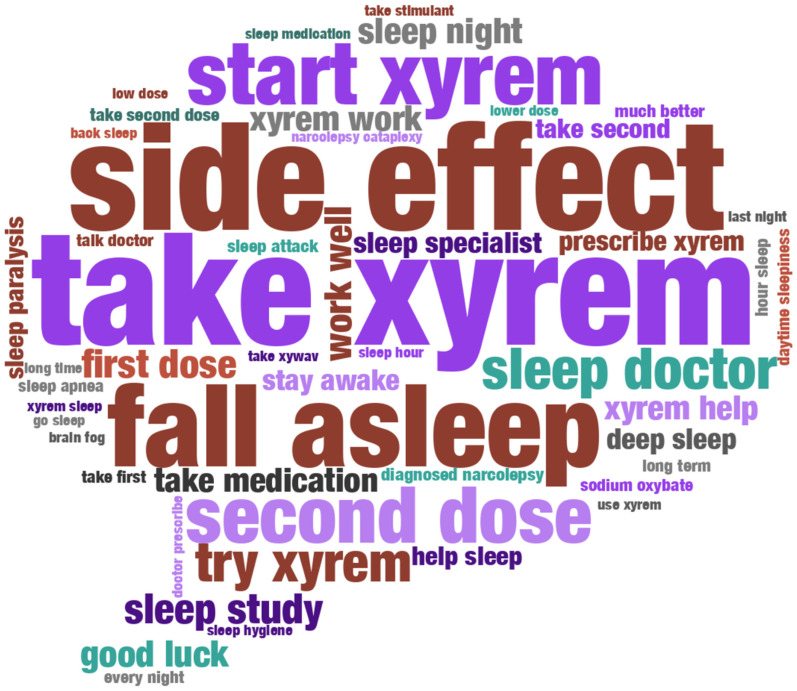
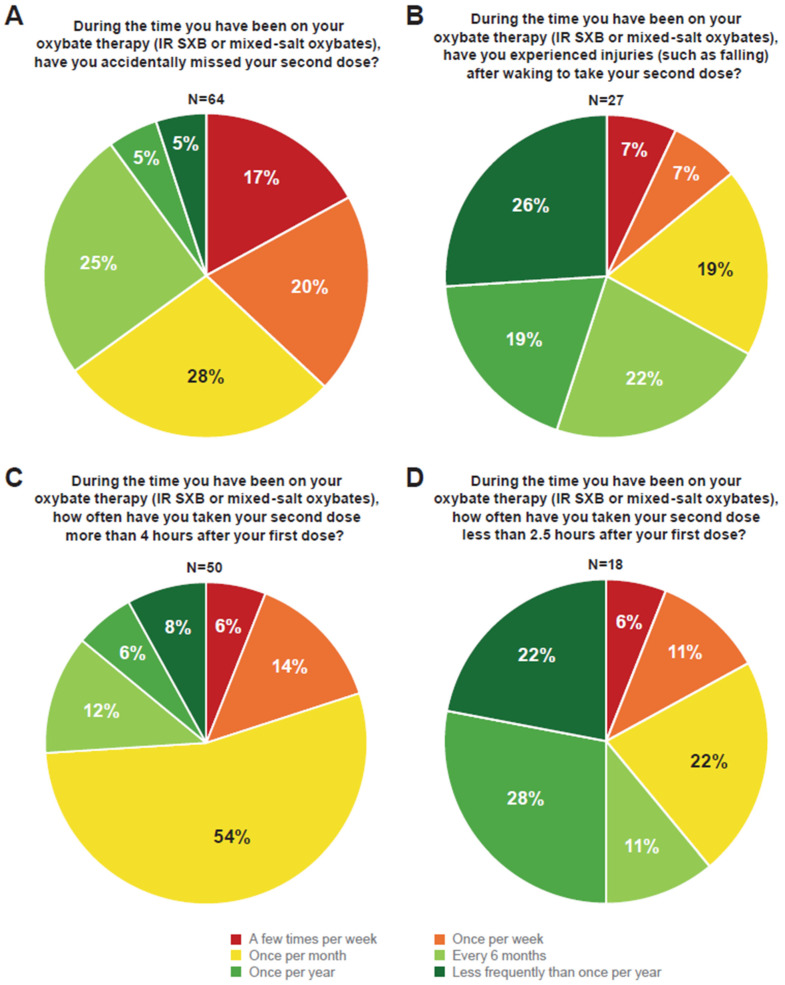
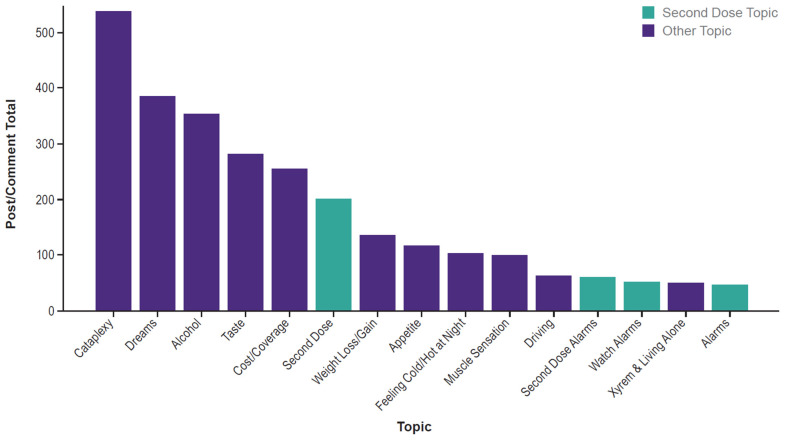
From the social media analysis, the largest topic was related to "cataplexy", with 537 posts/comments. The most frequent term was "xyrem", with 22,200 mentions. Of the 87 survey respondents, 85 respondents had narcolepsy, 75.3% (64/85) reported missing their second dose of immediate-release SXB or mixed-salt oxybates, and 58.8% (50/85) of respondents reported that they took their second dose of oxybate > 4 h after the first dose. Respondents reported poor sleep quality as the greatest effect or issue experienced after missing their second oxybate dose. When respondents were asked whether they had ever been injured after waking to take their second oxybate dose, 31.8% (27/85) of respondents reported an injury.
PWN taking twice-nightly oxybates often report inconsistent adherence to the prescribed dosing, which results in negative consequences in their lives. This research provided an anonymized forum for PWN to voice challenges with middle-of-the-night awakenings that they may be reluctant to explain to their clinician.
背景/目的:发作性睡病是一种慢性神经疾病,会带来诸多严重挑战,影响社交、情感和生活的经济质量等方面。开展了一项社交倾听分析和结构化调查,以更好地了解发作性睡病患者(PWN)的真实看法以及他们每晚服用两次羟丁酸钠(SXB)的体验。
为了描述提及SXB的发作性睡病社区中的对话和经历,于2011年8月至2022年10月进行了社交媒体分析。在2022年10月至2022年11月期间,对正在接受羟丁酸钠治疗的PWN进行了结构化调查。
通过社交媒体分析,最大的话题与“猝倒”相关,有537篇帖子/评论。出现频率最高的术语是“Xyrem”,被提及22200次。在87名调查受访者中,85名患有发作性睡病,75.3%(64/85)的受访者报告错过速释SXB或混合盐羟丁酸钠的第二剂,58.8%(50/85)的受访者报告他们在第一剂之后超过4小时才服用第二剂羟丁酸钠。受访者报告称,错过第二剂羟丁酸钠后,睡眠质量差是所经历的最严重影响或问题。当被问及在醒来服用第二剂羟丁酸钠后是否受过伤时,31.8%(27/85)的受访者报告受过伤。
每晚服用两次羟丁酸钠的PWN经常报告对规定剂量的依从性不一致,这给他们的生活带来负面影响。这项研究为PWN提供了一个匿名论坛,让他们能够说出半夜醒来面临的挑战,而这些挑战他们可能不愿向临床医生解释。