Ota Yusuke, Chen Fei, Prah Isaac, Mahazu Samiratu, Watanabe Kimiyo, Kinoshita Teruaki, Gu Yoshiaki, Nukui Yoko, Saito Ryoichi
Department of Molecular Microbiology and Immunology, Institute of Science Tokyo, Tokyo 113-8510, Japan.
Department of Pharmaceutical and Environmental Sciences, Tokyo Metropolitan Institute of Public Health, Tokyo 169-0073, Japan.
Antibiotics (Basel). 2024 Nov 23;13(12):1122. doi: 10.3390/antibiotics13121122.
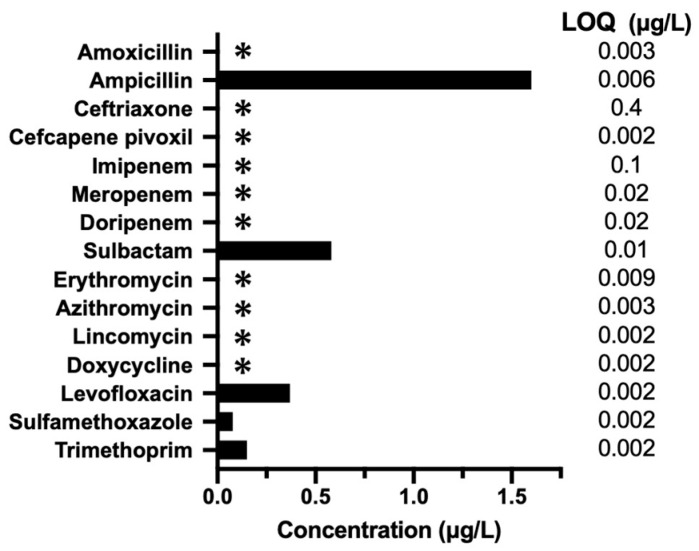
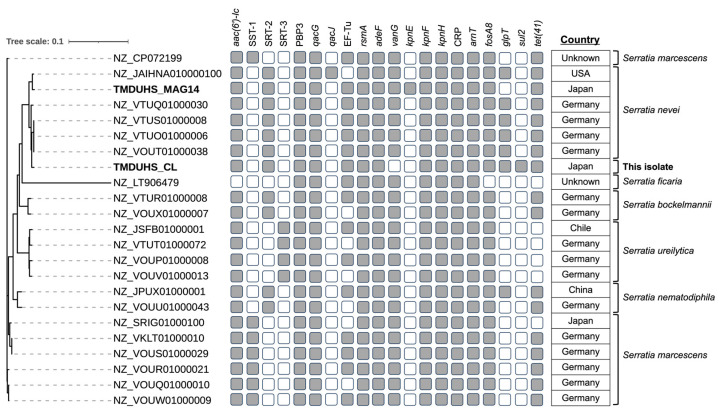
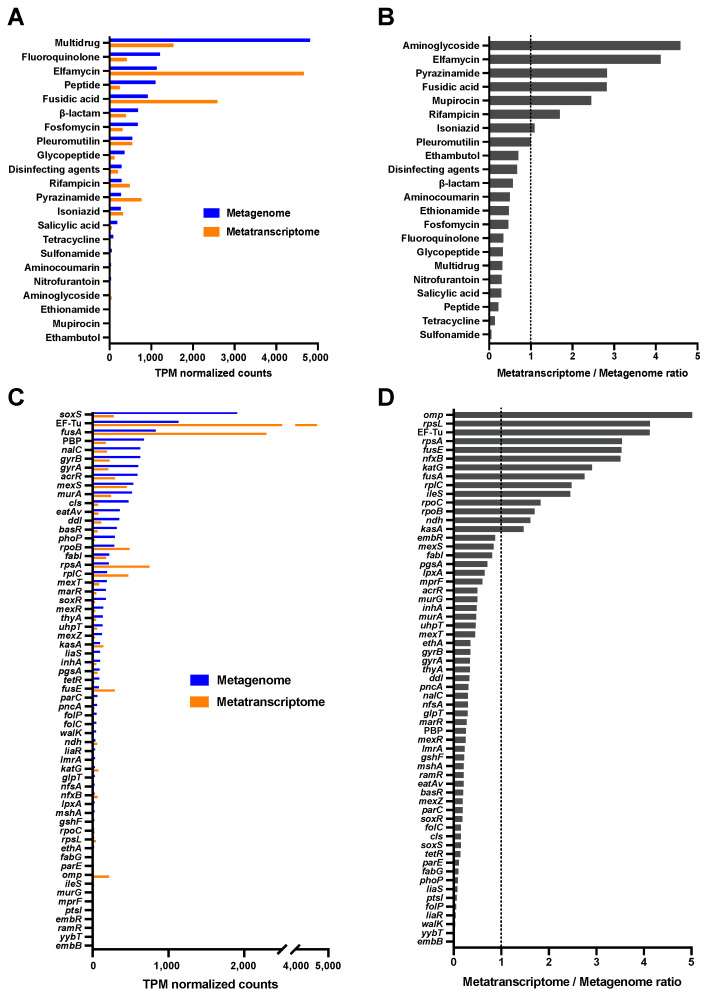
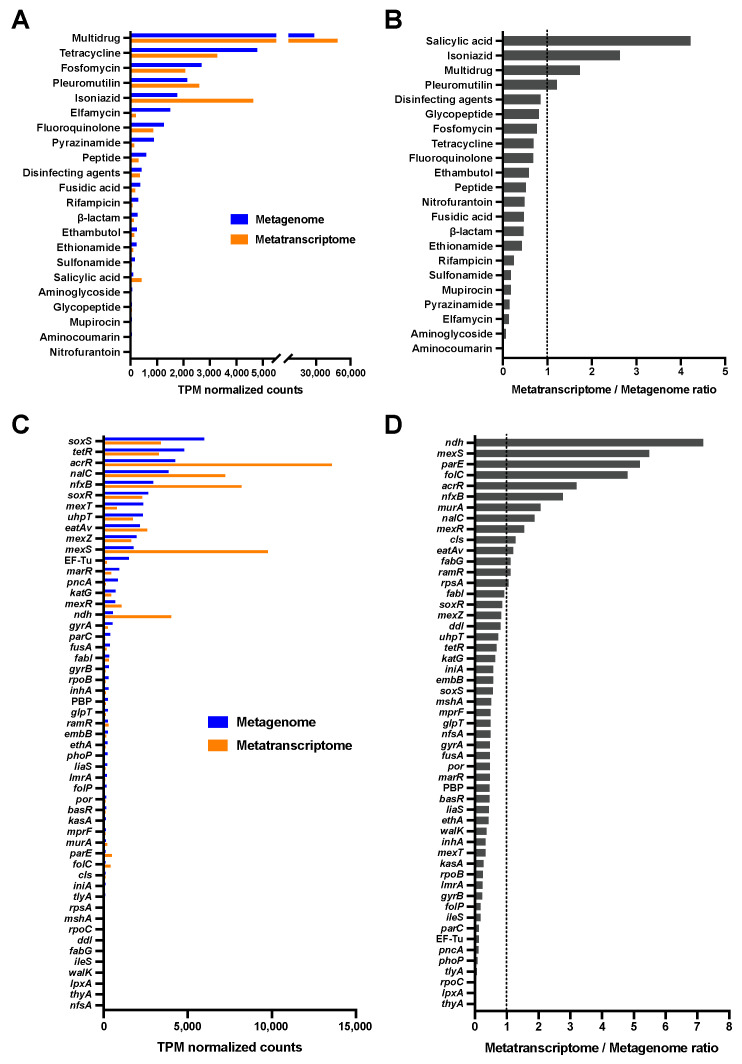
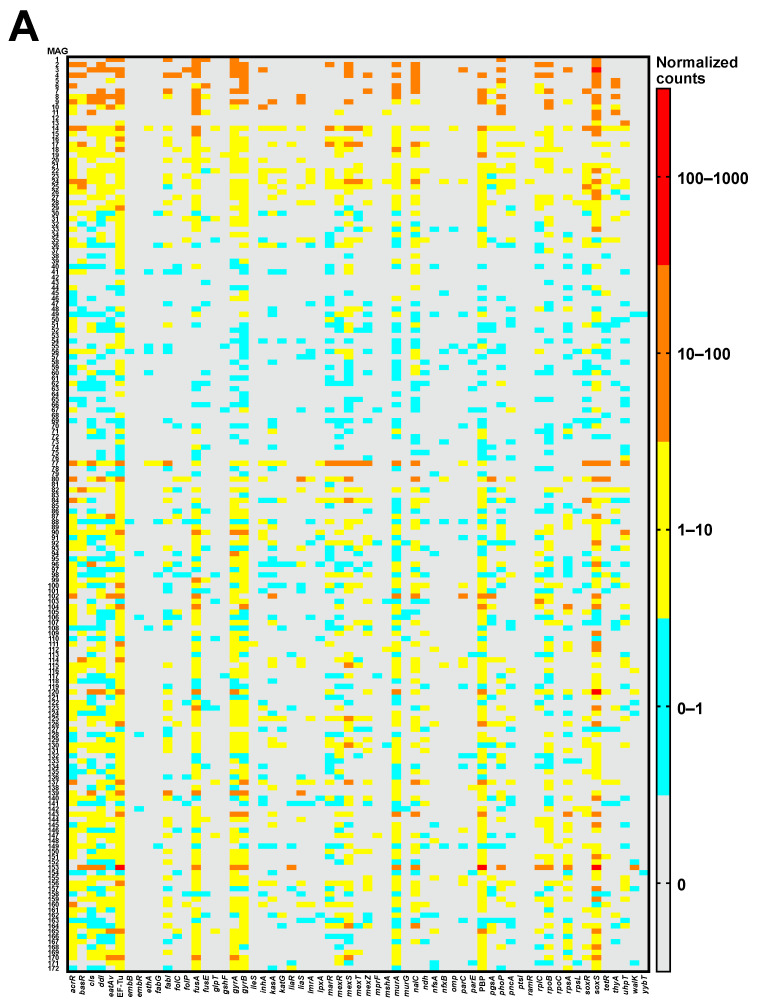
Antimicrobial resistance is a major global concern and economic threat, necessitating a reliable monitoring approach to understand its frequency and spread via the environment. Hospital wastewater serves as a critical reservoir for antimicrobial-resistant organisms; however, its role in resistance gene distribution and dissemination remains poorly understood. This study integrates metagenomic and metatranscriptomic analyses, elucidating the dynamics of antimicrobial resistance in hospital wastewater. Integrated metagenomic and metatranscriptomic sequencing were used to identify actively expressed antimicrobial-resistant genes and antimicrobial-resistant bacteria, offering comprehensive insights into antimicrobial resistance dynamics in hospital wastewater. Liquid chromatography-tandem mass spectrometry analysis revealed the presence of ampicillin, sulbactam, levofloxacin, sulfamethoxazole, and trimethoprim in the sample, which could apply selective pressure on antimicrobial resistance gene expression. While multidrug resistance genes were the most prevalent sequences in both metagenome-assembled genomes and plasmids, plasmid-derived sequences showed a high mRNA/DNA ratio, emphasizing the presence of functionally expressed antimicrobial resistance genes on plasmids rather than on chromosomes. The metagenomic and metatranscriptomic analyses revealed MAG14 with high mRNA levels of antimicrobial resistance genes; moreover, multidrug-resistant sp., genetically related to MAG14, was isolated from the wastewater, supporting the phenotypic characterization of crucial antimicrobial-resistant bacteria and validating the genome analysis results. The findings underscore key genes and bacteria as targets for antimicrobial resistance surveillance in hospital wastewater to protect public and environmental health.
抗菌药物耐药性是一个重大的全球关注问题和经济威胁,因此需要一种可靠的监测方法来了解其在环境中的发生频率和传播情况。医院废水是抗菌耐药菌的重要储存库;然而,其在耐药基因分布和传播中的作用仍知之甚少。本研究整合了宏基因组学和宏转录组学分析,阐明了医院废水中抗菌药物耐药性的动态变化。采用宏基因组学和宏转录组学联合测序来鉴定活跃表达的抗菌耐药基因和抗菌耐药菌,为医院废水中抗菌药物耐药性动态变化提供了全面的见解。液相色谱 - 串联质谱分析表明样品中存在氨苄西林、舒巴坦、左氧氟沙星、磺胺甲恶唑和甲氧苄啶,这些物质可能对抗菌耐药基因表达施加选择压力。虽然多重耐药基因是宏基因组组装基因组和质粒中最普遍的序列,但质粒衍生序列显示出较高的mRNA/DNA比率,这表明质粒而非染色体上存在功能表达的抗菌耐药基因。宏基因组学和宏转录组学分析揭示了MAG14具有高mRNA水平的抗菌耐药基因;此外,从废水中分离出了与MAG14基因相关的多重耐药菌sp.,支持了关键抗菌耐药菌的表型特征,并验证了基因组分析结果。这些发现强调了关键基因和细菌作为医院废水抗菌药物耐药性监测目标,以保护公众和环境健康。