Anjos Vinicius Pereira, Marangoni Caroline Guimarães Pançardes da Silva, Nadas Rafael, Machado Thiago Neves, Krul Damaris, Rodrigues Luiza Souza, Dalla-Costa Libera Maria, Schreiner Wido Herwig, Zezell Denise Maria, Bezerra Arandi Ginane, de Góes Rafael Eleodoro
Laboratório de Biofotônica, Centro de Lasers e Aplicações, Instituto de Pesquisas Energéticas e Nucleares, Universidade de São Paulo, São Paulo 05508-000, Brazil.
Laboratório Fotonanobio, Programa de Pós-Graduação em Física e Astronomia, Universidade Tecnológica Federal do Paraná, Curitiba 82590-300, Brazil.
Antibiotics (Basel). 2024 Dec 2;13(12):1157. doi: 10.3390/antibiotics13121157.
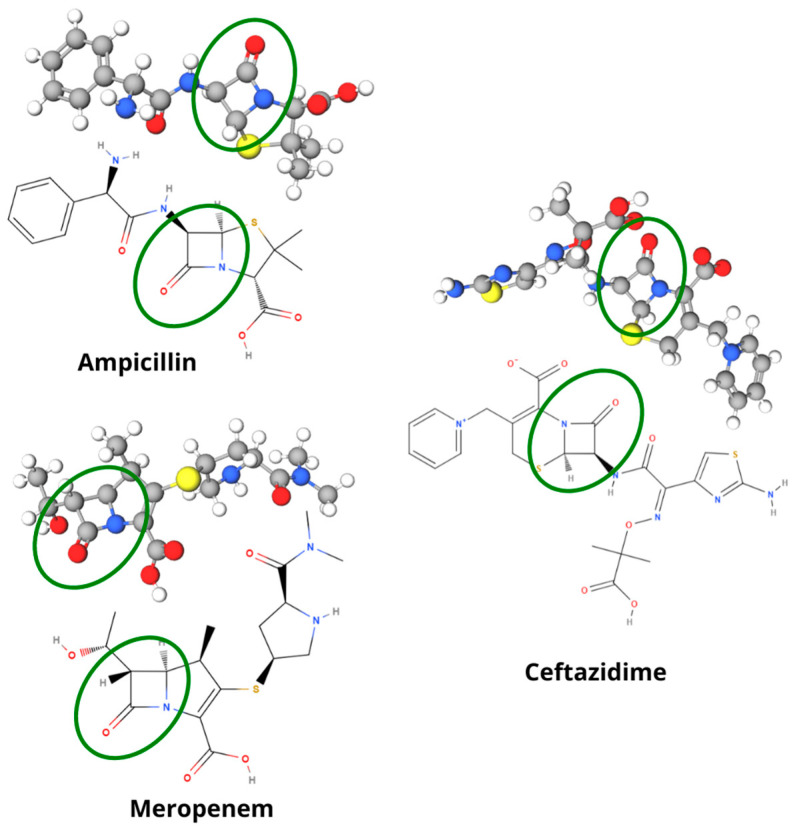
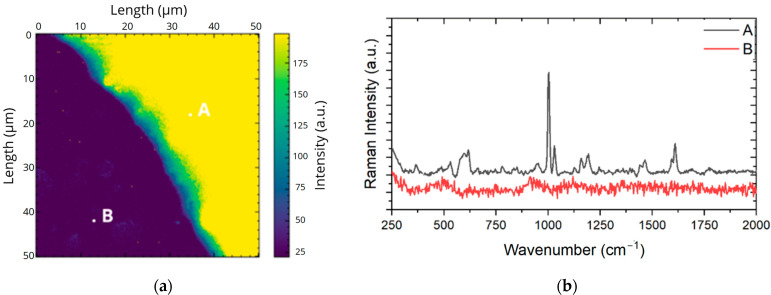
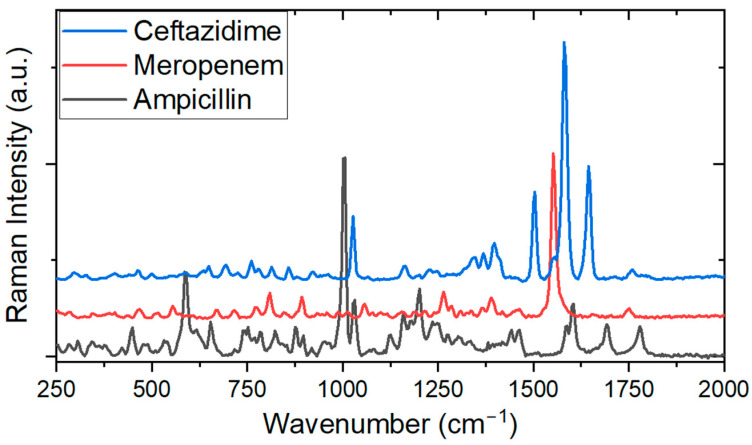
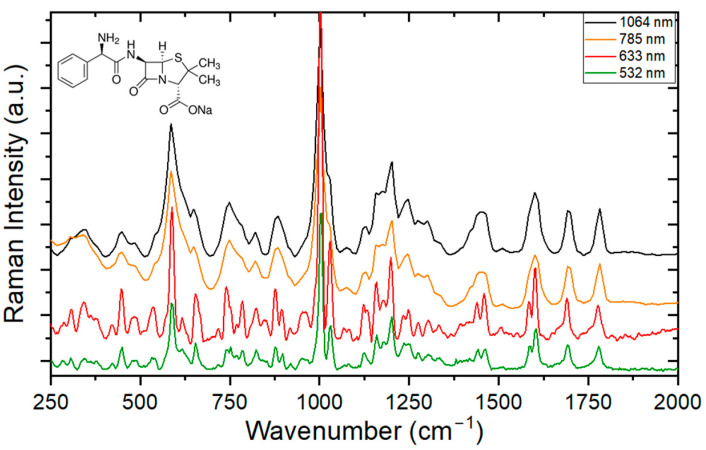
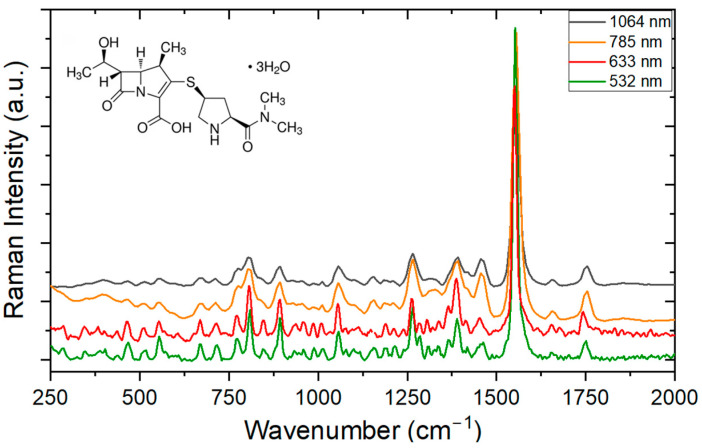
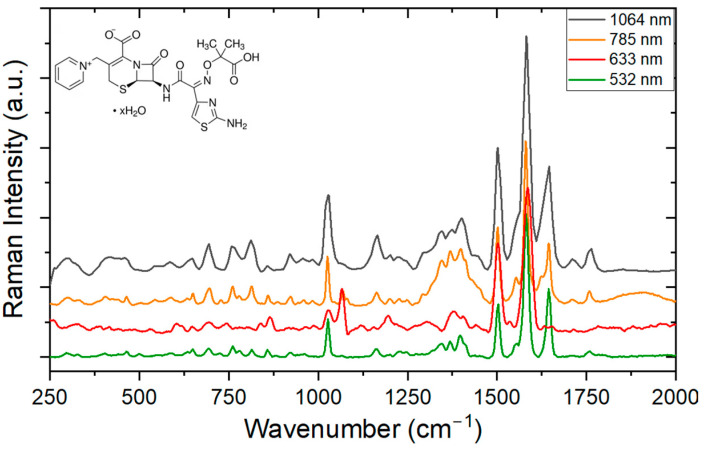
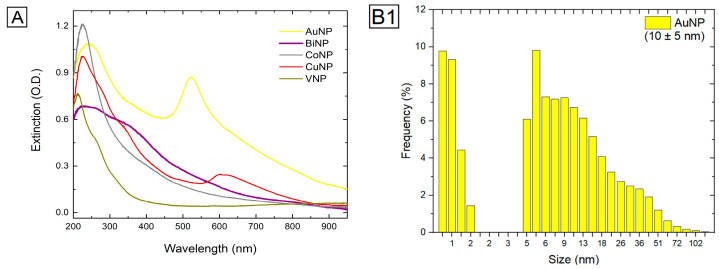
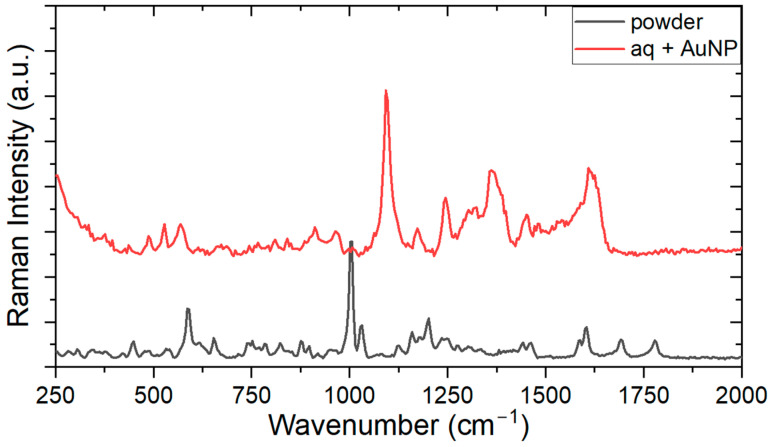
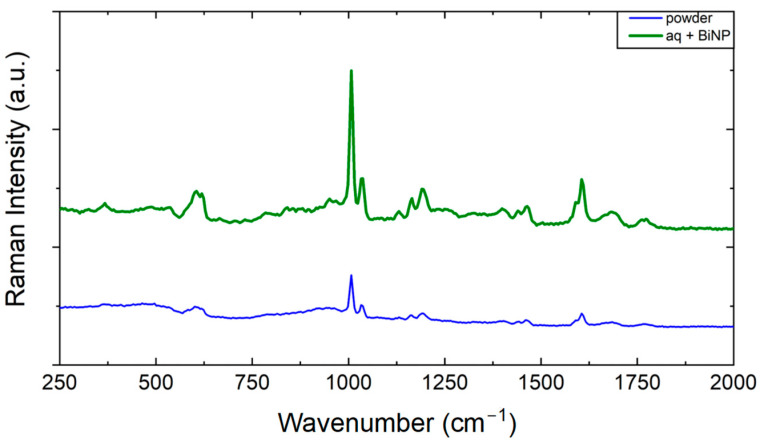
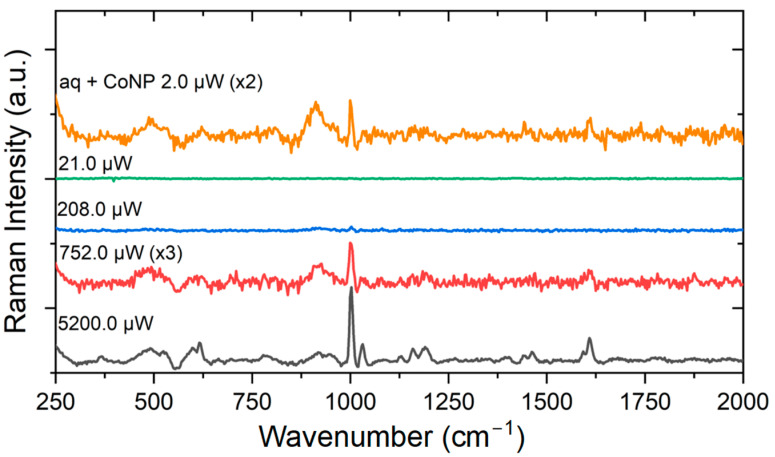
Beta-lactam antibiotics, derived from penicillin, are the most used class of antimicrobials used for treating bacterial infections. Over the years, microorganisms have developed resistance mechanisms capable of preventing the effect of these drugs. This condition has been a significant public health concern for the 21st century, especially after predictions that antimicrobial resistance could lead to 10 million deaths annually by 2050. The challenge of developing new antimicrobials brings with it the need to ensure the efficacy of existing ones, hence the importance of developing fast and low-cost monitoring techniques. In this study, we present an alternative based on nanophotonics using Surface-Enhanced Raman Spectroscopy (SERS) mediated by nanoparticles for the detection of antimicrobials, with emphasis on some beta-lactam antibiotics commonly prescribed in cases of critically ill patients. It is a sensitive and accurate technique for drug monitoring, allowing for rapid and specific detection of its molecular signatures. This approach is crucial to address the challenge of antimicrobial resistance and ensure the therapeutic efficacy of existing treatments. Our experiments demonstrate the possibility of identifying spectra with characteristic vibrations (fingerprints) of these antimicrobials via SERS. Our results point to new strategies for molecular monitoring of drugs by optical techniques using unconventional nanoparticles.
β-内酰胺抗生素源自青霉素,是治疗细菌感染最常用的一类抗菌药物。多年来,微生物已形成了能够阻止这些药物发挥作用的耐药机制。这种情况已成为21世纪一个重大的公共卫生问题,尤其是在有预测称到2050年抗菌药物耐药性可能导致每年1000万人死亡之后。开发新型抗菌药物面临的挑战带来了确保现有药物疗效的需求,因此开发快速且低成本的监测技术很重要。在本研究中,我们提出了一种基于纳米光子学的替代方法,利用纳米颗粒介导的表面增强拉曼光谱(SERS)来检测抗菌药物,重点关注重症患者常用的一些β-内酰胺抗生素。这是一种用于药物监测的灵敏且准确的技术,能够快速、特异性地检测其分子特征。这种方法对于应对抗菌药物耐药性挑战并确保现有治疗方法的治疗效果至关重要。我们的实验证明了通过SERS识别这些抗菌药物具有特征振动(指纹)光谱的可能性。我们的结果指出了利用非常规纳米颗粒通过光学技术进行药物分子监测的新策略。