Hernandez-Fuentes Gustavo A, Delgado-Enciso Osiris G, Larios-Cedeño Edgar G, Sánchez-Galindo Juan M, Ceballos-Magaña Silvia G, Pineda-Urbina Kayim, Alcalá-Pérez Mario A, Magaña-Vergara Nancy E, Delgado-Enciso Josuel, Díaz-Llerenas Uriel, Diaz-Martinez Janet, Garza-Veloz Idalia, Martinez-Fierro Margarita L, Rodriguez-Sanchez Iram P, Delgado-Enciso Ivan
Department of Molecular Medicine, School of Medicine, University of Colima, Colima 28040, Mexico.
State Cancerology Institute of Colima, Health Services of the Mexican Social Security Institute for Welfare (IMSS-BIENESTAR), Colima 28085, Mexico.
Life (Basel). 2024 Dec 23;14(12):1702. doi: 10.3390/life14121702.
L. (guanabana) leaves are rich in bioactive compounds with potential antioxidant properties. In the state of Colima, both ethanolic extracts and infusions are traditionally used in folk medicine to address various ailments. This study aimed to evaluate and compare the phytochemical composition and antioxidant activities of ethanolic extracts and infusions of leaves from three geographic regions in Colima, Mexico, with a focus on how geographic origin affects their bioactive properties.
Ethanolic extracts and infusions were prepared from leaves and analyzed using phytochemical screening; DPPH, total antioxidant capacity (TAC), and total phenolic content (TPC) measurements; and HPLC. TLC was also conducted to examine the presence of specific compounds, such as flavonoids and phenols.
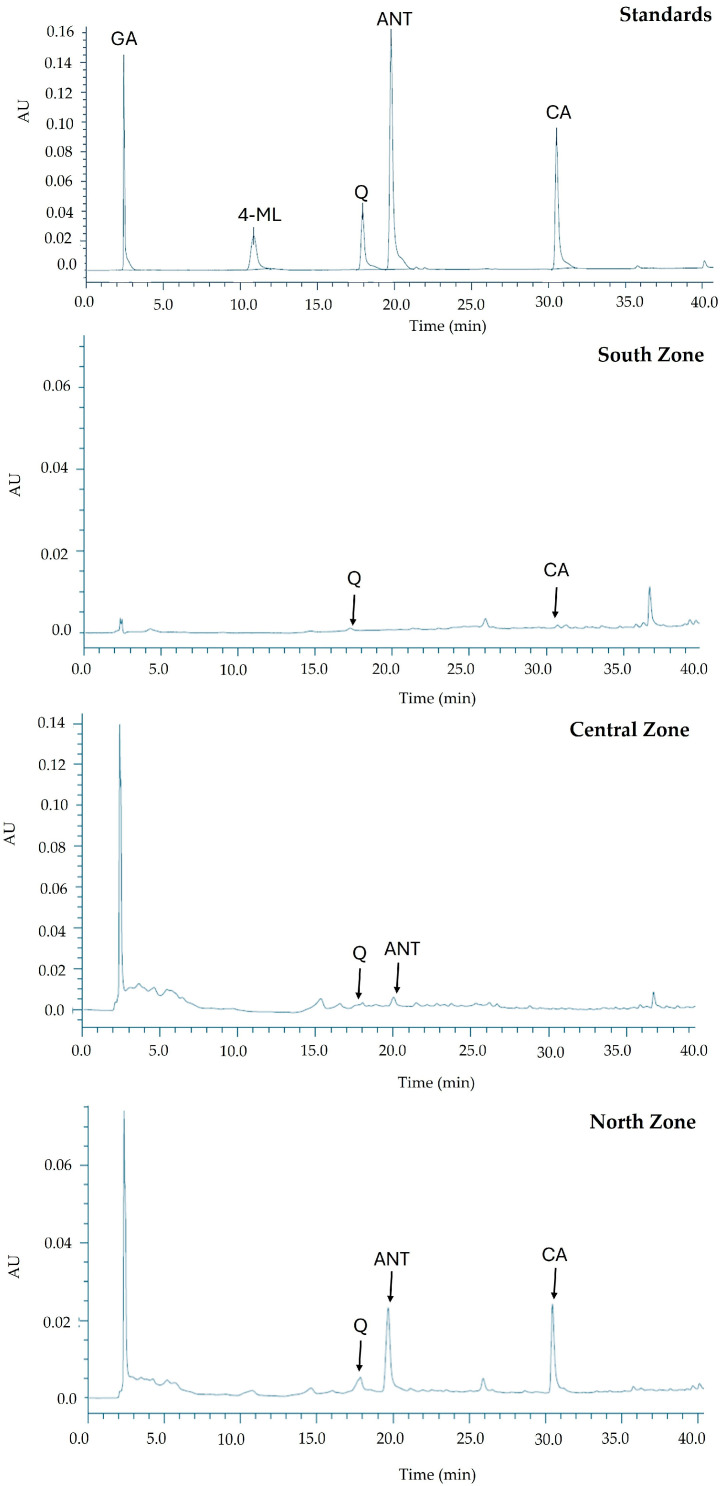
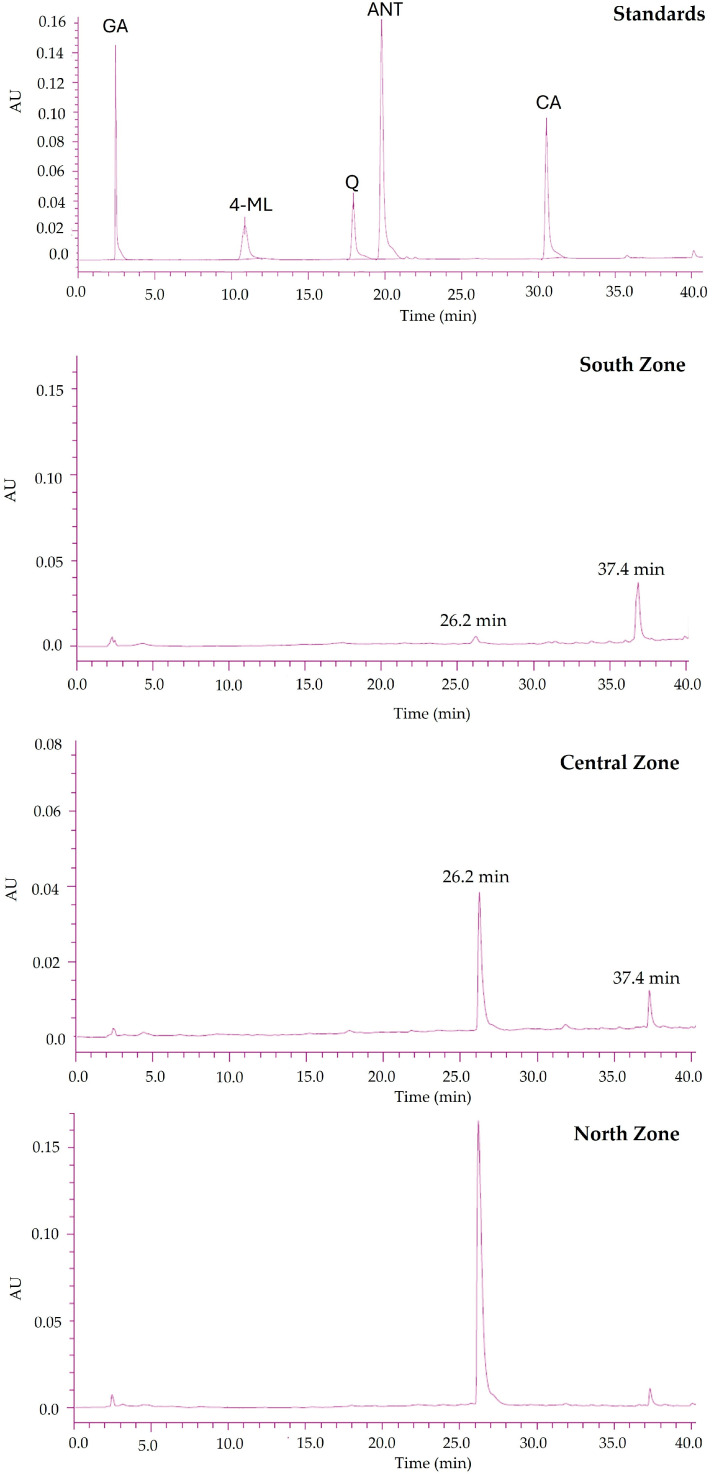
Both the ethanolic extracts and infusions contained significant levels of alkaloids, flavonoids, tannins, and phenolic compounds. The infusions demonstrated superior antioxidant capacity, with DPPH inhibition values of 72.5%, 68.3%, and 65.1% in the northern, central, and southern regions, respectively, compared to the ethanolic extracts' values of 50.3%, 48.9%, and 45.0%. HPLC identified quercetin as a major compound across all samples. Geographically, the northern region exhibited higher concentrations of bioactive compounds, particularly total flavonoid content (TFC) and iron-reducing power (FRPA).
Both the ethanolic extracts and infusions of leaves exhibited significant antioxidant properties, with the infusions showing superior performance. The results suggest that infusions may have potential applications in managing oxidative stress-related diseases such as cancer and diabetes. Exploring their use in traditional medicine and employing this type of approach can help discern the metabolite profile responsible for these bioactivities. Geographic factors influence the bioactive profile of the plant, and further research is needed to isolate specific bioactive compounds and elucidate their therapeutic mechanisms.
刺果番荔枝叶富含具有潜在抗氧化特性的生物活性化合物。在科利马州,乙醇提取物和浸剂在传统医学中都被用于治疗各种疾病。本研究旨在评估和比较墨西哥科利马三个地理区域的刺果番荔枝叶乙醇提取物和浸剂的植物化学成分及抗氧化活性,重点关注地理来源如何影响其生物活性特性。
从刺果番荔枝叶制备乙醇提取物和浸剂,并通过植物化学筛选、二苯基苦味酰基自由基(DPPH)、总抗氧化能力(TAC)和总酚含量(TPC)测定以及高效液相色谱法(HPLC)进行分析。还进行了薄层层析(TLC)以检测特定化合物如黄酮类和酚类的存在。
乙醇提取物和浸剂均含有大量生物碱、黄酮类、单宁和酚类化合物。浸剂表现出更强的抗氧化能力,北部、中部和南部地区浸剂的DPPH抑制值分别为72.5%、68.3%和65.1%,而乙醇提取物的相应值为50.3%、48.9%和45.0%。HPLC鉴定出槲皮素是所有样品中的主要化合物。在地理方面,北部地区生物活性化合物浓度更高,尤其是总黄酮含量(TFC)和铁还原能力(FRPA)。
刺果番荔枝叶的乙醇提取物和浸剂均表现出显著的抗氧化特性,浸剂性能更优。结果表明刺果番荔枝浸剂在管理与氧化应激相关的疾病如癌症和糖尿病方面可能具有潜在应用。探索其在传统医学中的用途并采用此类方法有助于识别负责这些生物活性的代谢物谱。地理因素影响植物的生物活性谱,需要进一步研究以分离特定生物活性化合物并阐明其治疗机制。