Hernández-Rangel Alejandra E, Cabrera-Licona Ariana, Hernandez-Fuentes Gustavo A, Beas-Guzmán Oscar F, Martínez-Martínez Francisco J, Alcalá-Pérez Mario A, Montes-Galindo Daniel A, Rodriguez-Sanchez Iram P, Martinez-Fierro Margarita L, Casarez-Price Juan C, De-Leon-Zaragoza Luis, Garza-Veloz Idalia, Delgado-Enciso Iván
School of Medicine, University of Colima, Colima 28040, Mexico.
Cancerology State Institute, Colima State Health Services, Colima 28085, Mexico.
Biomedicines. 2024 Aug 8;12(8):1804. doi: 10.3390/biomedicines12081804.
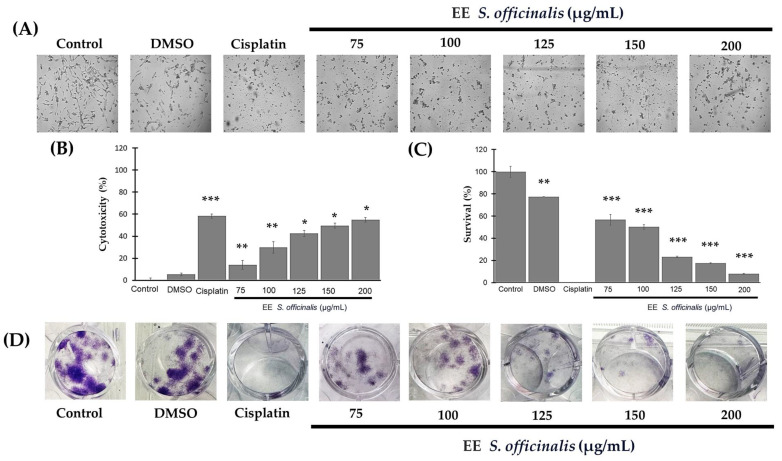
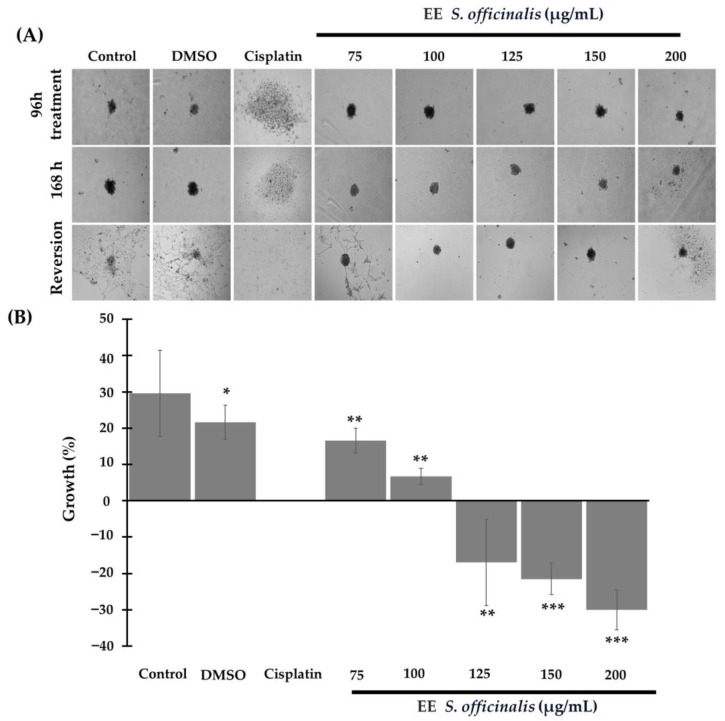
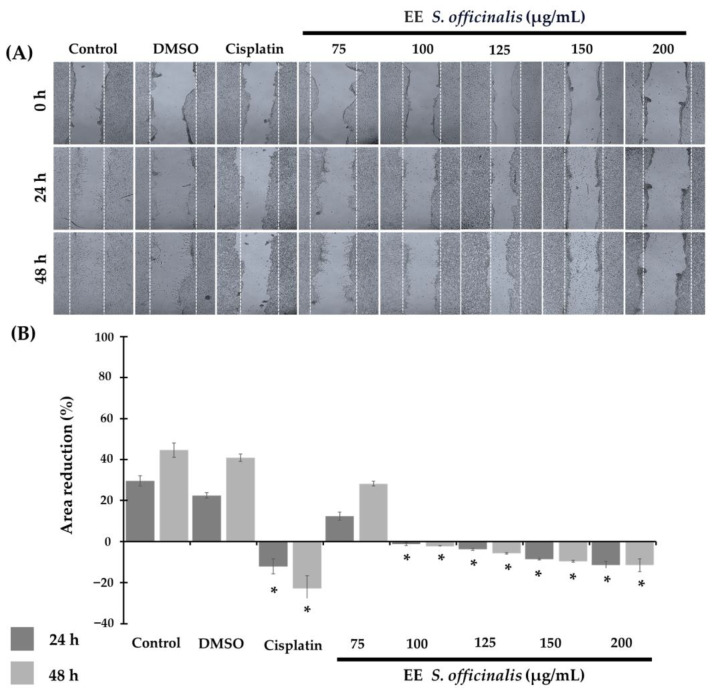
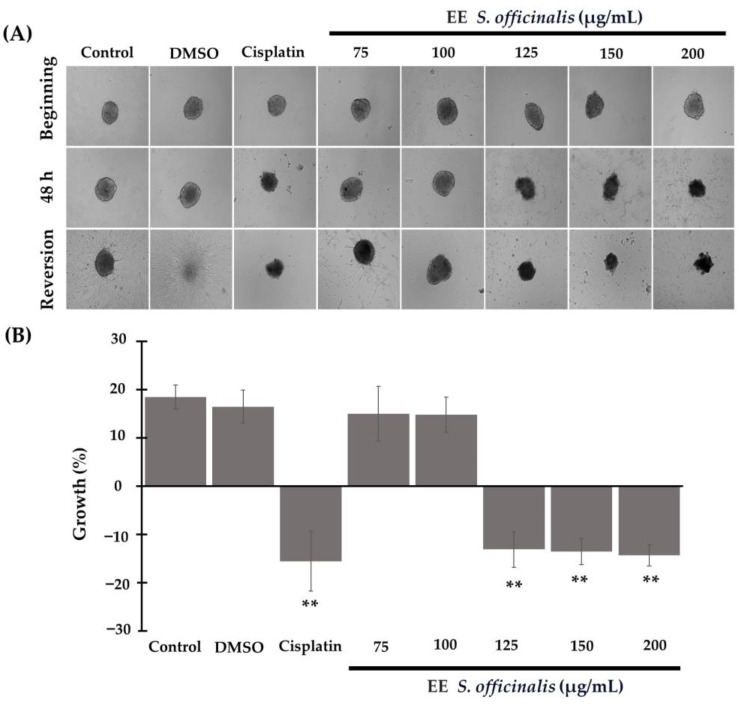
(SO) is one of the most widely used plants in traditional medicine worldwide. In the present study, the effect of an ethanolic extract of leaves on hallmarks of cancer of HPV-16-positive cancer tumorigenic cells, TC-1, was analyzed in vitro. Phytochemical and spectroscopic analysis were performed. Additionally, the extract's flavonoid content, reducing iron, and antioxidant capacity were determined. In regard to the in vitro tests, the cytotoxic activity and its effect on the replicative capacity and on the cell migration of TC-1 cells were analyzed by viability and clonogenic, survival, and wound healing assays. The effect of a pre-treatment or treatment on 3D culture formation, growth, and reversion capacity was also examined. The results of the phytochemical analysis allowed the detection of tannins, saponins, steroids, and flavonoids. The flavonoids content was found to be 153.40 ± 10.68 µg/mg of extract. Additionally, the extract exhibited an antioxidant capacity and a ferric-reducing capacity of around 40% compared to the ascorbic acid. Thin layer chromatographic (TLC) analysis and spectroscopic tests showed the presence of compounds similar to quercetin and catechin flavonoids in the extract. In the in vitro assays, the SO extract induced in a concentration-dependent way changes in cell morphology, the decrease of cell viability, survival, and migration. At a concentration of 125 µg/mL, the extract inhibited spheroid formation, reduced their growth, and affected their reversion to 2D. Ethanolic extract of leaves had inhibitory effects on hallmarks of the cancer line HPV-16+. This suggests that the phytochemicals present in it may be a source of chemotherapeutics against cervical cancer.
(某种植物)是世界范围内传统医学中使用最广泛的植物之一。在本研究中,体外分析了该植物叶子乙醇提取物对人乳头瘤病毒16型(HPV - 16)阳性致癌肿瘤细胞TC - 1的癌症特征的影响。进行了植物化学和光谱分析。此外,还测定了提取物中的黄酮含量、还原铁能力和抗氧化能力。关于体外试验,通过活力、克隆形成、存活和伤口愈合试验分析了细胞毒性活性及其对TC - 1细胞复制能力和细胞迁移的影响。还研究了预处理或处理对三维(3D)培养物形成、生长和逆转能力的影响。植物化学分析结果检测到了单宁、皂苷、类固醇和黄酮类化合物。发现提取物中的黄酮含量为153.40±10.68μg/mg提取物。此外,与抗坏血酸相比,提取物表现出约40%的抗氧化能力和铁还原能力。薄层色谱(TLC)分析和光谱测试表明提取物中存在与槲皮素和儿茶素类黄酮相似的化合物。在体外试验中,该植物提取物以浓度依赖性方式诱导细胞形态变化、细胞活力、存活率和迁移率下降。在浓度为125μg/mL时,提取物抑制球体形成,降低其生长,并影响其向二维(2D)的逆转。该植物叶子的乙醇提取物对HPV - 16 +癌症细胞系的特征具有抑制作用。这表明其中存在的植物化学物质可能是抗宫颈癌化疗药物的来源。