Gu Ao, Zhang Yiti, He Jianfeng, Zhao Mingri, Ding Lingjie, Liu Wanxi, Xiao Jianing, Huang Jiali, Liu Mujun, Liu Xionghao
MOE Key Lab of Rare Pediatric Diseases & Hunan Key Laboratory of Medical Genetics of the School of Life Sciences, Central South University, Changsha 410017, China.
Department of Cell Biology, School of Life Sciences, Central South University, Changsha 410017, China.
Int J Mol Sci. 2024 Dec 15;25(24):13448. doi: 10.3390/ijms252413448.
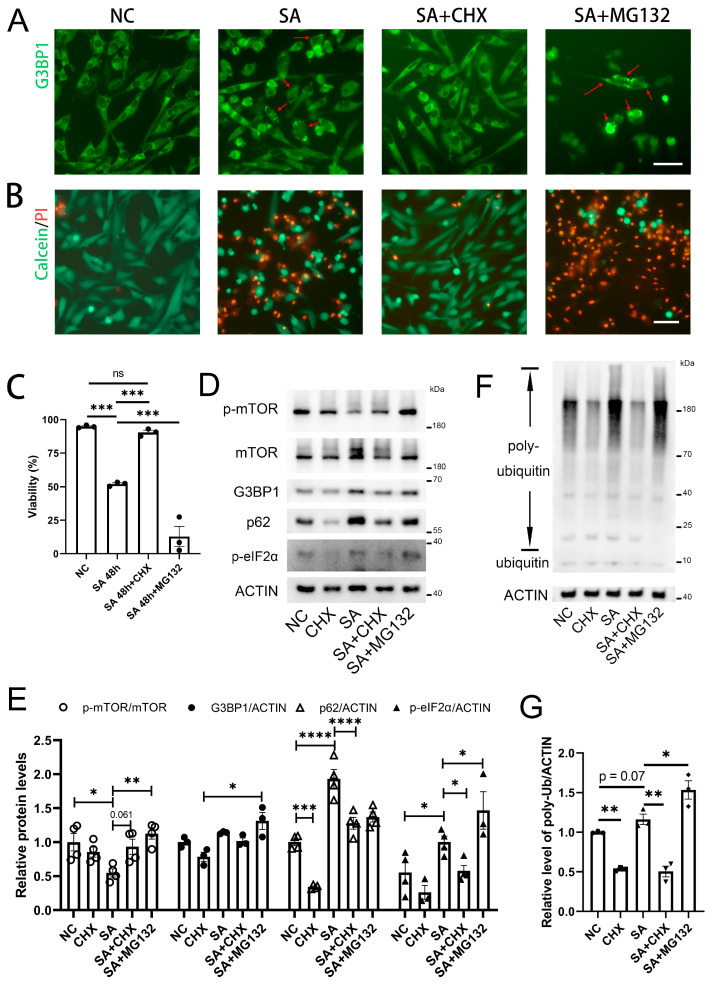
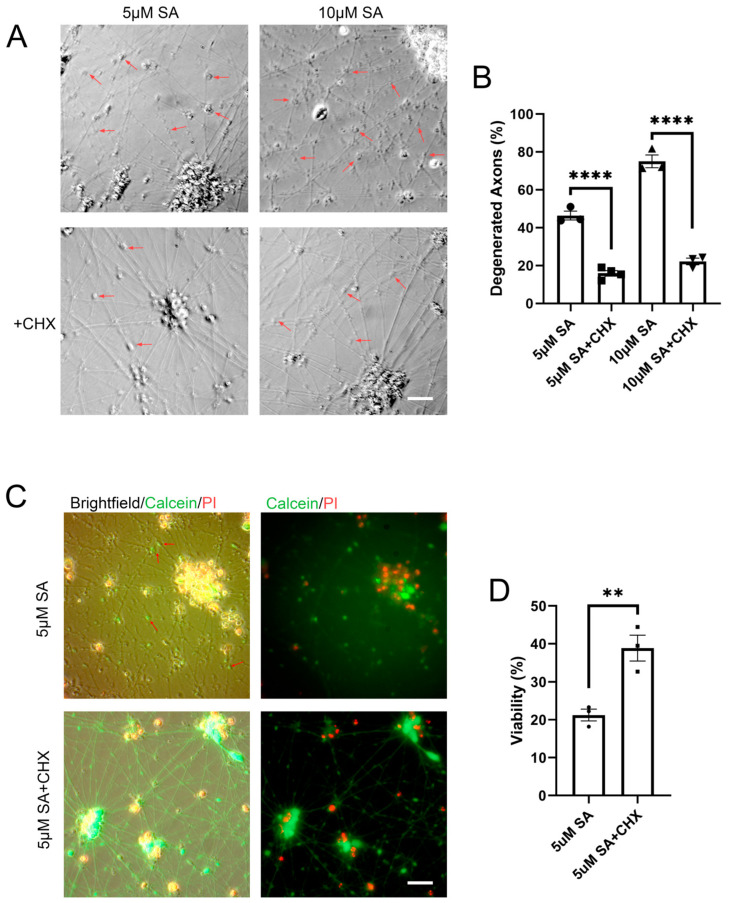
The pathogenesis of neurodegenerative diseases results from the interplay between genetic and environmental factors. Aging and chronic oxidative stress are critical contributors to neurodegeneration. UBQLN2, a ubiquitin-related protein, aids in protein degradation and protects against oxidative stress. In ALS neurons harboring UBQLN2 mutations, oxidative stress accelerates pathological changes, yet the precise mechanisms remain unclear. Using induced motor neurons (iMNs) derived from UBQLN2 P497H iPSCs, we observed ALS-like phenotypes, including TDP-43 mislocalization, increased cell death, and reduced viability. Sodium arsenite (SA)-induced oxidative stress triggered stress granule formation, while autophagy dysfunction exacerbated neuronal degeneration. CHX and bosutinib treatments reduced ubiquitinated protein accumulation and alleviated degeneration, highlighting potential therapeutic pathways. These findings emphasize the role of chronic oxidative stress and stress granule formation in UBQLN2 ALS, offering insights into novel therapeutic targets.
神经退行性疾病的发病机制源于遗传和环境因素之间的相互作用。衰老和慢性氧化应激是神经退行性变的关键因素。泛素相关蛋白UBQLN2有助于蛋白质降解并抵御氧化应激。在携带UBQLN2突变的肌萎缩侧索硬化症(ALS)神经元中,氧化应激会加速病理变化,但其确切机制仍不清楚。利用源自UBQLN2 P497H诱导多能干细胞(iPSC)的诱导运动神经元(iMN),我们观察到了类似ALS的表型,包括TDP-43定位错误、细胞死亡增加和活力降低。亚砷酸钠(SA)诱导的氧化应激触发了应激颗粒的形成,而自噬功能障碍则加剧了神经元变性。环己酰亚胺(CHX)和博舒替尼治疗减少了泛素化蛋白的积累并减轻了变性,突出了潜在的治疗途径。这些发现强调了慢性氧化应激和应激颗粒形成在UBQLN2型ALS中的作用,为新型治疗靶点提供了见解。