Limón Irene, Bedmar Javier, Fernández-Hernán Juan Pablo, Multigner Marta, Torres Belén, Rams Joaquín, Cifuentes Sandra C
Department of Applied Mathematics, Materials Science and Engineering and Electronic Technology, Escuela Superior de Ciencias Experimentales y Tecnología (ESCET), Universidad Rey Juan Carlos, C/Tulipán s/n, 28933 Móstoles, Spain.
Institute of Research on Technologies for Sustainability (ITPS), Universidad Rey Juan Carlos, C/Tulipán s/n, 28933 Móstoles, Spain.
Materials (Basel). 2024 Dec 19;17(24):6220. doi: 10.3390/ma17246220.
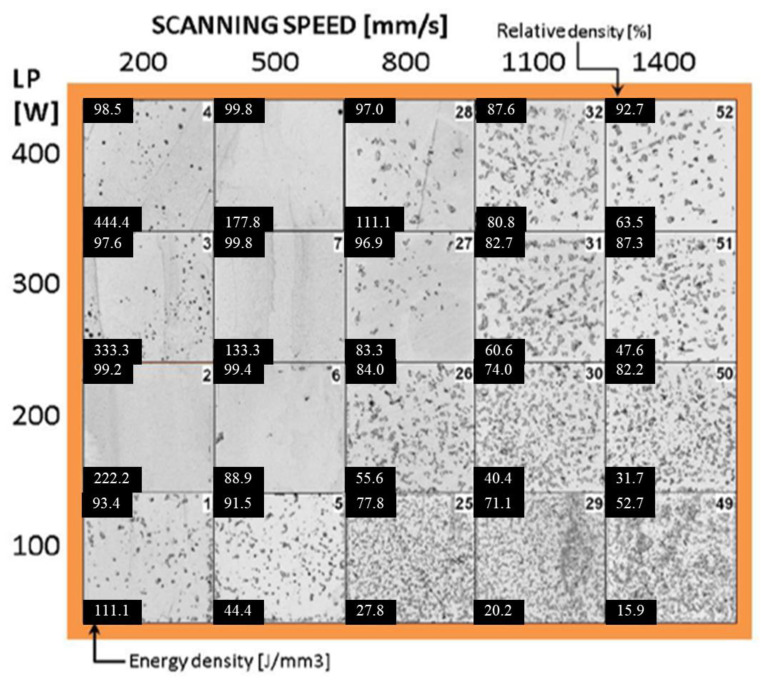
This review explores the advancements in additive manufacturing (AM) of biodegradable iron (Fe) and zinc (Zn) alloys, focusing on their potential for medical implants, particularly in vascular and bone applications. Fe alloys are noted for their superior mechanical properties and biocompatibility but exhibit a slow corrosion rate, limiting their biodegradability. Strategies such as alloying with manganese (Mn) and optimizing microstructure via laser powder bed fusion (LPBF) have been employed to increase Fe's corrosion rate and mechanical performance. Zn alloys, characterized by moderate biodegradation rates and biocompatible corrosion products, address the limitations of Fe, though their mechanical properties require improvement through alloying and microstructural refinement. LPBF has enabled the fabrication of dense and porous structures for both materials, with energy density optimization playing a critical role in achieving defect-free parts. Fe alloys exhibit higher strength and hardness, while Zn alloys offer better corrosion control and biocompatibility. In vitro and in vivo studies demonstrate promising outcomes for both materials, with Fe alloys excelling in load-bearing applications and Zn alloys in controlled degradation and vascular applications. Despite these advancements, challenges such as localized corrosion, cytotoxicity, and long-term performance require further investigation to fully harness the potential of AM-fabricated Fe and Zn biodegradable implants.
本综述探讨了可生物降解铁(Fe)和锌(Zn)合金增材制造(AM)的进展,重点关注其在医疗植入物中的潜力,特别是在血管和骨骼应用方面。铁合金以其优异的机械性能和生物相容性而闻名,但腐蚀速率较慢,限制了其生物降解性。已采用与锰(Mn)合金化以及通过激光粉末床熔融(LPBF)优化微观结构等策略来提高铁的腐蚀速率和机械性能。锌合金具有适度的生物降解速率和生物相容性良好的腐蚀产物,解决了铁的局限性,不过其机械性能需要通过合金化和微观结构细化来改善。LPBF能够为这两种材料制造致密和多孔结构,能量密度优化在实现无缺陷部件方面起着关键作用。铁合金具有更高的强度和硬度,而锌合金具有更好的腐蚀控制和生物相容性。体外和体内研究表明这两种材料都有良好的效果,铁合金在承重应用中表现出色,锌合金在可控降解和血管应用中表现出色。尽管取得了这些进展,但局部腐蚀、细胞毒性和长期性能等挑战仍需进一步研究,以充分发挥增材制造的可生物降解铁和锌植入物的潜力。