Pessoa Renata Torres, Santos da Silva Lucas Yure, Alcântara Isabel Sousa, Silva Tarcísio Mendes, Silva Eduardo Dos Santos, da Costa Roger Henrique Sousa, da Silva Aparecida Barros, Ribeiro-Filho Jaime, Pereira Bezerra Martins Anita Oliveira Brito, Coutinho Henrique Douglas Melo, Sousa Jean Carlos Pereira, Chaves Andréa Rodrigues, Marreto Ricardo Neves, de Menezes Irwin Rose Alencar
Laboratory of Pharmacology and Molecular Chemistry, Department of Chemical Biology, Regional University of Cariri (URCA), Rua Coronel Antônio Luis 1161, Pimenta, Crato 63105-000, Ceará, Brazil.
Oswaldo Cruz Foundation (FIOCRUZ), Fiocruz Ceará, R. São José, S/N-Precabura, Eusébio 61773-270, Ceará, Brazil.
Pharmaceuticals (Basel). 2024 Dec 11;17(12):1671. doi: 10.3390/ph17121671.
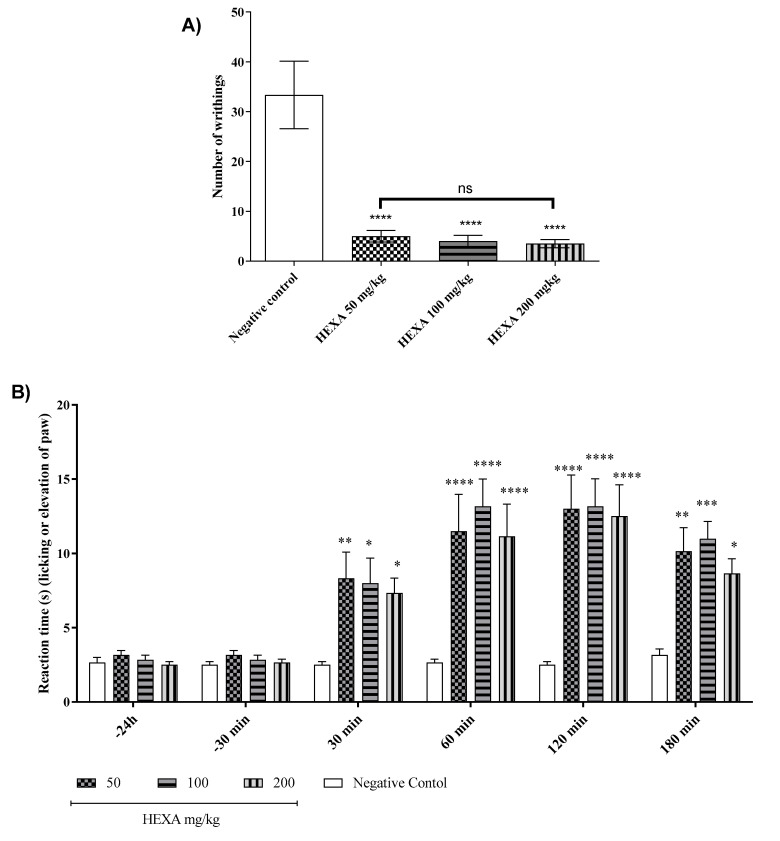
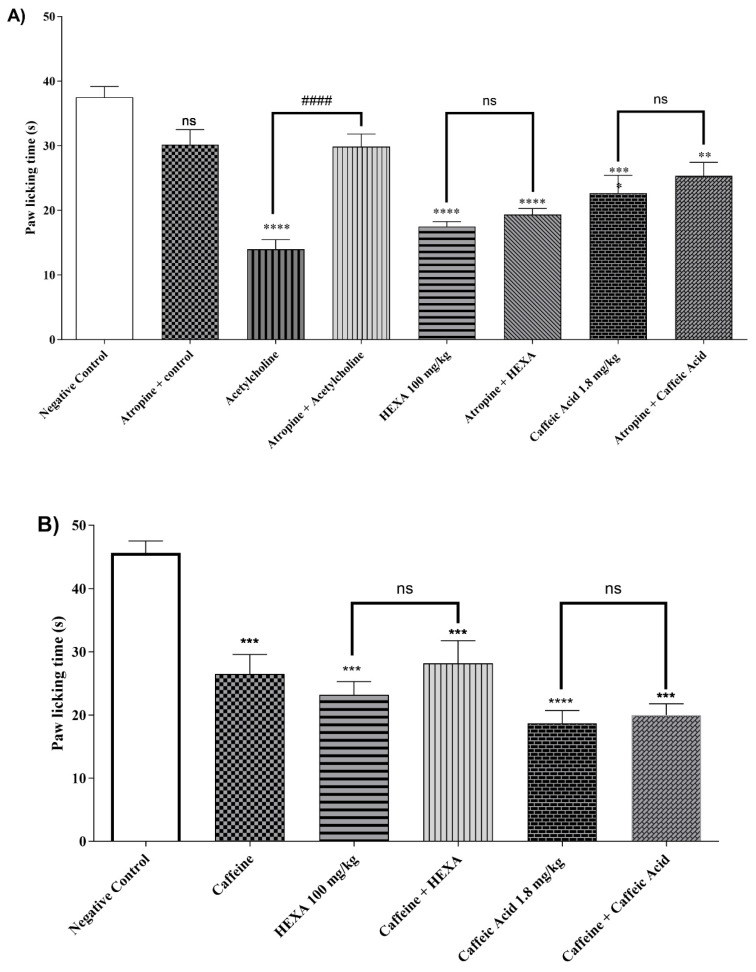
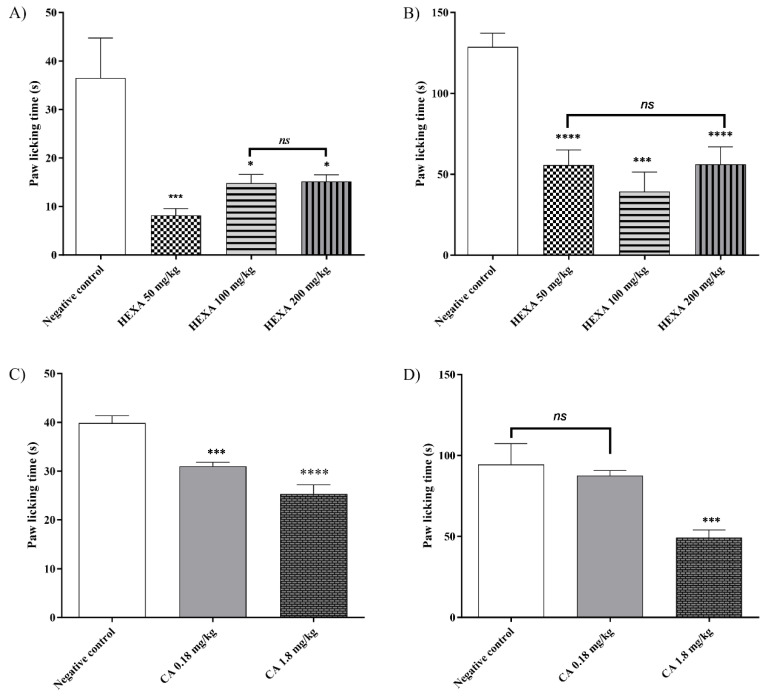
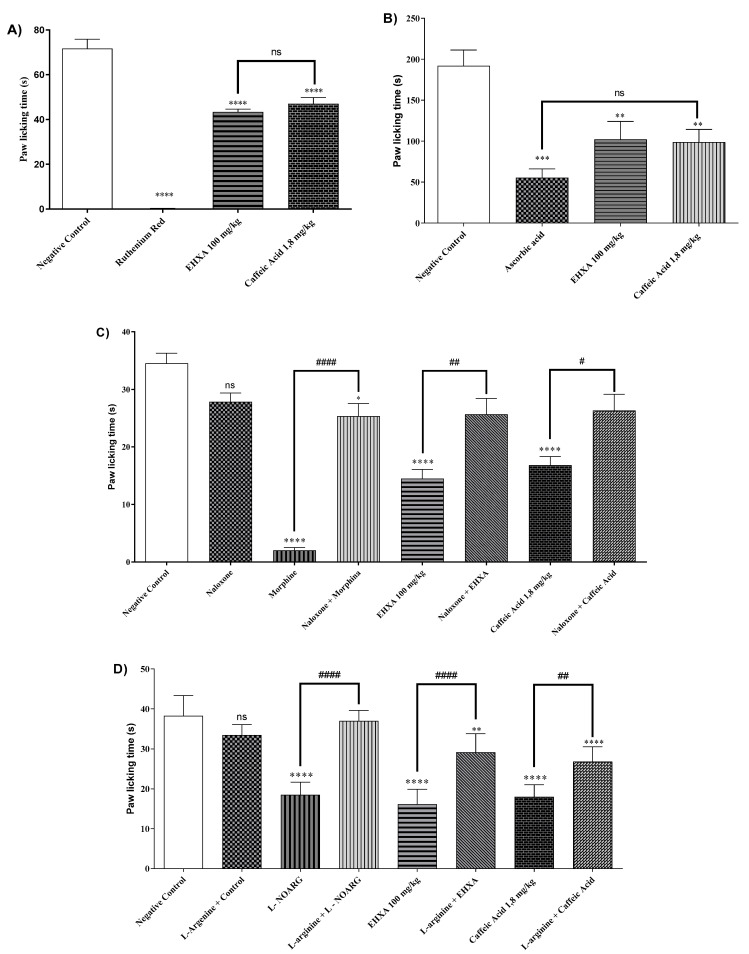
This study evaluated the antinociceptive effect of the L. bark extract (HEXA) and its primary component, caffeic acid (CA), through in vivo assays. : The antinociceptive properties were assessed using abdominal writhing, hot plate, and Von Frey tests. Additionally, the study investigated the modulation of various pain signaling pathways using a pharmacological approach. The results demonstrated that all doses of the HEXA significantly increased latency in the hot plate test, decreased the number of abdominal contortions, reduced hyperalgesia in the Von Frey test, and reduced both phases of the formalin test. Caffeic acid reduced licking time in the first phase of the formalin test at all doses, with the highest dose showing significant effects in the second phase. The HEXA potentially modulated α-adrenergic (52.99%), nitric oxide (57.77%), glutamatergic (33.66%), vanilloid (39.84%), cyclic guanosine monophosphate (56.11%), and KATP channel-dependent pathways (38.70%). Conversely, CA influenced the opioid, glutamatergic (53.60%), and vanilloid (34.42%) pathways while inhibiting nitric oxide (52.99%) and cyclic guanosine monophosphate (38.98%). HEXA and CA exhibit significant antinociceptive effects due to their potential interference in multiple pain signaling pathways. While the molecular targets remain to be fully investigated, HEXA and CA demonstrate significant potential for the development of new analgesic drugs.
本研究通过体内试验评估了L. bark提取物(HEXA)及其主要成分咖啡酸(CA)的抗伤害感受作用。采用扭体试验、热板试验和von Frey试验评估抗伤害感受特性。此外,该研究还采用药理学方法研究了各种疼痛信号通路的调节情况。结果表明,所有剂量的HEXA均显著增加热板试验中的潜伏期,减少扭体次数,减轻von Frey试验中的痛觉过敏,并减轻福尔马林试验的两个阶段。咖啡酸在福尔马林试验的第一阶段所有剂量均减少舔舐时间,最高剂量在第二阶段显示出显著效果。HEXA可能调节α-肾上腺素能(52.99%)、一氧化氮(57.77%)、谷氨酸能(33.66%)、香草酸(39.84%)、环磷酸鸟苷(56.11%)和KATP通道依赖性途径(38.70%)。相反,CA影响阿片类、谷氨酸能(53.60%)和香草酸(34.42%)途径,同时抑制一氧化氮(52.99%)和环磷酸鸟苷(38.98%)。由于HEXA和CA可能干扰多种疼痛信号通路,它们表现出显著的抗伤害感受作用。虽然分子靶点仍有待充分研究,但HEXA和CA在开发新型镇痛药方面显示出巨大潜力。