Guo Jiageng, Jiang Xinya, Tian Yu, Yan Shidu, Liu Jiaojiao, Xie Jinling, Zhang Fan, Yao Chun, Hao Erwei
Guangxi Key Laboratory of Efficacy Study on Chinese Materia Medica, Guangxi University of Chinese Medicine, Nanning 530000, China.
Guangxi Collaborative Innovation Center of Study on Functional Ingredients of Agricultural Residues, Guangxi University of Chinese Medicine, Nanning 530000, China.
Pharmaceuticals (Basel). 2024 Dec 17;17(12):1700. doi: 10.3390/ph17121700.
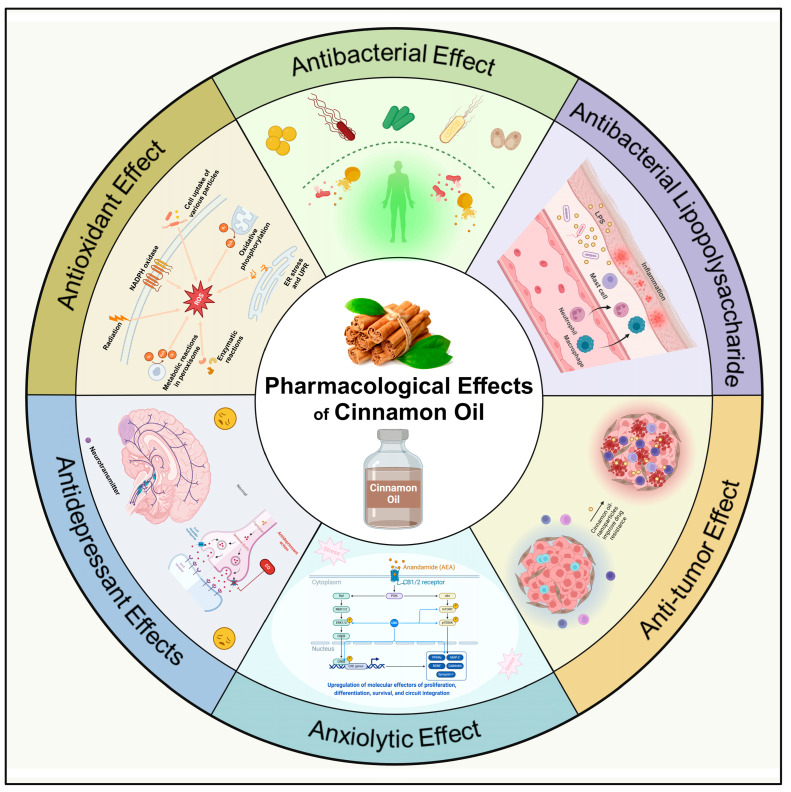
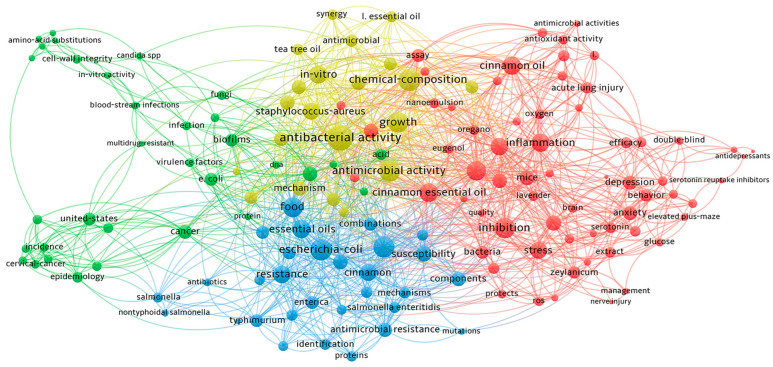
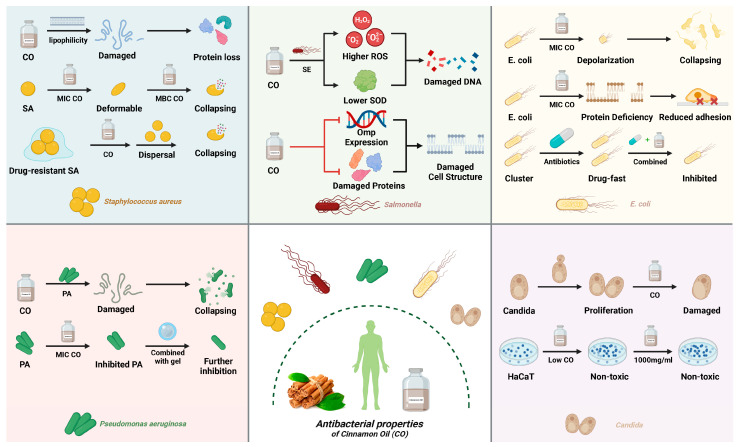
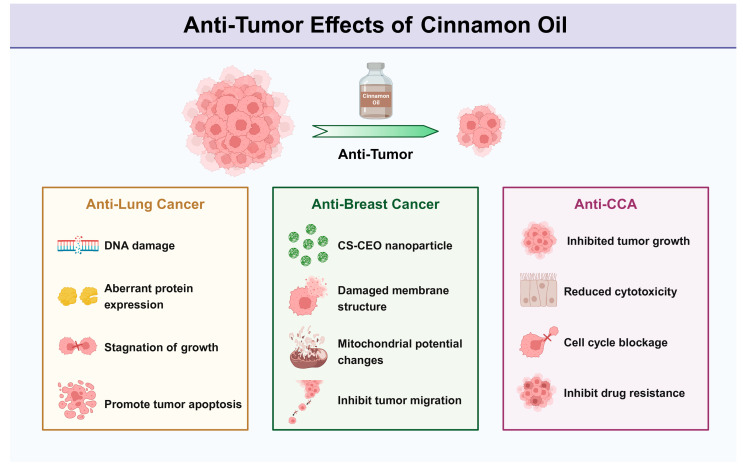
Cinnamon oil, an essential oil extracted from plants of the genus Cinnamomum, has been highly valued in ancient Chinese texts for its medicinal properties. This review summarizes the chemical composition, pharmacological actions, and various applications of cinnamon oil, highlighting its potential in medical and industrial fields. By systematically searching and evaluating studies from major scientific databases including Web of Science, PubMed, and ScienceDirect, we provide a comprehensive analysis of the therapeutic potential of cinnamon oil. Research indicates that cinnamon oil possesses a wide range of pharmacological activities, covering antibacterial, anti-inflammatory, anti-tumor, and hypoglycemic effects. It is currently an active ingredient in over 500 patented medicines. Cinnamon oil has demonstrated significant inhibitory effects against various pathogens comprising , , and . Its mechanisms of action include disrupting cell membranes, inhibiting ATPase activity, and preventing biofilm formation, suggesting its potential as a natural antimicrobial agent. Its anti-inflammatory properties are evidenced by its ability to suppress inflammatory markers like vascular cell adhesion molecules and macrophage colony-stimulating factors. Moreover, cinnamon oil has shown positive effects in lowering blood pressure and improving metabolism in diabetic patients by enhancing glucose uptake and increasing insulin sensitivity. The main active components of cinnamon oil include cinnamaldehyde, cinnamic acid, and eugenol, which play key roles in its pharmacological effects. Recently, the applications of cinnamon oil in industrial fields, including food preservation, cosmetics, and fragrances, have also become increasingly widespread. Despite the extensive research supporting its medicinal value, more clinical trials are needed to determine the optimal dosage, administration routes, and possible side effects of cinnamon oil. Additionally, exploring the interactions between cinnamon oil and other drugs, as well as its safety in different populations, is crucial. Considering the current increase in antibiotic resistance and the demand for sustainable and effective medical treatments, this review emphasizes the necessity for further research into the mechanisms and safety of cinnamon oil to confirm its feasibility as a basis for new drug development. In summary, as a versatile natural product, cinnamon oil holds broad application prospects and is expected to play a greater role in future medical research and clinical practice.
肉桂油是从樟属植物中提取的一种精油,在中国古代文献中因其药用特性而备受重视。本综述总结了肉桂油的化学成分、药理作用和各种应用,突出了其在医学和工业领域的潜力。通过系统检索和评估来自包括Web of Science、PubMed和ScienceDirect在内的主要科学数据库的研究,我们对肉桂油的治疗潜力进行了全面分析。研究表明,肉桂油具有广泛的药理活性,包括抗菌、抗炎、抗肿瘤和降血糖作用。它目前是500多种专利药物中的活性成分。肉桂油已对包括 、 和 在内的各种病原体表现出显著的抑制作用。其作用机制包括破坏细胞膜、抑制ATP酶活性和防止生物膜形成,表明其作为天然抗菌剂的潜力。其抗炎特性通过其抑制血管细胞粘附分子和巨噬细胞集落刺激因子等炎症标志物的能力得到证明。此外,肉桂油通过增强葡萄糖摄取和提高胰岛素敏感性,对降低糖尿病患者的血压和改善代谢显示出积极作用。肉桂油的主要活性成分包括肉桂醛、肉桂酸和丁香酚,它们在其药理作用中起关键作用。最近,肉桂油在工业领域的应用,包括食品保鲜、化妆品和香料,也越来越广泛。尽管有大量研究支持其药用价值,但仍需要更多的临床试验来确定肉桂油的最佳剂量、给药途径和可能的副作用。此外,探索肉桂油与其他药物之间的相互作用以及其在不同人群中的安全性至关重要。考虑到目前抗生素耐药性的增加以及对可持续和有效医疗治疗的需求,本综述强调有必要进一步研究肉桂油的作用机制和安全性,以确认其作为新药开发基础的可行性。总之,作为一种多功能天然产物,肉桂油具有广阔的应用前景,有望在未来的医学研究和临床实践中发挥更大的作用。