Peng Xueyan, Li Shu, Dou Wenjun, Li Mingxin, Gontcharov Andrey A, Peng Zhanwu, Qi Bao, Wang Qi, Li Yu
Engineering Research Center of Chinese Ministry of Education for Edible and Medicinal Fungi, Jilin Agricultural University, Changchun 130118, China.
Hefei Mycological Valley Innovation Institute, Hefei 231131, China.
Microorganisms. 2024 Dec 10;12(12):2540. doi: 10.3390/microorganisms12122540.
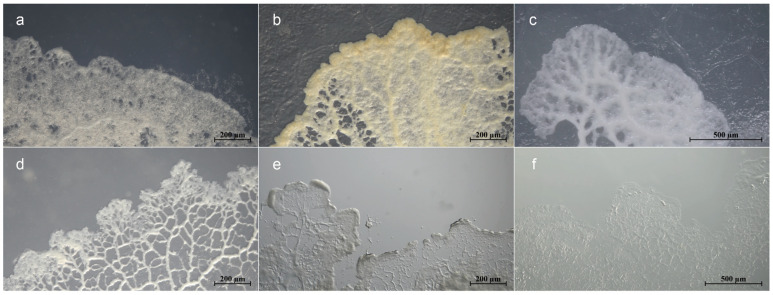
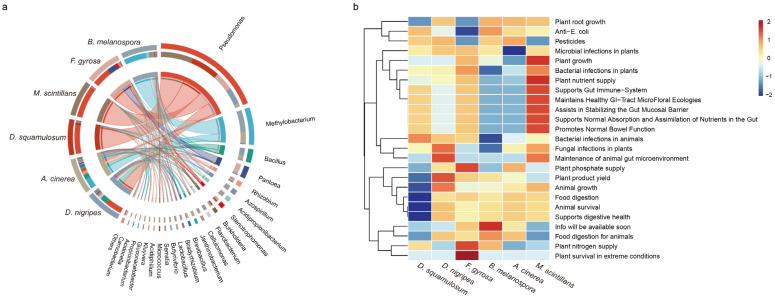
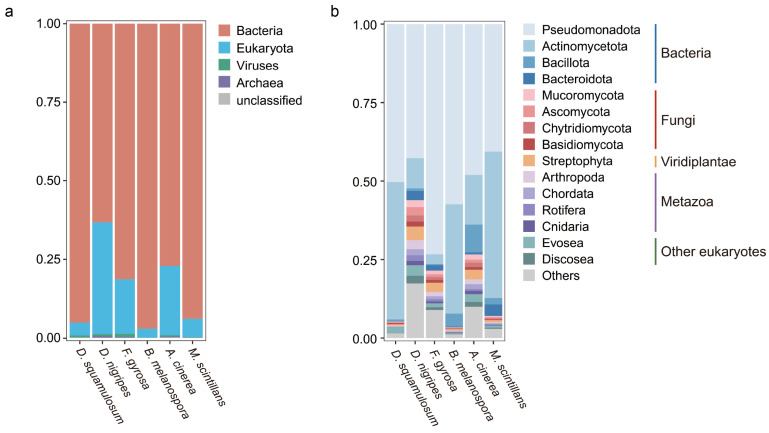
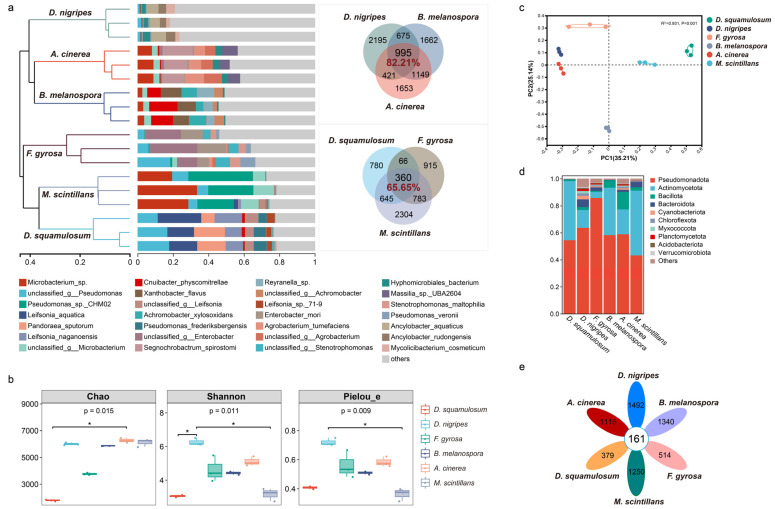
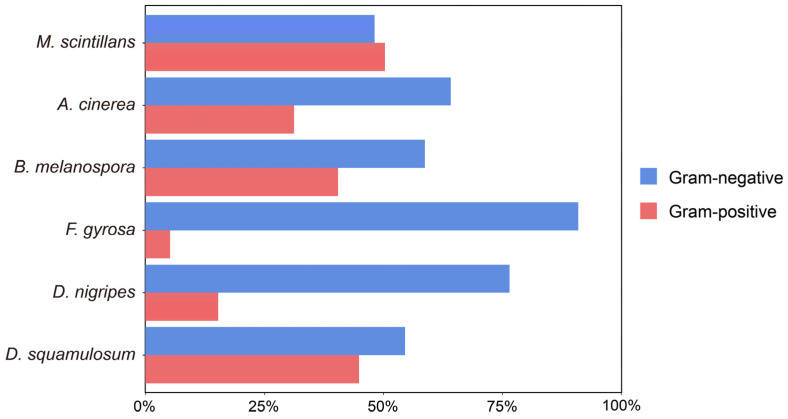
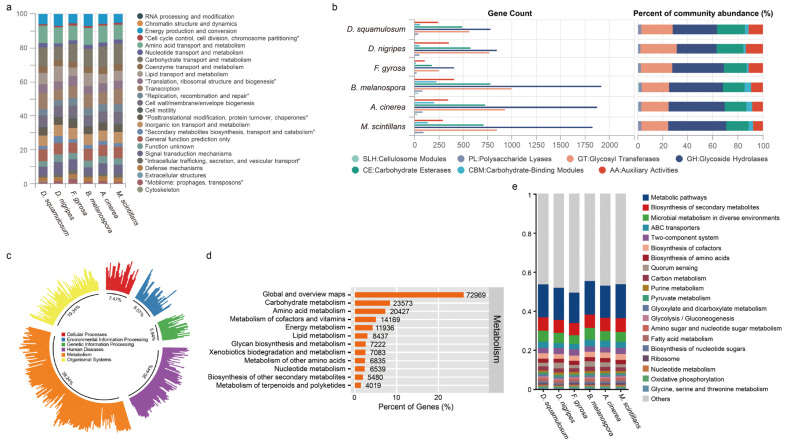
During the trophic period of myxomycetes, the plasmodia of myxomycetes can perform crawling feeding and phagocytosis of bacteria, fungi, and organic matter. Culture-based studies have suggested that plasmodia are associated with one or several species of bacteria; however, by amplicon sequencing, it was shown that up to 31-52 bacteria species could be detected in one myxomycete, suggesting that the bacterial diversity associated with myxomycetes was likely to be underestimated. To fill this gap and characterize myxomycetes' microbiota and functional traits, the diversity and functional characteristics of microbiota associated with the plasmodia of six myxomycetes species were investigated by metagenomic sequencing. The results indicate that the plasmodia harbored diverse microbial communities, including eukaryotes, viruses, archaea, and the dominant bacteria. The associated microbiomes represented more than 22.27% of the plasmodia genome, suggesting that these microbes may not merely be parasitic or present as food but rather may play functional roles within the plasmodium. The six myxomycetes contained similar bacteria, but the bacteria community compositions in each myxomycete were species-specific. Functional analysis revealed a highly conserved microbial functional profile across the six plasmodia, suggesting they may serve a specific function for the myxomycetes. While the host-specific selection may shape the microbial community compositions within plasmodia, functional redundancy ensures functional stability across different myxomycetes.
在黏菌的营养期,黏菌的原质团能够进行爬行摄食,并吞噬细菌、真菌和有机物。基于培养的研究表明,原质团与一种或几种细菌有关;然而,通过扩增子测序发现,在一种黏菌中最多可检测到31 - 52种细菌,这表明与黏菌相关的细菌多样性可能被低估了。为了填补这一空白并表征黏菌的微生物群及其功能特性,通过宏基因组测序研究了六种黏菌原质团相关微生物群的多样性和功能特征。结果表明,原质团含有多种微生物群落,包括真核生物、病毒、古细菌和占主导地位的细菌。相关微生物组占原质团基因组的22.27%以上,这表明这些微生物可能不仅仅是寄生性的或作为食物存在,而是可能在原质团中发挥功能作用。六种黏菌含有相似的细菌,但每种黏菌中的细菌群落组成具有物种特异性。功能分析揭示了六种原质团中高度保守的微生物功能谱,表明它们可能为黏菌发挥特定功能。虽然宿主特异性选择可能塑造原质团内的微生物群落组成,但功能冗余确保了不同黏菌之间的功能稳定性。