Kang Kyu-Ri, Kim Pan-Kyeom, Jo Kyung-Min, Jang Jin-Young, Kang Hyun Mi, Kang Jin-Han
The Vaccine Bio Research Institute, College of Medicine, The Catholic University of Korea, Annex to Seoul Saint Mary Hospital, 222 Banpo-daero, Seocho-gu, Seoul 06591, Republic of Korea.
SK Bioscience, 332 Pangyo-ro, Bundang-gu, Seongnam-si 13493, Republic of Korea.
Vaccines (Basel). 2024 Dec 11;12(12):1392. doi: 10.3390/vaccines12121392.
Influenza remains a significant public health challenge, with vaccination being a substantial way to prevent it. Cell-cultured influenza vaccines have emerged to improve on the drawbacks of egg-based vaccines, but there are few studies focusing on T cell immunity with both types of vaccines. Therefore, we studied the following 2022-2023 seasonal influenza vaccines with a standard dose and high dose: cell-based (C_sd and C_hd) and egg-based (E_sd and E_hd) vaccines.
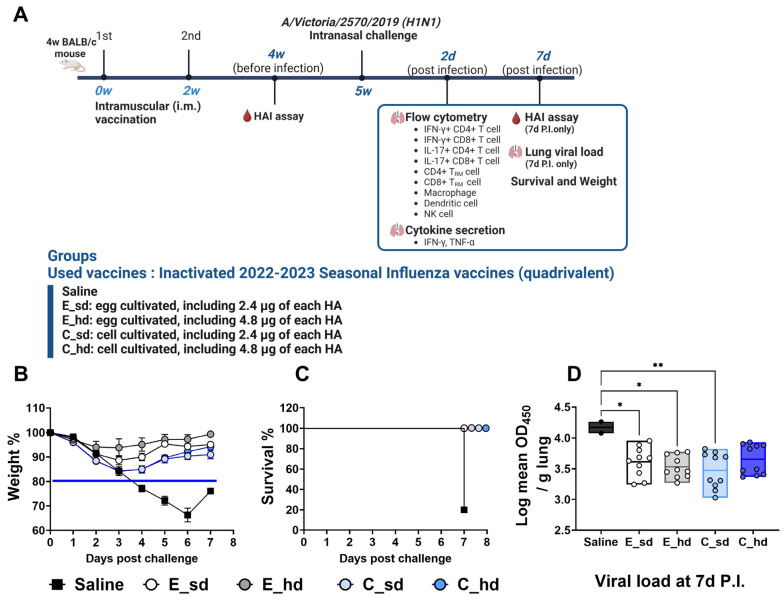
Along with a saline control group, C_sd, C_hd, E_sd, and E_hd vaccines were administered to BALB/c mice, followed by a challenge with the A/Victoria/2570/2019 (H1N1) strain.
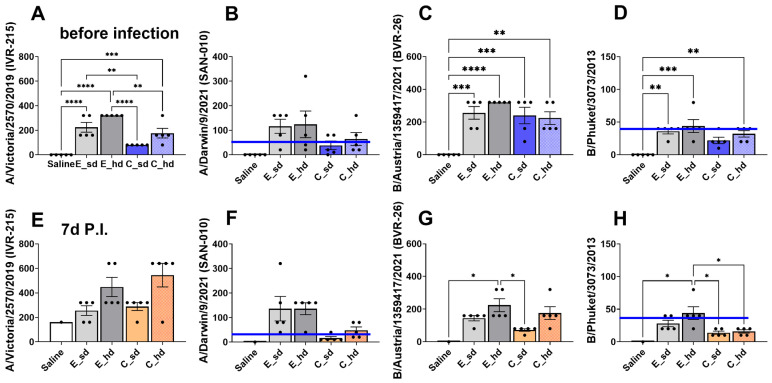
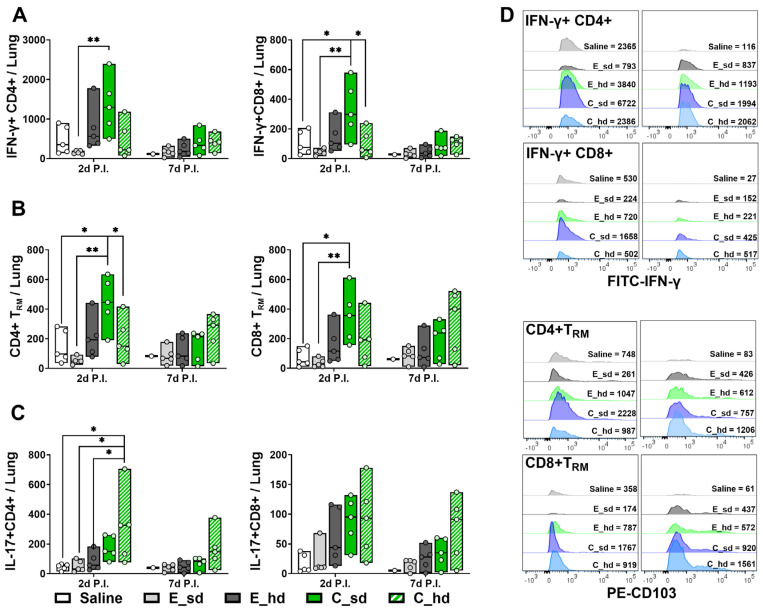
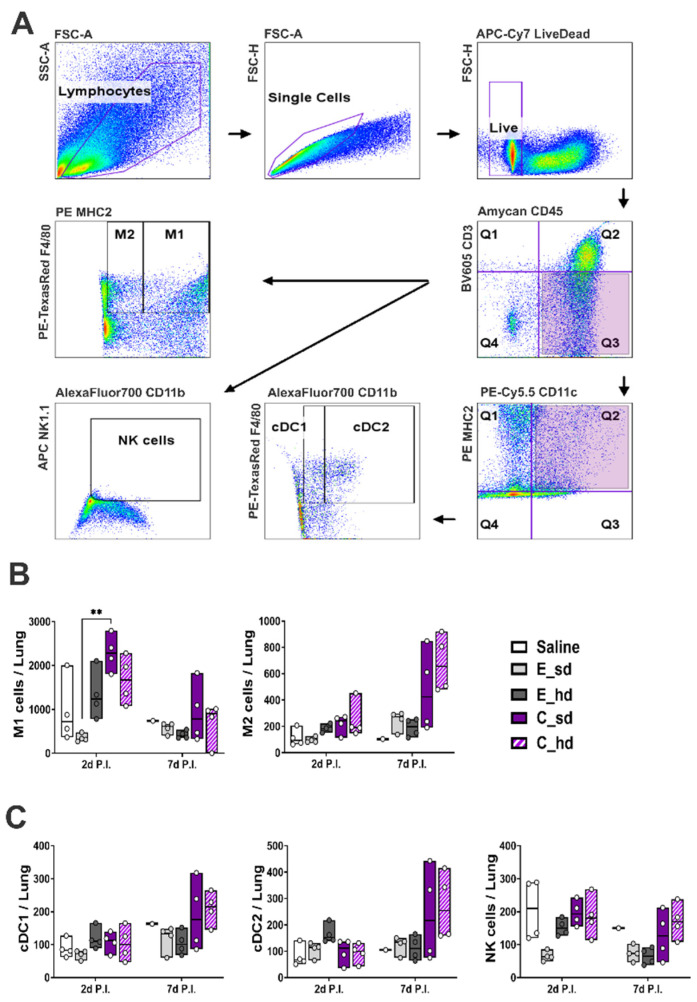
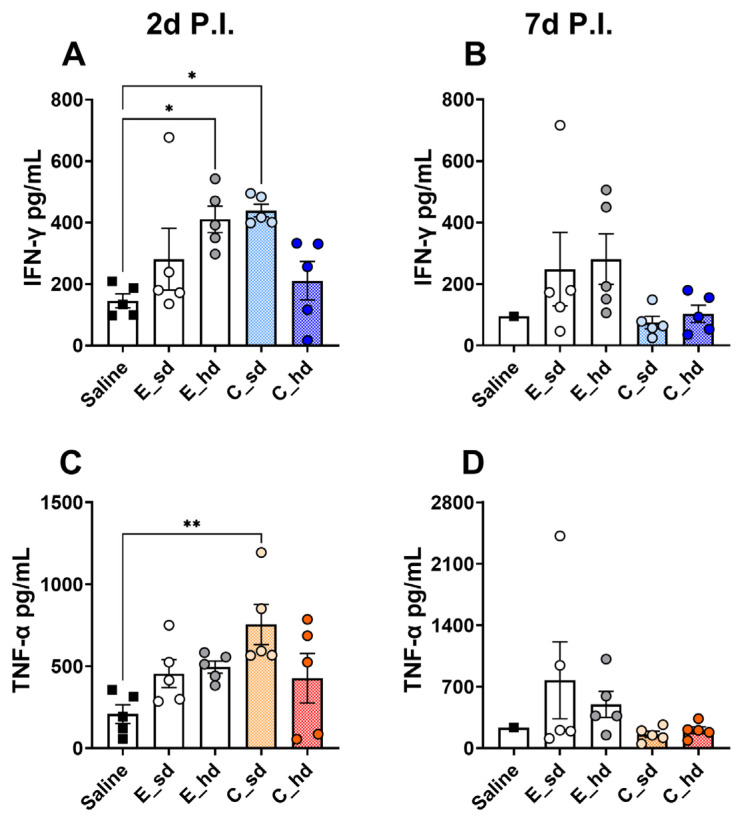
After the challenge, four out of five mice in the saline group died by day 7 post-infection (P.I.). None of the vaccinated groups experienced over 20% weight loss or any deaths. On day 7 P.I., the lung viral load in the saline group (mean log value of 4.17) was higher than that in the vaccinated groups, with the C_sd group showing the lowest viral load (mean log value of 3.47). The C_sd group showed a significantly high response in macrophage 1 (M1), IFN-γ+ T cells, and tissue-resident memory (T) T cells compared with the E_sd group on day 2 P.I. These M1, IFN-γ+ T cells, and T cells showed similar trends ( < 0.01). In terms of humoral immunity, only the E_hd group showed HAI titers above 40 for all four strains before and after the challenge.
The high levels of T cells in the cell-cultured vaccines suggest, pending further real-world research, that these vaccines may offer advantages.
流感仍然是一项重大的公共卫生挑战,接种疫苗是预防流感的重要方式。细胞培养流感疫苗的出现改善了基于鸡蛋的疫苗的缺点,但很少有研究关注这两种疫苗的T细胞免疫。因此,我们研究了以下2022 - 2023年季节性流感标准剂量和高剂量疫苗:细胞培养型(C_sd和C_hd)和鸡蛋培养型(E_sd和E_hd)疫苗。
除生理盐水对照组外,将C_sd、C_hd、E_sd和E_hd疫苗接种到BALB/c小鼠体内,随后用A/维多利亚/2570/2019(H1N1)毒株进行攻击。
攻击后,生理盐水组五只小鼠中有四只在感染后第7天死亡。接种疫苗的组均未出现超过20%的体重减轻或死亡。在感染后第7天,生理盐水组的肺病毒载量(平均对数值为4.17)高于接种疫苗的组,C_sd组的病毒载量最低(平均对数值为3.47)。在感染后第2天,与E_sd组相比,C_sd组在巨噬细胞1(M1)、IFN-γ+ T细胞和组织驻留记忆(T)T细胞方面表现出显著高的反应。这些M1、IFN-γ+ T细胞和T细胞呈现相似趋势(P < 0.01)。在体液免疫方面,只有E_hd组在攻击前后对所有四种毒株的血凝抑制(HAI)效价均高于40。
细胞培养疫苗中T细胞水平较高,这表明在进一步的实际研究之前,这些疫苗可能具有优势。