• 文献检索
  • 文档翻译
  • 深度研究
  • 学术资讯
  • Suppr Zotero 插件Zotero 插件
  • 邀请有礼
  • 套餐&价格
  • 历史记录
应用&插件
Suppr Zotero 插件Zotero 插件浏览器插件Mac 客户端Windows 客户端微信小程序
定价
高级版会员购买积分包购买API积分包
服务
文献检索文档翻译深度研究API 文档MCP 服务
关于我们
关于 Suppr公司介绍联系我们用户协议隐私条款
关注我们

Suppr 超能文献

核心技术专利:CN118964589B侵权必究
粤ICP备2023148730 号-1Suppr @ 2026

文献检索

告别复杂PubMed语法,用中文像聊天一样搜索,搜遍4000万医学文献。AI智能推荐,让科研检索更轻松。

立即免费搜索

文件翻译

保留排版,准确专业,支持PDF/Word/PPT等文件格式,支持 12+语言互译。

免费翻译文档

深度研究

AI帮你快速写综述,25分钟生成高质量综述,智能提取关键信息,辅助科研写作。

立即免费体验

一种hTfR1受体特异性VHH抗体可中和表达胡宁病毒和马丘波病毒糖蛋白的假病毒。

A hTfR1 Receptor-Specific VHH Antibody Neutralizes Pseudoviruses Expressing Glycoproteins from Junín and Machupo Viruses.

作者信息

Kang Qinglin, Li Gege, Wu Yan, Wang Shaoyan, Chen Zhengshan, Zai Xiaodong, Pan Xiaoyan, Wang Rong, Lu Jiansheng, Du Peng, Yang Zhixin, Chi Xiangyang, Xiao Gengfu, Xu Junjie

机构信息

School of Medicine, Zhejiang University, Hangzhou 310063, China.

Laboratory of Advanced Biotechnology, Beijing Institute of Biotechnology, Beijing 100071, China.

出版信息

Viruses. 2024 Dec 20;16(12):1951. doi: 10.3390/v16121951.

DOI:10.3390/v16121951
PMID:39772257
原文链接:https://pmc.ncbi.nlm.nih.gov/articles/PMC11680233/
Abstract

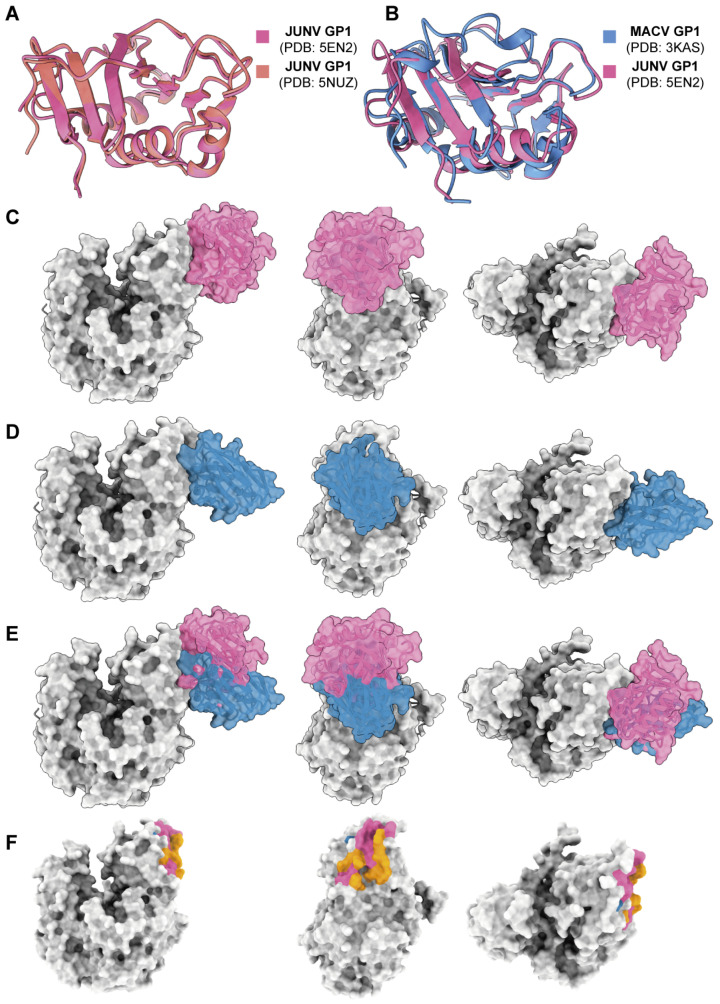
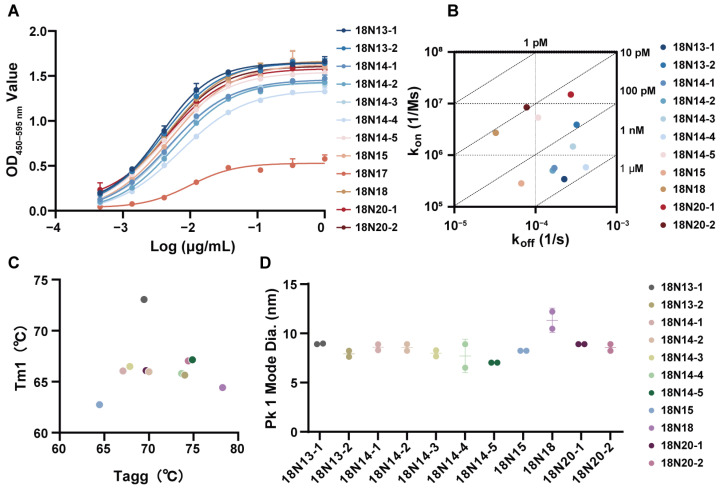
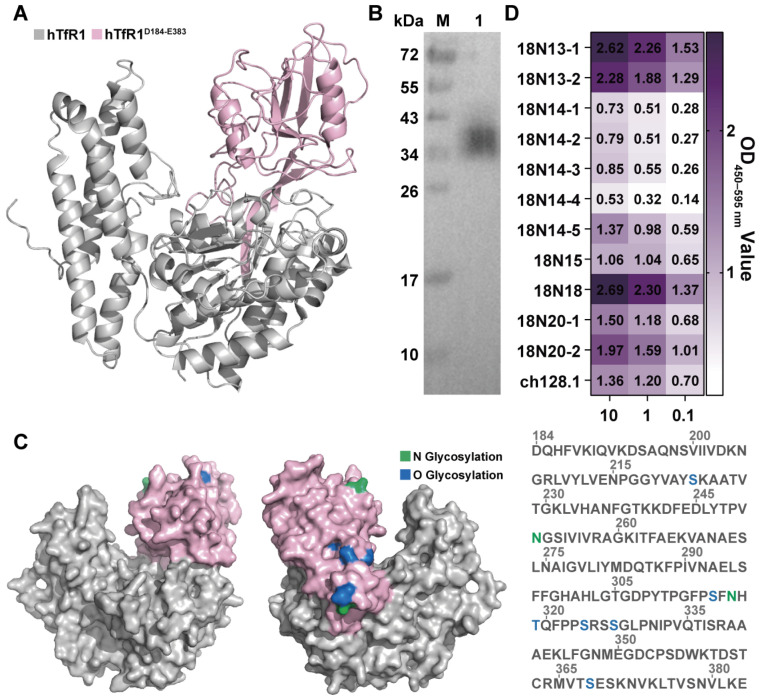
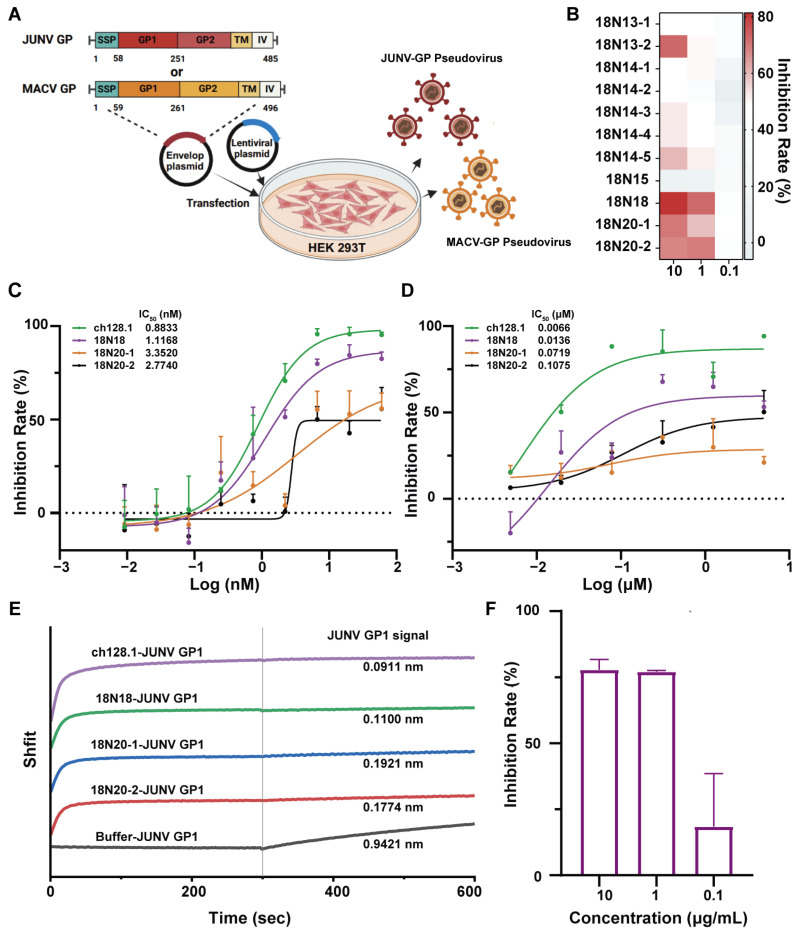
The Junín virus (JUNV) is one of the New World arenaviruses that cause severe hemorrhagic fever. Human transferrin receptor 1 (hTfR1) has been identified as the main receptor for JUNV for virus entry into host cells. To date, no treatment has been approved for JUNV. Herein, we investigated 12 anti-hTfR1 VHH (variable domain of the heavy chain of heavy-chain antibody) antibodies and confirmed their interaction with hTfR1. Most of them could bind to the hTfR1 apical domain, which is the glycoprotein 1 (GP1) binding domain of JUNV. Among them, 18N18 exhibited neutralizing activity against both the human immunodeficiency virus (HIV)-vectored lentiviral Junín pseudoviruses and the recombinant vesicular stomatitis virus (VSV)-vectored Junín pseudoviruses. We also verified that 18N18 blocked the interaction between hTfR1 and JUNV GP1. In addition, 18N18 could neutralize another New World arenavirus, the Machupo virus. Using AlphaFold 3-based simulation of 18N18-hTfR1 docking, we determined that 18N18's binding epitope was located at the JUNV GP1 binding epitope. 18N18 represents a candidate for JUNV treatment and provides a potential approach that could be applied to New World arenaviruses.

摘要

胡宁病毒(JUNV)是导致严重出血热的新大陆沙粒病毒之一。人转铁蛋白受体1(hTfR1)已被确定为JUNV进入宿主细胞的主要受体。迄今为止,尚无针对JUNV的获批治疗方法。在此,我们研究了12种抗hTfR1 VHH(重链抗体重链可变域)抗体,并证实了它们与hTfR1的相互作用。其中大多数能够结合hTfR1顶端结构域,该结构域是JUNV的糖蛋白1(GP1)结合结构域。其中,18N18对人免疫缺陷病毒(HIV)载体慢病毒胡宁假病毒和重组水疱性口炎病毒(VSV)载体胡宁假病毒均表现出中和活性。我们还验证了18N18阻断了hTfR1与JUNV GP1之间的相互作用。此外,18N18可以中和另一种新大陆沙粒病毒——马丘波病毒。通过基于AlphaFold 3的18N18 - hTfR1对接模拟,我们确定18N18的结合表位位于JUNV GP1结合表位处。18N18代表了一种JUNV治疗候选药物,并提供了一种可应用于新大陆沙粒病毒的潜在方法。
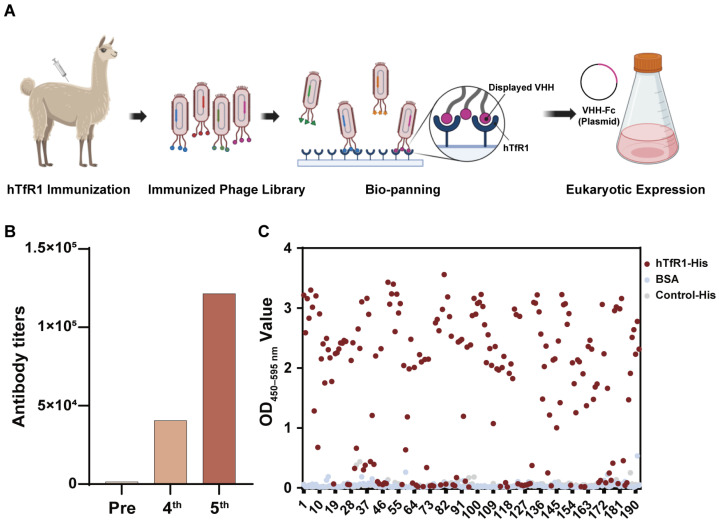
https://cdn.ncbi.nlm.nih.gov/pmc/blobs/22f1/11680233/6620a178fefd/viruses-16-01951-g005.jpg
https://cdn.ncbi.nlm.nih.gov/pmc/blobs/22f1/11680233/d0b61e53d1fd/viruses-16-01951-g001.jpg
https://cdn.ncbi.nlm.nih.gov/pmc/blobs/22f1/11680233/0772f4ce67ec/viruses-16-01951-g002.jpg
https://cdn.ncbi.nlm.nih.gov/pmc/blobs/22f1/11680233/566583b4035a/viruses-16-01951-g003.jpg
https://cdn.ncbi.nlm.nih.gov/pmc/blobs/22f1/11680233/ce635bec98ff/viruses-16-01951-g004.jpg
https://cdn.ncbi.nlm.nih.gov/pmc/blobs/22f1/11680233/6620a178fefd/viruses-16-01951-g005.jpg
https://cdn.ncbi.nlm.nih.gov/pmc/blobs/22f1/11680233/d0b61e53d1fd/viruses-16-01951-g001.jpg
https://cdn.ncbi.nlm.nih.gov/pmc/blobs/22f1/11680233/0772f4ce67ec/viruses-16-01951-g002.jpg
https://cdn.ncbi.nlm.nih.gov/pmc/blobs/22f1/11680233/566583b4035a/viruses-16-01951-g003.jpg
https://cdn.ncbi.nlm.nih.gov/pmc/blobs/22f1/11680233/ce635bec98ff/viruses-16-01951-g004.jpg
https://cdn.ncbi.nlm.nih.gov/pmc/blobs/22f1/11680233/6620a178fefd/viruses-16-01951-g005.jpg

相似文献

1
A hTfR1 Receptor-Specific VHH Antibody Neutralizes Pseudoviruses Expressing Glycoproteins from Junín and Machupo Viruses.一种hTfR1受体特异性VHH抗体可中和表达胡宁病毒和马丘波病毒糖蛋白的假病毒。
Viruses. 2024 Dec 20;16(12):1951. doi: 10.3390/v16121951.
2
Vaccine-elicited receptor-binding site antibodies neutralize two New World hemorrhagic fever arenaviruses.疫苗诱导的受体结合位点抗体中和两种新域出血热沙粒病毒。
Nat Commun. 2018 May 14;9(1):1884. doi: 10.1038/s41467-018-04271-z.
3
Antibody-Based Inhibition of Pathogenic New World Hemorrhagic Fever Mammarenaviruses by Steric Occlusion of the Human Transferrin Receptor 1 Apical Domain.抗体通过空间位阻阻断人转铁蛋白受体 1 顶端结构域抑制新型世界出血热沙粒病毒属病毒。
J Virol. 2021 Aug 10;95(17):e0186820. doi: 10.1128/JVI.01868-20.
4
Differences in Glycoprotein Complex Receptor Binding Site Accessibility Prompt Poor Cross-Reactivity of Neutralizing Antibodies between Closely Related Arenaviruses.糖蛋白复合受体结合位点可及性的差异导致密切相关沙粒病毒之间中和抗体的交叉反应性较差。
J Virol. 2017 Mar 13;91(7). doi: 10.1128/JVI.01454-16. Print 2017 Apr 1.
5
Guinea Pig Transferrin Receptor 1 Mediates Cellular Entry of Junín Virus and Other Pathogenic New World Arenaviruses.豚鼠转铁蛋白受体 1 介导 Junín 病毒和其他致病性新世界沙粒病毒的细胞进入。
J Virol. 2020 Jan 31;94(4). doi: 10.1128/JVI.01278-19.
6
Contrasting Modes of New World Arenavirus Neutralization by Immunization-Elicited Monoclonal Antibodies.新型世界沙粒病毒中和的免疫诱导单克隆抗体的对比模式。
mBio. 2022 Apr 26;13(2):e0265021. doi: 10.1128/mbio.02650-21. Epub 2022 Mar 22.
7
Assessing cross-reactivity of Junín virus-directed neutralizing antibodies.评估 Junín 病毒定向中和抗体的交叉反应性。
Antiviral Res. 2019 Mar;163:106-116. doi: 10.1016/j.antiviral.2019.01.006. Epub 2019 Jan 19.
8
Transferrin receptor 1 is a cellular receptor for New World haemorrhagic fever arenaviruses.转铁蛋白受体1是新大陆出血热沙粒病毒的细胞受体。
Nature. 2007 Mar 1;446(7131):92-6. doi: 10.1038/nature05539. Epub 2007 Feb 7.
9
An antibody recognizing the apical domain of human transferrin receptor 1 efficiently inhibits the entry of all new world hemorrhagic Fever arenaviruses.一种能够识别人转铁蛋白受体 1 顶域的抗体能够有效抑制所有新出现的世界出血热沙粒病毒属病毒的进入。
J Virol. 2012 Apr;86(7):4024-8. doi: 10.1128/JVI.06397-11. Epub 2012 Jan 25.
10
Glycoprotein-Specific Antibodies Produced by DNA Vaccination Protect Guinea Pigs from Lethal Argentine and Venezuelan Hemorrhagic Fever.通过DNA疫苗接种产生的糖蛋白特异性抗体可保护豚鼠免受致命的阿根廷出血热和委内瑞拉出血热的侵害。
J Virol. 2016 Jan 20;90(7):3515-29. doi: 10.1128/JVI.02969-15.

本文引用的文献

1
Phase 1 Clinical Trial of PPMX-T003, a Novel Human Monoclonal Antibody Specific for Transferrin Receptor 1, to Evaluate Its Safety, Pharmacokinetics, and Pharmacodynamics.PPMX-T003 的 1 期临床试验,这是一种新型针对转铁蛋白受体 1 的人源单克隆抗体,旨在评估其安全性、药代动力学和药效学。
Clin Pharmacol Drug Dev. 2023 Jun;12(6):579-587. doi: 10.1002/cpdd.1216. Epub 2022 Dec 30.
2
Contrasting Modes of New World Arenavirus Neutralization by Immunization-Elicited Monoclonal Antibodies.新型世界沙粒病毒中和的免疫诱导单克隆抗体的对比模式。
mBio. 2022 Apr 26;13(2):e0265021. doi: 10.1128/mbio.02650-21. Epub 2022 Mar 22.
3
Host receptor-targeted therapeutic approach to counter pathogenic New World mammarenavirus infections.
针对新型世界哺乳动物沙粒病毒感染的宿主受体靶向治疗方法。
Nat Commun. 2022 Jan 28;13(1):558. doi: 10.1038/s41467-021-27949-3.
4
A resource of high-quality and versatile nanobodies for drug delivery.一种用于药物递送的高质量且多功能纳米抗体资源。
iScience. 2021 Aug 21;24(9):103014. doi: 10.1016/j.isci.2021.103014. eCollection 2021 Sep 24.
5
Therapy for Argentine hemorrhagic fever in nonhuman primates with a humanized monoclonal antibody.用人源化单克隆抗体治疗非人类灵长类动物的阿根廷出血热。
Proc Natl Acad Sci U S A. 2021 Mar 16;118(11). doi: 10.1073/pnas.2023332118.
6
Antibodies Targeting the Transferrin Receptor 1 (TfR1) as Direct Anti-cancer Agents.靶向转铁蛋白受体1(TfR1)的抗体作为直接抗癌剂
Front Immunol. 2021 Mar 17;12:607692. doi: 10.3389/fimmu.2021.607692. eCollection 2021.
7
A guide to: generation and design of nanobodies.纳米抗体的生成与设计指南
FEBS J. 2021 Apr;288(7):2084-2102. doi: 10.1111/febs.15515. Epub 2020 Aug 28.
8
Development of horse neutralizing immunoglobulin and immunoglobulin fragments against Junín virus.抗 Junín 病毒马源中和免疫球蛋白和免疫球蛋白片段的研制。
Antiviral Res. 2020 Feb;174:104666. doi: 10.1016/j.antiviral.2019.104666. Epub 2019 Nov 21.
9
Modified ribavirin analogues as antiviral agents against Junín virus.修饰的利巴韦林类似物作为抗胡宁病毒的抗病毒药物。
Bioorg Med Chem Lett. 2019 Feb 15;29(4):556-559. doi: 10.1016/j.bmcl.2018.12.063. Epub 2019 Jan 2.
10
Neutralization of Junín virus by single domain antibodies targeted against the nucleoprotein.针对核蛋白的单域抗体对胡宁病毒的中和作用。
Sci Rep. 2018 Jul 30;8(1):11451. doi: 10.1038/s41598-018-29508-1.