Cottingham Hugh, Judd Louise M, Wisniewski Jessica A, Wick Ryan R, Stanton Thomas D, Vezina Ben, Macesic Nenad, Peleg Anton Y, Okeke Iruka N, Holt Kathryn E, Hawkey Jane
Department of Infectious Diseases, School of Translational Medicine, Monash University, Melbourne, Victoria, Australia.
Centre to Impact AMR, Monash University, Melbourne, Victoria, Australia.
mSystems. 2025 Feb 18;10(2):e0141324. doi: 10.1128/msystems.01413-24. Epub 2025 Jan 8.
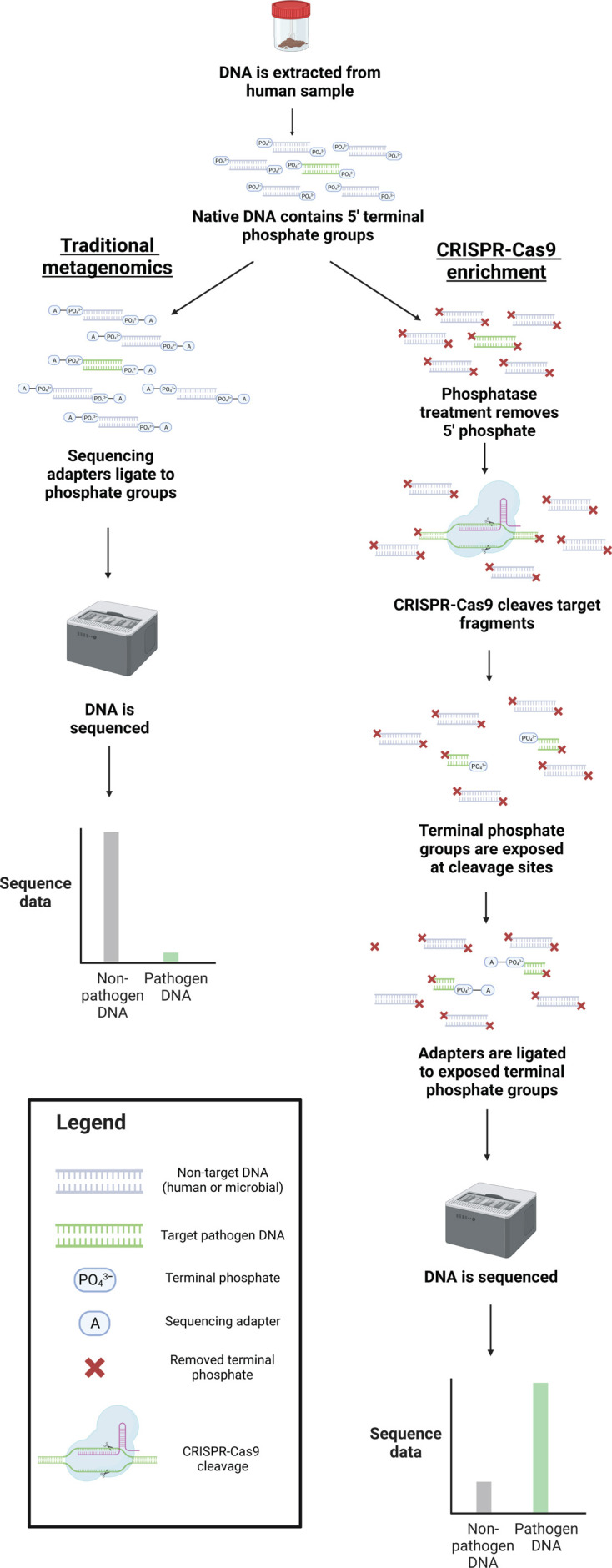
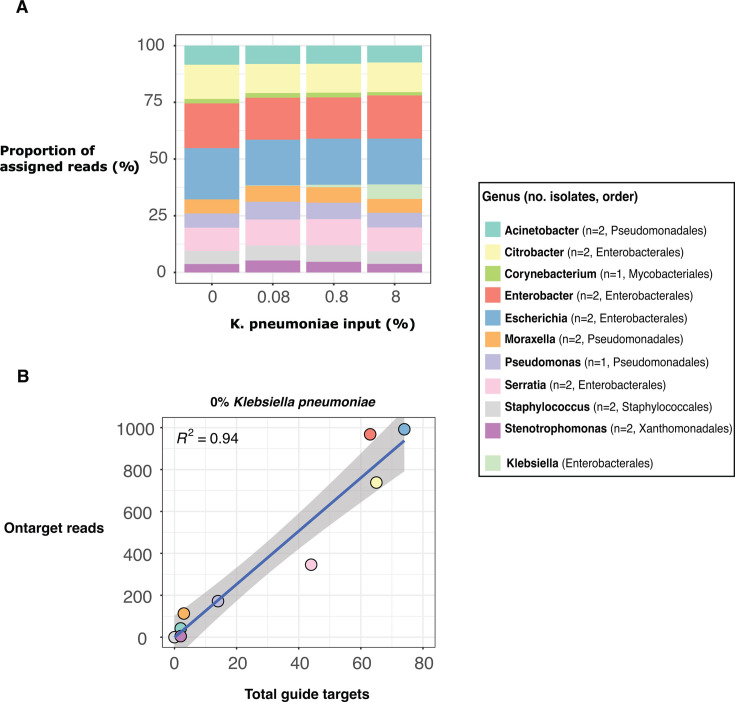
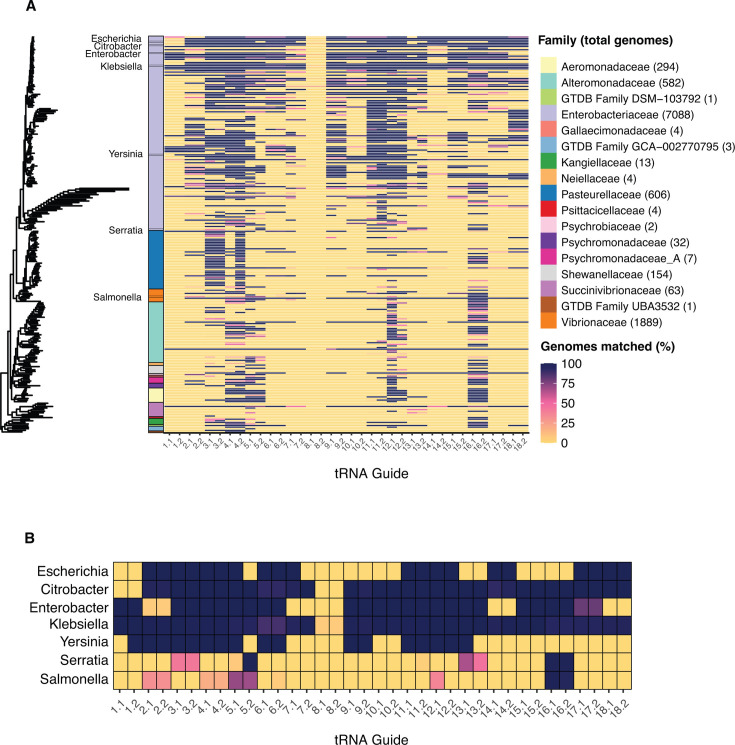
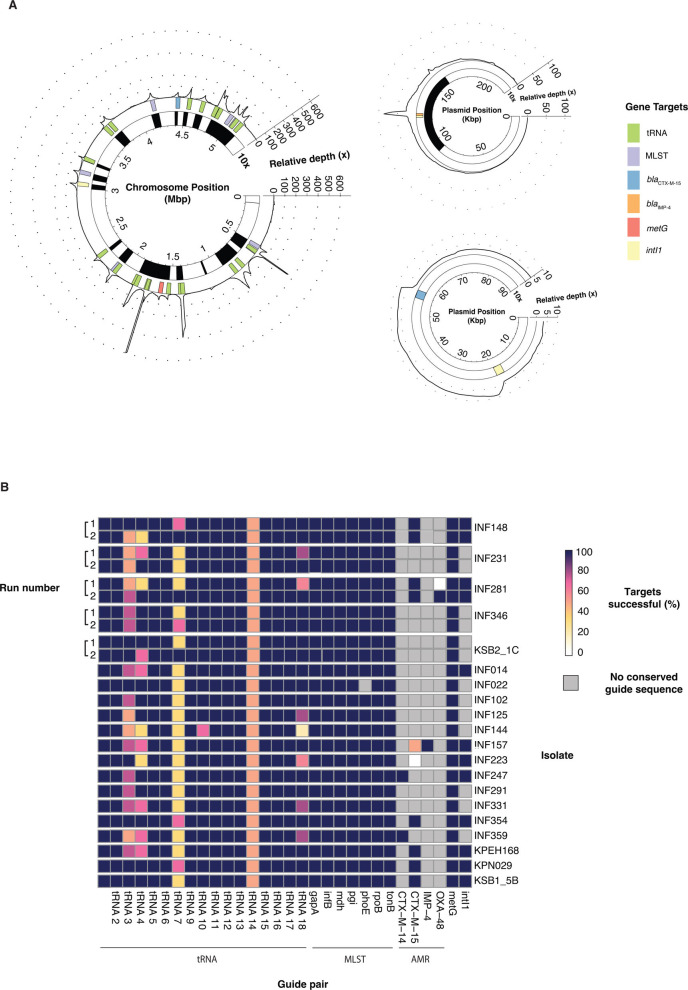
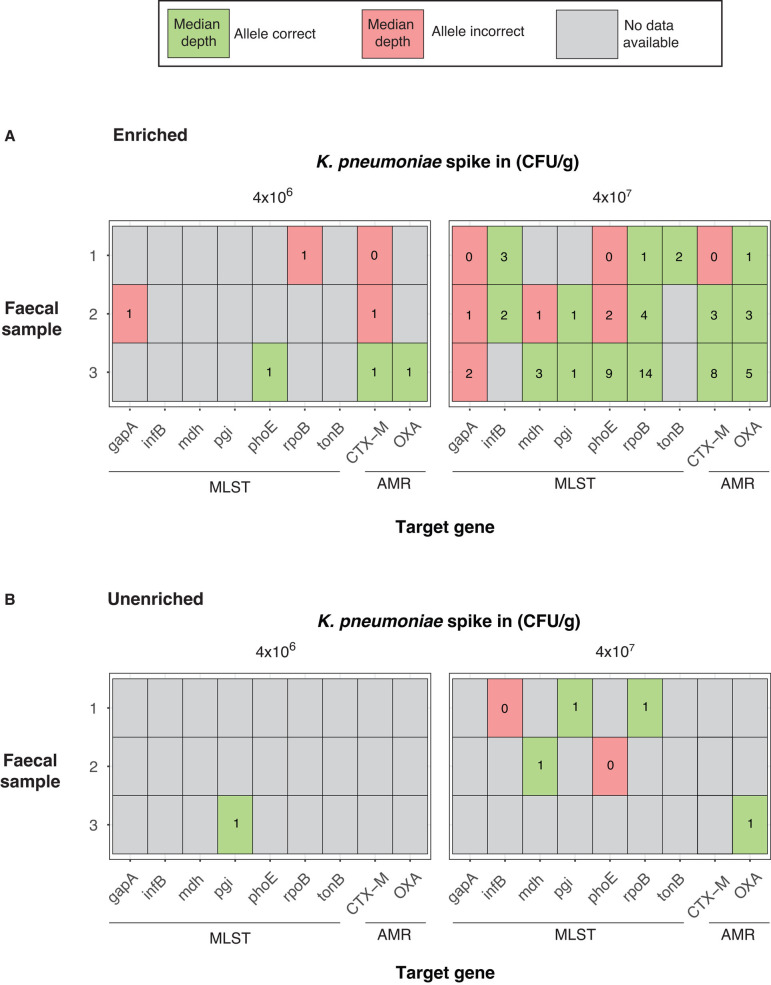
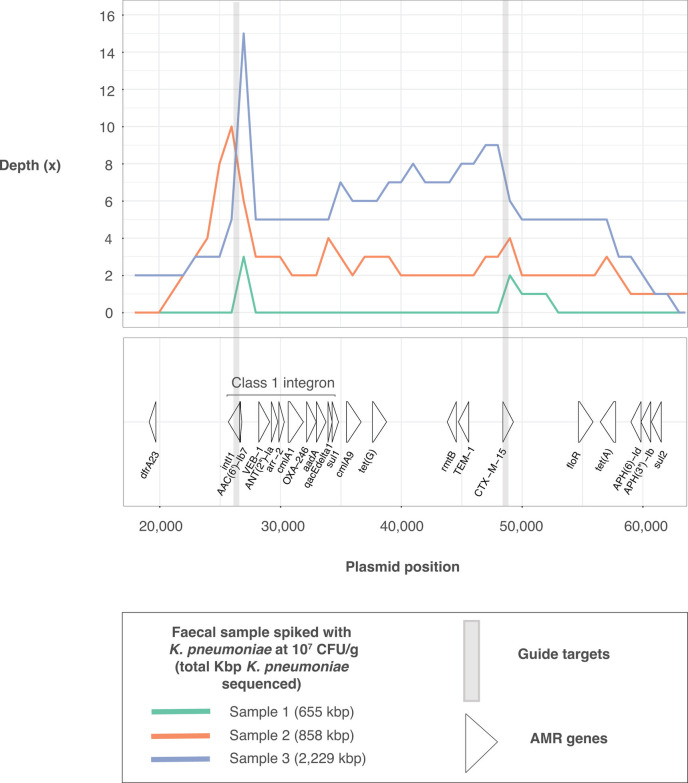
Sequencing DNA directly from patient samples enables faster pathogen characterization compared to traditional culture-based approaches, but often yields insufficient sequence data for effective downstream analysis. CRISPR-Cas9 enrichment is designed to improve the yield of low abundance sequences but has not been thoroughly explored with Oxford Nanopore Technologies (ONT) for use in clinical bacterial epidemiology. We designed CRISPR-Cas9 guide RNAs to enrich the human pathogen , by targeting multi-locus sequence type (MLST) and transfer RNA (tRNA) genes, as well as common antimicrobial resistance (AMR) genes and the resistance-associated integron gene . We validated enrichment performance in 20 . isolates, finding that guides generated successful enrichment across all conserved sites except for one AMR gene in two isolates. Enrichment of MLST genes led to a correct allele call in all seven loci for 8 out of 10 isolates that had depth of 30× or more in these regions. We then compared enriched and unenriched sequencing of three human fecal samples spiked with at varying abundance. Enriched sequencing generated 56× and 11.3× the number of AMR and MLST reads, respectively, compared to unenriched sequencing, and required approximately one-third of the computational storage space. Targeting the gene often led to detection of 10-20 proximal resistance genes due to the long reads produced by ONT sequencing. We demonstrated that CRISPR-Cas9 enrichment combined with ONT sequencing enabled improved genomic characterization outcomes over unenriched sequencing of patient samples. This method could be used to inform infection control strategies by identifying patients colonized with high-risk strains.
Understanding bacteria in complex samples can be challenging due to their low abundance, which often results in insufficient data for analysis. To improve the detection of harmful bacteria, we implemented a technique aimed at increasing the amount of data from target pathogens when combined with modern DNA sequencing technologies. Our technique uses CRISPR-Cas9 to target specific gene sequences in the bacterial pathogen and improve recovery from human stool samples. We found our enrichment method to significantly outperform traditional methods, generating far more data originating from our target genes. Additionally, we developed new computational techniques to further enhance the analysis, providing a thorough method for characterizing pathogens from complex biological samples.
与传统的基于培养的方法相比,直接从患者样本中对DNA进行测序能够更快地鉴定病原体特征,但通常产生的序列数据不足以进行有效的下游分析。CRISPR-Cas9富集技术旨在提高低丰度序列的产量,但尚未在牛津纳米孔技术(ONT)中进行充分探索以用于临床细菌流行病学。我们设计了CRISPR-Cas9引导RNA,通过靶向多位点序列类型(MLST)和转运RNA(tRNA)基因,以及常见的抗菌药物耐药性(AMR)基因和耐药相关整合子基因,来富集人类病原体。我们在20株分离株中验证了富集性能,发现除了两株分离株中的一个AMR基因外,引导RNA在所有保守位点均成功实现了富集。对于10株在这些区域深度达到30×或更高的分离株中的8株,MLST基因的富集导致所有7个位点的等位基因分型正确。然后,我们比较了三个添加了不同丰度的[具体细菌名称未给出]的人类粪便样本的富集测序和未富集测序。与未富集测序相比,富集测序产生的AMR和MLST读数分别是其56倍和11.3倍,并且所需的计算存储空间约为其三分之一。由于ONT测序产生的长读长,靶向[具体基因名称未给出]基因通常会导致检测到10 - 20个近端耐药基因。我们证明,与患者样本的未富集测序相比,CRISPR-Cas9富集技术与ONT测序相结合能够改善基因组特征鉴定结果。该方法可用于通过识别携带高危菌株的患者来为感染控制策略提供信息。
由于细菌丰度低,了解复杂样本中的细菌具有挑战性,这通常导致分析数据不足。为了改进对有害细菌的检测,我们实施了一种技术,旨在与现代DNA测序技术结合时增加来自目标病原体的数据量。我们的技术使用CRISPR-Cas9靶向细菌病原体[具体细菌名称未给出]中的特定基因序列,并提高从人类粪便样本中的回收率。我们发现我们的富集方法明显优于传统方法,产生了远多于源自目标基因的数据。此外,我们开发了新的计算技术以进一步加强分析,提供了一种从复杂生物样本中鉴定病原体的全面方法。